






3 The role of UPS

Power outage protection
When the municipal power grid experiences an instant power outage, the UPS power system will immediately convert the DC power in the battery into AC power to continue supplying power to the load, avoiding inconvenience and losses caused by the power outage. For example, in some critical computer network systems or data storage devices, UPS can ensure that the system will not immediately stop running in the event of a sudden interruption of mains power, and users have enough time to save important data and handle emergencies.
Voltage stabilizing effect
The voltage of the mains is easily affected by the distance and quality of the power transmission lines. Users closer to the substation have higher voltage, while users farther away from the substation have lower voltage. UPS achieves voltage stabilization function through internal power conversion devices. UPS uses inverter technology internally to convert input AC power into DC power, and then reverse the DC power to AC power. The output voltage and frequency of the inverter are independently controllable, so it can stabilize the mains voltage within a suitable range, provide stable voltage power for user equipment, ensure the normal operation of equipment and extend its service life.
Surge protection
Usually, UPS power systems have a cutting-edge discharge design to absorb surges. In the power system, sudden waves may occur due to various reasons, such as lightning and the start stop of large equipment, which can affect the efficiency and lifespan of the equipment. UPS can absorb these surges and provide protection for the equipment.
High and low voltage protection
When the mains voltage is high or low, the voltage regulator (AVR) inside the UPS power supply keeps the mains voltage within a safe and usable range, ensuring that the equipment can operate normally. When the high and low voltages exceed the usable range, the UPS power system will activate the battery power supply to ensure the continuous operation of the equipment. For example, in areas with significant voltage fluctuations, UPS can effectively protect equipment from the effects of abnormal voltage.
Harmonic distortion protection
When electricity is transmitted to the user end through transmission and distribution lines, the voltage waveform is distorted, and the fundamental current changes, resulting in harmonics. Harmonics can affect the use of equipment, and UPS can provide stable and high-quality power supply for equipment, effectively reducing the impact of harmonic distortion on equipment and improving its operational efficiency and lifespan.
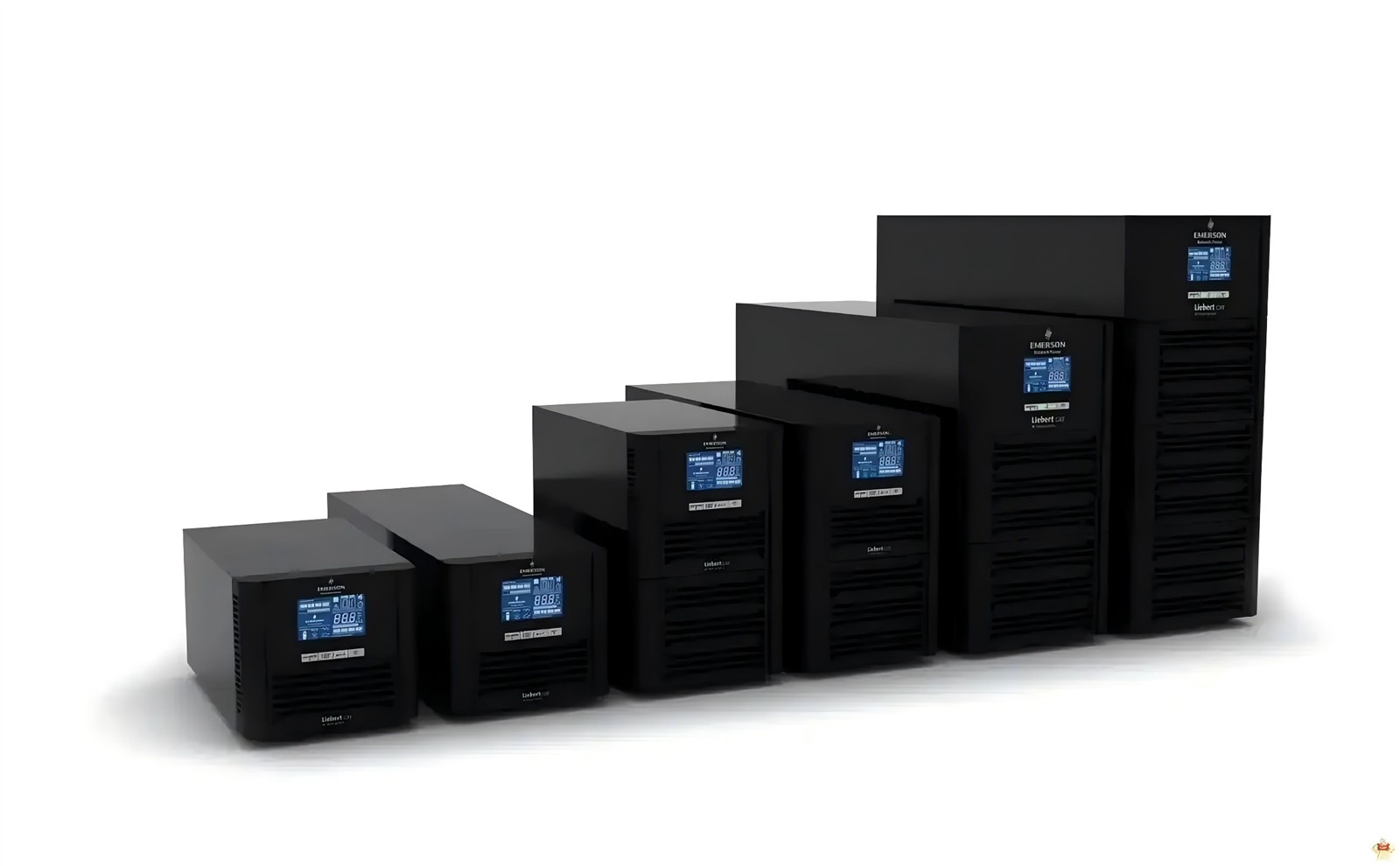
Stable frequency effect
The frequency is the period in which the mains power changes every second, and 50Hz is 50 cycles per second. The sudden changes in the power consumption of the user end during the operation of the municipal power generator will cause fluctuations in the speed, resulting in an unstable frequency of the converted power. The power converted by the UPS power supply can provide a stable frequency to ensure the normal operation of the instrument and equipment.
Instant protection
Sometimes there may be voltage surges, dips, or momentary voltage drops in the mains power supply, which can affect the accuracy of equipment and, in severe cases, damage precision equipment, causing losses to users. The UPS system can provide stable voltage to protect equipment. For example, in some precision instruments and equipment that require high voltage accuracy, UPS can effectively prevent the impact of instantaneous voltage changes on the equipment.
Suppress transverse and common mode noise
Horizontal mode noise is generated between the live and neutral wires; Common mode noise is generated between the live wire, neutral wire, and ground wire. Invisible power issues are difficult to prevent, constantly endangering equipment and causing losses to users. UPS can purify the power environment, safeguard instruments and data, ensure the normal operation of equipment, and extend the service life of equipment.
4 How to choose the appropriate UPS

Determine power
To choose a suitable UPS, the first step is to determine the power of the equipment. Generally speaking, the power of a regular PC or industrial computer is around 200W, and the power of a server is between 300W and 600W. The power values of other devices can refer to the equipment manual. When determining the required UPS power, it is recommended that the load power accounts for 30% to 80% of the UPS power. If the load is too large, it may cause UPS power overload when starting at the same time; When the load is too small, it not only causes waste, but also affects the performance of the battery. For example, the total load can be calculated based on the total power of the equipment, in VA units. The capacity of the UPS should not be less than the total load divided by 0.8, taking into account the UPS's shock resistance and expansion needs.
Consider maintainability
It is recommended not to pursue too many performance indicators when choosing UPS equipment for ordinary stations. It depends on the needs, as long as the cost-effectiveness is high, it is possible to use it. When choosing UPS equipment, it is also necessary to consider the size of the equipment space, the safety of use and maintenance, etc. In the early stages of work, adding a computer and a printer required low power and did not require high power accuracy, so backup models were often used. Nowadays, the number of networked computers and other electrical equipment at various stations has increased significantly, and the available power requirements are high. It is recommended to use online UPS. Online UPS has stable voltage, frequency, and zero switching time, and does not interfere with the load, especially suitable for stations that are far away from the city and have large power fluctuations. For large data centers, UPS power is generally used, and from a maintainability perspective, it is best to use hot swappable critical modules. Some modularity is composed of power modules and may not necessarily be hot swappable. The bypass module is generally less commonly used online, but for some high-level data centers, operation and maintenance units also hope to perform some maintenance on the bypass module during operation, including monitoring. Choose fully modular systems as much as possible.
Consider the price
Taking into account factors such as the brand, reputation, and localization rate of UPS equipment. At present, the performance and quality of domestic brand UPS can meet the demand, such as Shante, Kehua, and Aite Network Energy brands, with complete after-sales service, which is worth considering when purchasing. The performance and price of UPS are directly proportional, with higher performance and indicators often leading to higher prices. Whether it is a metal casing, whether there is an input/output isolation transformer, whether there is power factor compensation, whether there is SP control, whether there is a large screen LCD display, etc., each item has additional value. When choosing UPS equipment for ordinary stations, it is recommended not to pursue too many performance indicators. It should be determined according to the needs, as long as it is functional and cost-effective.