


Ask what kills containerised storage projects late in the schedule, and the answer is rarely the battery. It is the six weeks nobody planned for: a road permit that took longer than expected, a crane pad that was never poured, a container that arrived at the site entrance but could not travel the last four hundred meters of gravel road. BESS logistics is not an afterthought to the engineering - for a containerised system it is part of the engineering, fixed at design time and expensive to discover late.
This guide covers the three phases that move a containerised system from factory to foundation - transport, lifting, and site logistics - plus the documentation and receiving checks that protect both your schedule and your warranty.

Why Logistics Shapes the Design
A containerised BESS is heavy, dense, and regulated cargo all at once. Typical 20-foot energy containers run 25–40 tonnes loaded; batteries travel as Class 9 dangerous goods under UN 38.3 certification, at a controlled state of charge (typically around 30% SOC for transport safety). Every one of those facts constrains the design before a single component is placed:
Weight and footprint determine whether the unit ships as standard freight or oversize/overweight, which determines cost, route, and timeline.
The lifting system must be engineered for a fully loaded, dynamically loaded container - corner castings and frame ratings are design items, not details.
The transport SOC requirement means the battery ships partly discharged and needs SOC management from factory door to commissioning - a logistics task with electrical consequences.
Buyers who involve logistics at the specification stage route around all of this; buyers who involve logistics after the PO inherit it.
Phase One: Transport
Sea freight. Standard-height containers move on flat racks or in cell guides; anything over-height (many thermal-management tops are) needs flat-rack booking with lashing plans. Salt exposure during ocean transit is real - for coastal-destined systems, check how the unit is protected during the voyage (packaging, desiccants, port-side storage), because a humid salt-air hold for six weeks is its own corrosivity event before the cabinet ever reaches its C5 environment.
Road transport. Overweight/oversize moves need permits that vary by jurisdiction and can take weeks; lowboy trailers, escort vehicles, and route surveys (bridge weights, overhead clearances, turn radii) are standard for large containers. The last mile is where projects fail: a 35-tonne load on a rural access road is a different exercise than highway freight. Walk the final approach early - grade, surface strength, culverts, gates, overhead lines - and fix the road before it fixes your delivery date.
Recharge logistics for the battery. Because cells ship at reduced SOC with periodic requirements, long transits and site delays need a plan for SOC checks and topping up where required. Ask the supplier for the transport-SOC regime and the maximum permissible storage interval before recharge or commissioning - it is a warranty condition, and it interacts directly with your project schedule.
Phase Two: Lifting
The container is engineered to be lifted, but only correctly. The rules that matter:
Lift points are specified, not chosen. Corner castings and dedicated lifting lugs are rated for vertical lifting with appropriate hardware; lifting from forklift pockets or improvised points on a fully loaded unit risks structural damage and voided warranty.
Spreader beams beat slings. Long containers lifted with direct slings put lateral compression loads on the frame and, more importantly, on the internal battery racks and busbars. A spreader beam keeps the lift vertical - for heavy energy containers it is standard practice, not an upgrade.
Dynamic loads are the hidden multiplier. A 30-tonne static load becomes substantially more under swing, sudden stop, or wind. Crane selection, rigging inspection, and wind limits (most crane plans stop work at modest wind speeds with large sail areas) belong in the lift plan.
Forklift handling is viable only for smaller, lighter units and only with rated forks and specified pick points - and it is usually the wrong tool for anything container-sized.
Every lift should follow a written lift plan: equipment, rigging, load path, ground conditions, wind limits, and the exclusion zone. If the supplier provides a lifting drawing and a suggested lift plan (good ones do), make it a contract deliverable, not a favor.

Phase Three: Site Logistics
The site has to receive what the freight plan delivers. Four items decide whether install week is boring or eventful.
Ground and access. Confirm the road network end to end for the heaviest vehicle, and confirm ground-bearing capacity at the delivery point, the crane pad, and the final foundation. A crane pad is engineered ground - not "the flat area near the fence." Your earlier energy storage site assessment should have captured soil, access, and laydown space; this is where that pays off.
Delivery sequencing. Containers, transformers, switchgear, and cabling arrive in an order that matches the erection sequence. Storage in the wrong order creates a shuffling problem on a small site. Plan laydown areas, and remember that outdoor storage of energized-ish (partly charged) battery units has constraints: temperature limits, SOC maintenance, security, and fire separation from combustibles during the wait.
Placement precision. Foundations are set to tolerances the cabinet's structure and door alignments depend on. Anchor systems, shimming, and grounding all happen at set time - the commissioning crew inherits whatever tolerance the crane operator achieved.
Utilities readiness. Empty conduits, ground grids, and cable trenches that were supposed to be ready before the container arrives have a way of not being ready. Sequence civil works to finish before steel, and hold a pre-delivery checklist as a gate.
Documentation and Receiving Checks
Batteries are dangerous goods; the paperwork is not optional and it protects your claim rights:
UN 38.3 test summary, MSDS/SDS, and dangerous-goods declarations for the cells and modules - required for transport, and the foundation of your compliance file.
Packing list and as-built weights per unit - verify against the lifting plan; published weights are sometimes optimistic.
Vibration and shock endurance of the packaged unit (a design requirement for battery packs in transit) - and on arrival, inspect for transit damage before signing: tilt indicators, shock indicators, visual checks of seals and enclosures, and photos. Receiving without inspection is how transit damage becomes a warranty dispute instead of a carrier claim.
Hand the inspected units to a structured BESS commissioning process - arriving and energizing are different milestones.
Common Failures, Collected
Each of these shows up repeatedly in real projects; each is cheap to prevent early:
Road permit or route survey discovered late, delaying delivery weeks.
Last-mile access (grade, surface, gate width) never physically walked.
Crane pad not built, or lift plan improvised on the day.
Units delivered before foundations or trenches were ready, with SOC ticking down in laydown.
Lifting from unrated points to "save the crane cost."
Receiving signed without inspection, absorbing someone else's transit damage.
Coastal shipment with no salt-protection or post-transit inspection, feeding corrosion years later.
The Bottom Line
Containerised BESS logistics is a design input, a three-phase plan (transport, lifting, sitework), and a documentation discipline - in that order. Involve it at specification, walk the last mile early, lift only from rated points with a written plan, and inspect on arrival before you sign. Do those five things and the heaviest part of your project becomes a routine Tuesday instead of a schedule crisis.
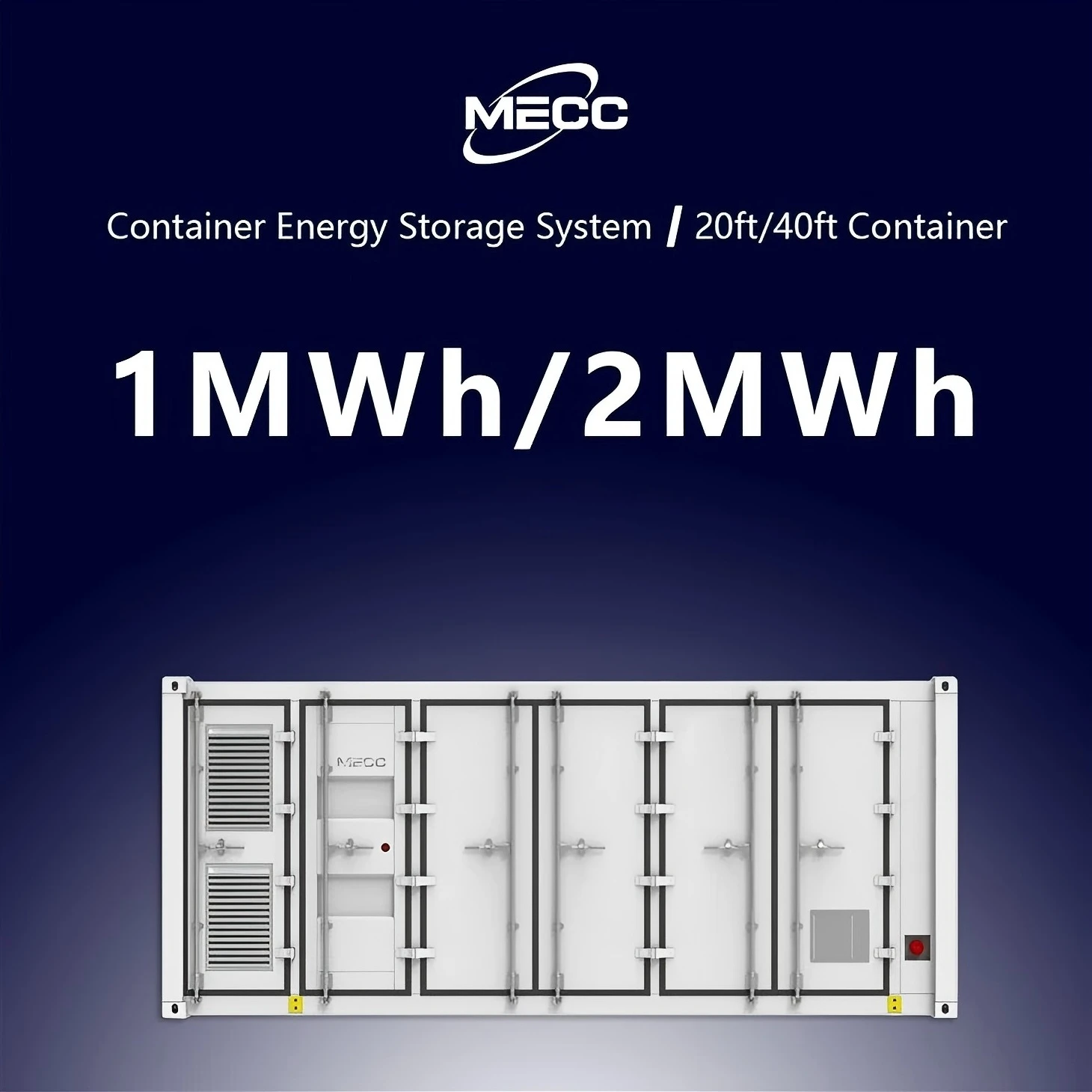
500KW/1MW 1MWh/2MWh Battery Energy Storage System Container
The 500kW/1MW 1MWh/2MWh Battery Energy Storage System Container is a turn‑key utility‑grade energy storage solution housed in standard 20ft or 40ft shipping containers, integrating bidirectional PCS, A‑grade LiFePO4 battery clusters, master BMS, liquid‑cooled thermal management, gas fire suppression, high‑voltage distribution and EMS energy management system with full factory pre‑assembly and pre‑commissioning. Requiring only foundation construction and high‑voltage cable connection for on‑site commissioning, it supports flexible power‑capacity configuration and multi‑container parallel expansion, delivering core capabilities of peak‑shaving and load shifting, renewable energy smoothing, frequency‑voltage grid support, islanded micro‑grid operation and large‑scale emergency backup. Featuring IP54 enclosure protection and comprehensive multi‑layer safety mechanisms, it adapts to diverse harsh outdoor environments, and is widely deployed for ground‑mounted PV power stations, industrial parks, mining operations, island microgrids and grid‑side auxiliary service projects to stabilize grid fluctuations, boost renewable energy utilization and reduce comprehensive energy costs.