



Standing at a critical juncture of the energy revolution, photovoltaic power plants are ushering in unprecedented development opportunities. With the rapid advancement of technology and breakthroughs in a series of cutting-edge technologies, the face of photovoltaic power plants will be completely changed, leading the energy revolution towards a new journey.
In the field of photovoltaic cell technology, perovskite cells are undoubtedly the most dazzling "new star". The conversion efficiency of traditional crystalline silicon cells is gradually approaching the theoretical limit, while perovskite cells have shown great potential due to their unique crystal structure and optoelectronic properties. Laboratory data shows that the conversion efficiency of single junction perovskite cells has exceeded 25.7%, and the perovskite crystalline silicon stacked cell has achieved an astonishing efficiency of 33.9%. What is even more exciting is that perovskite cells have solution processing characteristics and can be prepared on a large scale using a printing like method, which is expected to significantly reduce their production costs. Imagine a future photovoltaic power station that is no longer a single blue photovoltaic panel array, but flexible photovoltaic materials that can be customized in color and pattern according to demand. They can be pasted on the exterior walls of buildings like wallpaper, or made into transparent photovoltaic glass, applied to windows and curtain walls, making every building a power generation unit.

Intelligent operation and maintenance technology will also bring earth shattering changes to photovoltaic power plants. At present, drone inspection and big data analysis have been widely applied, but in the future, intelligent operation and maintenance will be more intelligent and autonomous. Artificial intelligence algorithms will be deeply integrated into the operation and maintenance management of photovoltaic power plants. Through learning and analyzing massive operating data, they can not only accurately predict equipment failures, but also optimize the operation strategy of the power plant in advance. For example, according to the weather forecast, the system can adjust the angle of the photovoltaic panel in advance to cope with the coming bad weather; By analyzing the fluctuations in electricity prices during different time periods, automatic control of energy storage system charging and discharging is achieved to maximize economic benefits. Meanwhile, nanorobots are also expected to be applied in the maintenance of photovoltaic power plants. These tiny robots can autonomously move on the surface of photovoltaic panels, remove dust and dirt, repair tiny cracks and defects, greatly improving the power generation efficiency and service life of photovoltaic panels.
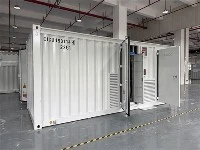
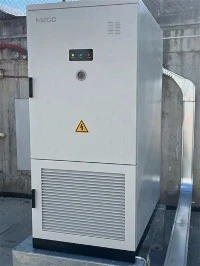
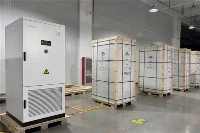
The integration of energy storage technology and photovoltaic power plants will be a key direction for future development. Currently, lithium battery energy storage is widely used in photovoltaic power plants, but with the development of technology, new energy storage technologies such as flow batteries and compressed air energy storage will play a greater role. Flow batteries have the characteristics of large capacity, long lifespan, and high safety, making them particularly suitable for large-scale energy storage scenarios. In some large photovoltaic power plants, megawatt level flow battery energy storage systems can store several hours of electricity generation, effectively solving the intermittent problem of photovoltaic power generation. Compressed air energy storage stores energy by compressing air during low electricity consumption periods and releasing air during high electricity consumption periods to drive turbines for power generation. Its energy conversion efficiency continues to improve, and the cost is gradually decreasing. In the future, the combination of photovoltaic power stations and energy storage systems will become even closer, forming an integrated energy system of "photovoltaic storage", achieving stable power supply and flexible allocation.

In addition, the cross-border integration of photovoltaic power plants with other industries will also create infinite possibilities. In the field of agriculture, the "agricultural photovoltaic complementarity" model will be further upgraded. Under photovoltaic panels, not only can traditional crops be grown, but new crop varieties suitable for low light environments may also be cultivated. By using an intelligent control system, the transmittance of photovoltaic panels can be precisely adjusted according to the growth needs of crops. In terms of fisheries, the "Fishery Photovoltaic Complementary" power station will be equipped with more advanced water quality monitoring and aquaculture equipment, achieving intelligent and coordinated development of photovoltaic power generation and aquaculture. In the field of transportation, innovative applications such as photovoltaic road surfaces and photovoltaic charging piles will continue to emerge, allowing new energy vehicles to enjoy clean energy during both driving and charging processes.
The future of photovoltaic power plants is a blueprint intertwined with technological innovation and diverse applications. With the gradual maturity and promotion of these cutting-edge technologies, photovoltaic power plants will no longer be just places for electricity production, but will become comprehensive energy platforms that integrate power generation, energy storage, ecological protection, and industrial integration, injecting strong impetus into global energy transformation and sustainable development.