


Under the wave of accelerating transformation of the global energy structure, energy storage technology has become the key to solving the intermittency problem of renewable energy and improving the stability of the power system. Energy storage containers, with their advantages of high integration, modularity, and ease of transportation and installation, have become innovative pioneers in the field of energy storage, reshaping the pattern of modern energy storage and allocation.

1 Highly integrated design, creating an energy storage "all-around warehouse"
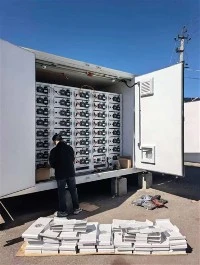
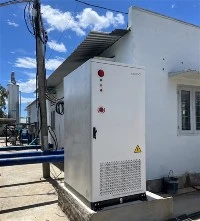
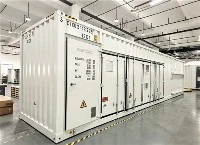
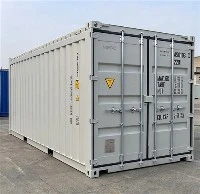
Energy storage containers highly integrate core components such as battery systems, battery management systems (BMS), energy conversion systems (PCS), thermal management systems, and fire and security systems into standardized containers. Taking the energy storage container launched by CATL as an example, a single 20 foot container can integrate 1.4MWh of energy storage capacity, equivalent to providing one day's electricity consumption for nearly 200 ordinary households.
In terms of battery systems, battery types such as lithium iron phosphate and ternary lithium can be flexibly configured according to different application requirements. Lithium iron phosphate batteries are widely used in power grid and industrial and commercial energy storage scenarios due to their high safety and long cycle life; Ternary lithium batteries have the advantage of high energy density and are suitable for scenarios that require high space compactness. The battery management system is like the "smart brain" of an energy storage container, monitoring the voltage, current, temperature, state of charge (SOC) and other parameters of each battery cell in real time to accurately control the charging and discharging process of the battery, ensuring the consistency and safety of the battery pack. For example, when a battery cell temperature is detected to be too high, the BMS will immediately activate the thermal management system and adjust the charging and discharging strategy to avoid the risk of thermal runaway.
The energy conversion system is responsible for bidirectional conversion between the direct current of the battery and the alternating current of the power grid, achieving flexible storage and release of electrical energy. Its fast response capability can complete power regulation in milliseconds, meeting the needs of power grid frequency and voltage regulation. The thermal management system adopts multiple heat dissipation methods such as liquid cooling, air cooling, or phase change materials to work together, ensuring that the battery operating temperature is stable in the appropriate range. The liquid cooling system of a certain brand of energy storage container can control the temperature fluctuation inside the container within ± 2 ℃, effectively extending the service life of the battery. The fire and security system is equipped with smoke detection, flame monitoring, gas fire extinguishing and other devices. Once an abnormality occurs, the fire extinguishing program can be activated in a very short time to ensure the safety of personnel and equipment.

2 Modular deployment for flexible and efficient application
The modular nature of energy storage containers enables rapid deployment according to project requirements. Whether it is a small distributed energy storage project or a large centralized energy storage power station, the energy storage scale can be adjusted by increasing or decreasing the number of containers. In industrial parks, enterprises can install 1-2 energy storage containers according to their own electricity load characteristics, and use the peak valley electricity price difference to reduce electricity costs; In large-scale wind farms and photovoltaic power plants, hundreds of energy storage containers are operated in parallel, which can effectively smooth out the fluctuations of renewable energy generation and improve the ability to absorb clean energy.
This modular deployment method greatly shortens the project construction cycle. The construction of traditional large-scale energy storage power stations takes months or even years, while using energy storage containers, from production to installation and commissioning, can be put into use in as little as a few weeks. Meanwhile, modular design also reduces the difficulty of operation and maintenance. When a container malfunctions, it can be quickly isolated and replaced without affecting the operation of the entire energy storage system. In addition, the standardized design of energy storage containers enables them to quickly reach the project site through various transportation methods such as sea and land transportation, especially suitable for energy storage project construction in remote areas and special environments such as islands.

3 Multi scenario application, unleashing the value of energy storage
On the grid side, energy storage containers can participate in auxiliary services such as peak shaving, frequency regulation, and alleviating grid congestion. During peak electricity usage periods, energy storage containers discharge to supplement the power gap; Charging during off peak periods, storing excess electricity, and achieving "peak shaving and valley filling". In California, multiple energy storage container projects participate in grid peak shaving, reducing investment in new thermal power units annually. In terms of frequency regulation, energy storage containers, with their fast response capability, can effectively suppress grid frequency fluctuations and ensure stable operation of the power system.
The industrial and commercial sector is an important application scenario for energy storage containers. For large electricity consumers such as shopping malls, office buildings, and data centers, energy storage containers can be used as backup power sources to quickly supply power in the event of a power outage, ensuring the normal operation of critical equipment. Meanwhile, utilizing the peak valley electricity price difference for energy storage arbitrage can significantly reduce electricity costs. After installing energy storage containers in a large shopping mall, it saves over one million yuan in electricity bills annually. In addition, in some industrial parks, energy storage containers can also be combined with distributed photovoltaic power generation systems to build microgrids in the park, achieving self-sufficiency and optimized utilization of energy.
In the field of renewable energy, the construction of energy storage containers in conjunction with wind farms and photovoltaic power stations can effectively solve the intermittent and fluctuating problems of renewable energy generation. In a million kilowatt wind solar energy storage integration project in Gansu, the application of energy storage containers has reduced the output fluctuation rate of wind and solar power from 30% to within 10%, significantly improving the grid's ability to accept clean energy and reducing the phenomenon of wind and solar power curtailment.