





Three proposals land on the same desk, all promising to cut a demand charge. One is solar-only, one is storage-only, one is hybrid peak shaving. The price per kW of "peak reduction" varies by a factor of three, and none of the three numbers is directly comparable - because they are not selling the same thing.
Solar produces energy when the sun is up. Storage produces power when you ask. Hybrid produces both, and can move the first to the time of the second. Whether that matters depends almost entirely on when your peak occurs.
This is a practical comparison of the three architectures, what each can and cannot do to a demand charge, and how to size them without overspending.
The measurement that decides everything
Demand charges are levied on net import at the meter, averaged over an interval. That single fact governs the comparison.
Solar reduces net import only while it is generating. If the site's peak occurs at 2 p.m. on a sunny day, solar is directly shaving it. If the peak occurs at 7 p.m. in winter, solar contributes nothing to that interval - and may have contributed nothing for hours.
So the first analysis is not a financial one. It is a coincidence study:
Extract twelve months of 15-minute interval data.
Identify the intervals that set the demand charge each month, and the ratchet if one applies.
Plot those intervals against the solar generation profile for the same site and orientation.
Calculate what share of peak-setting intervals occur while solar is producing meaningfully.
In cool-climate office buildings, heating and lighting peaks often land in the early morning or evening, well outside the solar window. In warm-climate retail and cold storage, the peak is usually mid-afternoon and coincides well with irradiance. In manufacturing, it depends on shift patterns and can fall anywhere.
That coincidence factor - not the panel price - determines whether solar-only is a serious option.
What solar-only can and cannot do
It can reduce net import during daylight, often substantially, and it does so with no cycling cost and a well-understood twenty-five-year asset life. Where the peak is midday and cooling-driven, solar alone can cut demand charges meaningfully, and the economics can be attractive because the same generation also offsets energy charges.
It cannot be dispatched. Output is a function of irradiance, cloud cover, temperature and soiling. A passing cloud can remove 60% of output in under a minute, right at the moment the interval average matters. Solar also cannot shift energy to the evening, and in many jurisdictions export is limited, curtailed or compensated at a rate well below retail.
The subtler problem is that solar-only peak shaving sizes the array for a demand charge rather than for energy yield. Oversizing PV to guarantee peak reduction on a partially cloudy day is expensive, and the surplus generation is often exported at a poor rate. A site that buys 150% of its energy needs to guarantee a peak reduction is usually overpaying for the guarantee.
Solar-only works best when three conditions hold: the peak is reliably coincident with irradiance, export is reasonably compensated, and the site can tolerate residual demand risk.
What storage-only can and cannot do
Storage is the only one of the three that is dispatchable on demand. It can respond to an interval projection within seconds, hold output for as long as its energy allows, and target a specific demand level with reasonable precision.
The constraint is energy. A 500 kW / 1 MWh system can hold 500 kW for two hours, then it is empty. If the peak lasts three hours, the last hour is unprotected. If the site has two peaks - morning and afternoon - the battery must be budgeted across both, or sized for the larger one.
Storage-only is therefore sized on three numbers, not one:
Power - the peak reduction you need, plus forecast margin.
Energy - the duration of the peak you must cover, at that power.
Recovery - how quickly the battery can recharge before the next peak, which depends on grid capacity and price windows.
Its weakness is cost: per kW of peak reduction, storage is usually the most expensive of the three, because you are paying for dispatchability and for a battery that cycles. Its strength is certainty: it works at 7 p.m. in December, in the rain, every day, and it also captures TOU arbitrage and provides resilience.
What hybrid actually adds
Hybrid peak shaving is not simply "solar plus storage." The value comes from four specific interactions:
1. Solar charges the battery instead of exporting at a low rate. Instead of sending midday surplus to the grid for a fraction of retail, the site stores it and discharges it against the evening peak. This converts a low-value export into a high-value demand reduction.
2. Storage firmness turns an intermittent resource into a dispatchable one. The battery absorbs solar variability, so the combined system can hold a net-import target even as irradiance moves. This is what allows a hybrid system to guarantee a demand level that solar alone cannot.
3. The array can be sized for energy, not for the worst cloud. Because the battery provides firming, the PV array does not need to be oversized to cover every contingency. Capital shifts from panels to batteries only where dispatchability is actually needed.
4. Shared interconnection. One connection, one transformer, one interconnection study. In markets with expensive or slow grid access, this alone can justify the hybrid.
The cost is complexity. Two generation sources, one controller, and a set of priority rules that must be right - otherwise the battery charges from the grid at the wrong time, or the inverter curtails while the battery is empty.
Sizing the three architectures
A worked comparison makes the trade-offs concrete. Take a site with a 600 kW peak at 3 p.m., a 450 kW evening baseline, and a demand charge of $16/kW. The goal is to cap demand at 450 kW - a 150 kW reduction.
Solar-only. To reliably deliver 150 kW at 3 p.m., the array must be sized for that output under realistic irradiance, not nameplate. At a 75% performance ratio at that hour, that implies roughly 200 kW DC. On a cloudy day output may fall to 40 kW - a 110 kW shortfall that the utility bills for. The array also produces far more energy than the peak reduction requires, most of it exported.
Storage-only. 150 kW of discharge for the duration of the peak. If the peak lasts three hours, that is 450 kWh delivered, which at 88% round-trip efficiency requires about 510 kWh of usable capacity, plus reserve. No weather dependence, no export issue, full dispatchability - and the highest capital cost.
Hybrid. A 120 kW array combined with a 100 kW / 250 kWh battery. Solar carries most of the midday reduction; the battery covers cloud transients, extends the reduction into the evening, and absorbs surplus instead of exporting. Total peak reduction is firmer than solar-only at a lower battery cost than storage-only.
The hybrid is usually the lowest-cost way to achieve a guaranteed reduction when the peak is partially coincident with solar. When the peak is fully coincident, solar-only is cheaper. When the peak is entirely outside the solar window, storage-only is the only real option.
Control: where hybrid projects succeed or fail
A hybrid system needs one controller with explicit priorities. Four rules matter:
Charge from solar first, from the grid only when necessary and only off-peak. Grid charging at peak times destroys the value proposition and can increase the demand charge rather than reduce it.
Protect the reserve for the peak. A battery that has been used for arbitrage all morning will be empty at 3 p.m.
Coordinate with export limitation. If the site has a zero-export constraint, surplus solar must go into the battery or be curtailed. Curtailment while the battery is empty is a control failure, not a hardware limitation.
Handle cloud transients without cycling to death. Firming control should have a deadband and a ramp limit, or the battery will chase irradiance and consume its cycle life on noise.
Which one to choose
Solar-only when the peak is reliably within the solar window, export is reasonably valued, and the site can accept residual weather risk. Best economics per dollar when coincidence is high.
Storage-only when the peak falls outside daylight, when the site needs resilience or TOU arbitrage as well, or when the interconnection cannot accommodate generation. Highest certainty per kW.
Hybrid when the peak spans late afternoon into evening, when export is constrained or poorly compensated, when a firm demand target is required, or when the site has a single constrained grid connection. Usually the best risk-adjusted choice for C&I sites with cooling-driven daytime peaks and evening operation.
Six mistakes that appear in almost every proposal
Sizing PV on nameplate rather than on hour-specific output. A 200 kW array does not produce 200 kW at 3 p.m. in July, and produces far less in December.
Assuming the peak is when the sun is strongest. Check the interval data; peaks are frequently at 5–7 p.m.
Ignoring export limits. A solar-only case that assumes unrestricted export can collapse in a zero-export or net-billing regime.
Charging the battery from the grid during peak hours. It reduces savings and can raise the demand charge.
Treating hybrid as two independent systems. Without a shared controller and priority stack, the components work against each other.
Modelling demand savings as a percentage. Solar and storage reduce specific intervals; an average percentage will not survive a ratchet or a cloudy week.
FAQ
Can solar alone reduce demand charges?
Yes, if the peak-setting intervals occur while the array is generating. It cannot reduce demand at night or during cloudy periods, and it cannot guarantee a demand level.
Is hybrid always better than storage-only?
No. If the peak is entirely outside daylight, solar adds cost without reducing demand. Hybrid wins when there is meaningful coincidence and a need to firm it.
How do I estimate the right solar-to-storage ratio?
Start from the coincidence factor and the required firm capacity, then simulate. As a rough starting point, ratios between 1:1 and 2:1 (kW PV to kW battery) suit daytime peaks with evening tails; higher PV ratios suit energy-heavy, low-peak sites.
Does the battery need to be sized for the full peak?
Only for the portion solar cannot cover with acceptable certainty. That is the core sizing question in a hybrid design.
What about incentives?
Solar and storage incentives differ by market, and hybrid eligibility rules vary. Confirm treatment before finalising the ratio, since an incentive can shift the optimum.
The bottom line
Solar-only, storage-only and hybrid peak shaving solve the same headline problem with different levels of dispatchability and different exposure to weather. The deciding variable is not price per kW of equipment. It is when your peak happens and how firm the reduction must be.
Measure coincidence first, size for the interval that actually sets the bill, and give the hybrid one controller with clear priorities. Everything else is procurement.
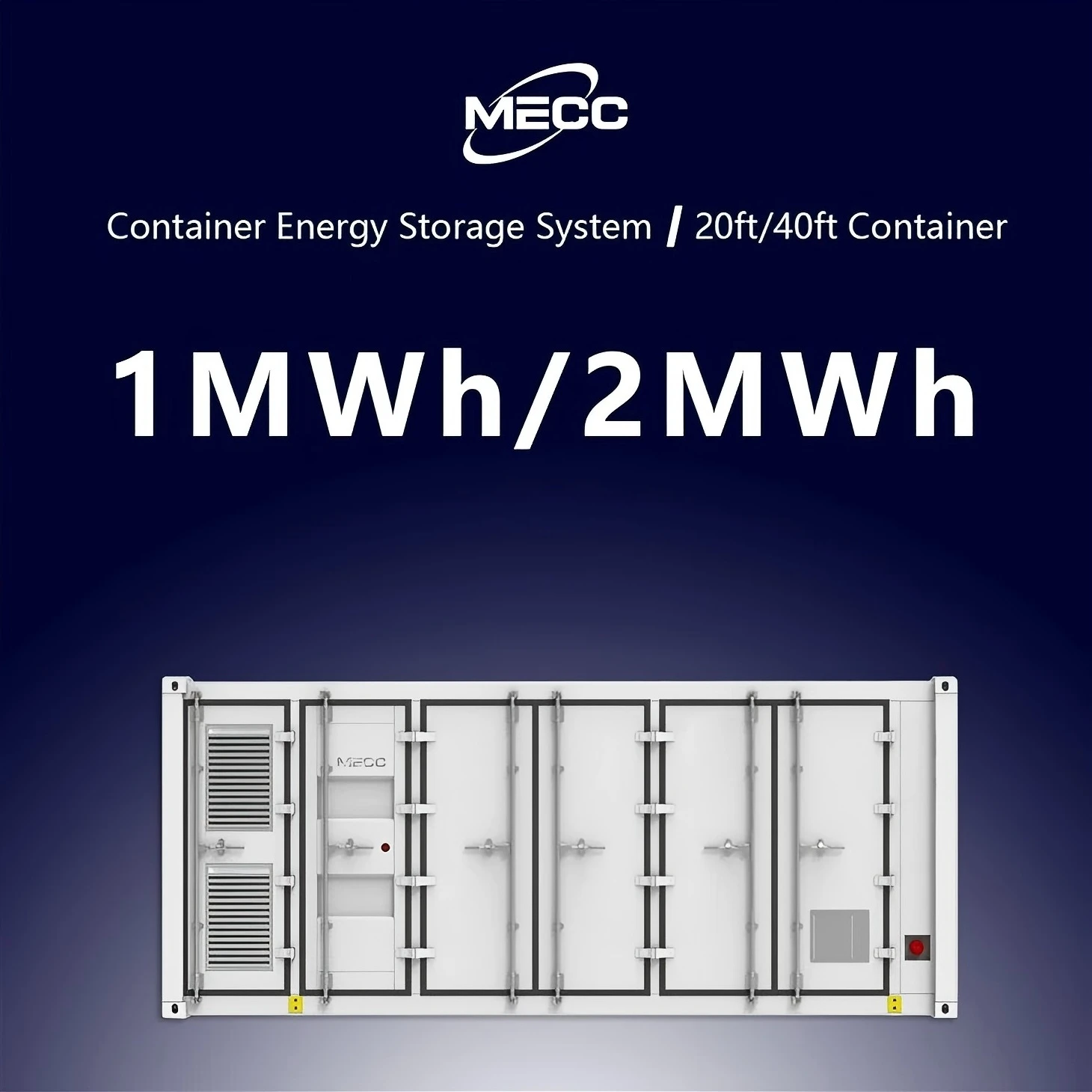
500KW/1MW 1MWh/2MWh Battery Energy Storage System Container
The 500kW/1MW 1MWh/2MWh Battery Energy Storage System Container is a turn‑key utility‑grade energy storage solution housed in standard 20ft or 40ft shipping containers, integrating bidirectional PCS, A‑grade LiFePO4 battery clusters, master BMS, liquid‑cooled thermal management, gas fire suppression, high‑voltage distribution and EMS energy management system with full factory pre‑assembly and pre‑commissioning. Requiring only foundation construction and high‑voltage cable connection for on‑site commissioning, it supports flexible power‑capacity configuration and multi‑container parallel expansion, delivering core capabilities of peak‑shaving and load shifting, renewable energy smoothing, frequency‑voltage grid support, islanded micro‑grid operation and large‑scale emergency backup. Featuring IP54 enclosure protection and comprehensive multi‑layer safety mechanisms, it adapts to diverse harsh outdoor environments, and is widely deployed for ground‑mounted PV power stations, industrial parks, mining operations, island microgrids and grid‑side auxiliary service projects to stabilize grid fluctuations, boost renewable energy utilization and reduce comprehensive energy costs.