


MECC now accepts project-specific customization of all-in-one containerized battery storage, spanning 500kWh to 5MWh within a standard 20-foot footprint.
MECC has presented its customizable 20-foot container energy storage system and confirmed that the company accepts bespoke configurations ranging from 500kWh to 5MWh. Each unit is delivered as an all-in-one integrated cabin, combining batteries, power conversion, control, and thermal management inside a single transportable enclosure. The offering targets commercial, industrial, and small utility projects that need storage without constructing a dedicated battery building.
The display highlights a trend MECC has leaned into: buyers no longer want a fixed cabinet size, they want a storage block that matches the site. By keeping the container shell standard and varying the internal configuration, MECC covers a wide project range from one product family.
A 20ft Footprint for Flexible Capacity
The standard 20-foot container provides a familiar, shippable form factor. Within that envelope, MECC scales stored energy from 500kWh up to 5MWh by adjusting the number of battery racks and the size of the power conversion system. A 500kWh cabin fits a single commercial site; a 5MWh unit serves a small solar or wind installation. Because the outer shell stays the same, transport, siting, and permitting follow well-understood patterns.
For overseas projects, that standardization reduces surprises. A cabin ships like any other container, arrives at a port, and is set on a prepared pad. Civil works are limited to a foundation and a grid connection point.
Core Highlights of the Container ESS
500kWh to 5MWh Configuration Range
The wide capacity band means one product family covers many project sizes. System designers can match stored energy to the site's load profile and local tariff rather than rounding to a fixed SKU. Power rating is tuned alongside capacity, so the cabin delivers the right discharge duration, whether that is one hour or four. This flexibility is what separates a configurable container from a sealed product.
All-in-One Integrated Design
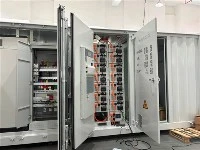
Inside the container, battery racks, power conversion system (PCS), battery management system (BMS), energy management system (EMS), thermal control, and fire safety share one enclosure. Cables, conduits, and supports are installed at the factory. On site, connection is mainly the grid tie and communications, which shortens commissioning from weeks to days. The integrated approach also reduces the number of separate supplier interfaces a project must manage.
Customization to Project Requirements
MECC builds each cabin to order. Voltage level, PCS brand and topology, cooling method, and door and cable-entry layout can follow the customer's specification. This matters for markets with specific grid codes or for EPCs who standardize on particular inverter brands. The company's position is that the container should fit the project, not the other way around. Distributors benefit as well: a configurable flagship SKU can serve several end markets without holding many finished variants in stock.
Technical Advantages That Reduce Operating Risk
For larger units, liquid cooling keeps cells within a narrow temperature band, which slows capacity fade and extends cycle life. Smaller cabins may use forced-air cooling where appropriate. Either way, thermal management is engineered into the enclosure rather than added later.
Safety provisions include fire detection, suppression, and gas venting, with compartment isolation between battery racks. The BMS monitors each rack, while the EMS coordinates charge and discharge against site limits and grid signals. Remote access lets operators view status and receive alarms without being on site, which lowers the cost of maintaining multiple distributed installations.
Because the cabin is factory-tested as a complete system, many integration faults are found before shipment. That pre-commissioning is a meaningful difference from field-assembled racks, where problems surface during startup.
Application Scenarios for Overseas Buyers
The 20ft container ESS fits a broad set of uses:
Commercial and industrial sites using storage for peak shaving and demand-charge reduction.
Solar and wind farms needing co-located storage to shift generation or meet grid rules.
Microgrids and island systems serving remote communities, mines, or ports.
Utility substations and grid-support sites providing frequency or capacity services.
Critical facilities such as factories and logistics hubs requiring extended backup.
For engineering, procurement, and construction (EPC) contractors, a pre-integrated container reduces design work and on-site labor, and concentrates responsibility in one supplier. For distributors, the 500kWh to 5MWh range is a single configurable line that can be quoted against many tenders. For project owners, it provides one warranty and a clear path to add more cabins as demand grows.
Market Value Across the Project Lifecycle
The value of a containerized battery system is measured over its operating life. Factory integration protects quality and shortens schedules, which pulls forward the date revenue or savings begin. A single supplier for hardware, controls, and support simplifies warranty responsibility and reduces coordination overhead, especially in regions where skilled labor is scarce.
Scalability also protects the investment. An owner can start with a 500kWh cabin and add parallel units as load or generation expands, rather than overbuilding at the start. That staged approach matches capital spending to actual need.
Outlook
MECC positions the customizable 20ft container ESS as a core part of its storage portfolio, sitting above its cabinet products and below utility-scale builds. The company continues to expand manufacturing capacity and regional service coverage to meet growing demand in Europe, the Middle East, Southeast Asia, and Latin America. As more commercial and small utility projects seek turnkey storage, a standard container shell with configurable internals is becoming a practical default for deployers who value speed and predictability over bespoke engineering.
The customizable 20ft container ESS is available now for project evaluation and volume orders. Interested buyers, EPCs, and distributors can contact MECC for configuration options, datasheets, and regional delivery terms.
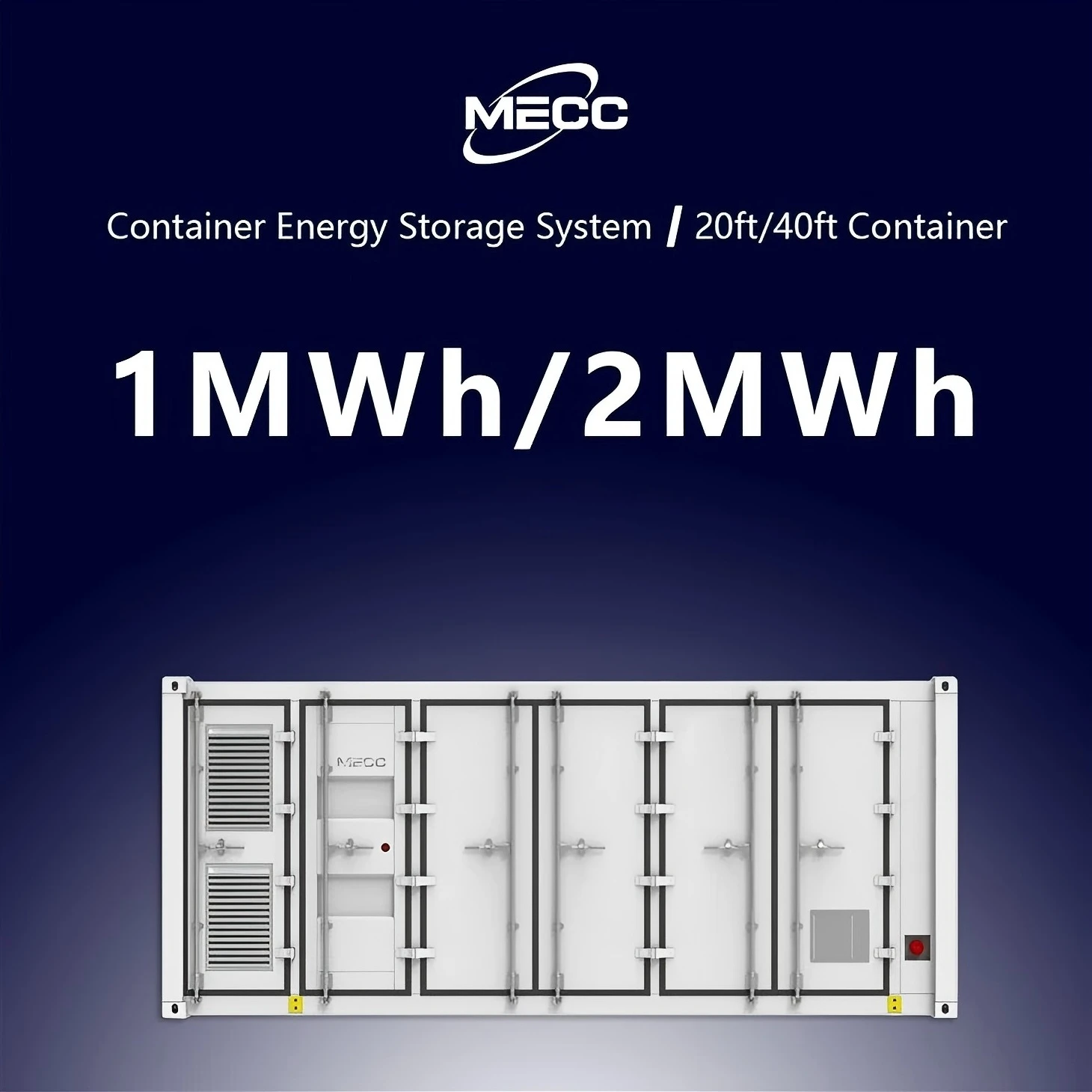
500KW/1MW 1MWh/2MWh Battery Energy Storage System Container
The 500kW/1MW 1MWh/2MWh Battery Energy Storage System Container is a turn‑key utility‑grade energy storage solution housed in standard 20ft or 40ft shipping containers, integrating bidirectional PCS, A‑grade LiFePO4 battery clusters, master BMS, liquid‑cooled thermal management, gas fire suppression, high‑voltage distribution and EMS energy management system with full factory pre‑assembly and pre‑commissioning. Requiring only foundation construction and high‑voltage cable connection for on‑site commissioning, it supports flexible power‑capacity configuration and multi‑container parallel expansion, delivering core capabilities of peak‑shaving and load shifting, renewable energy smoothing, frequency‑voltage grid support, islanded micro‑grid operation and large‑scale emergency backup. Featuring IP54 enclosure protection and comprehensive multi‑layer safety mechanisms, it adapts to diverse harsh outdoor environments, and is widely deployed for ground‑mounted PV power stations, industrial parks, mining operations, island microgrids and grid‑side auxiliary service projects to stabilize grid fluctuations, boost renewable energy utilization and reduce comprehensive energy costs.