



For many commercial and industrial sites, the demand charge is the silent line item that dwarfs the actual energy used. A C&I battery energy storage system (BESS) attacks it directly through peak shaving - and the savings are surprisingly easy to estimate before you buy. This guide walks through a practical peak shaving savings calculator approach so you can model your own demand-charge reduction and decide what size system pays off.
What a Demand Charge Actually Is
Most C&I tariffs bill two ways. The first is energy - cents per kWh consumed. The second is the demand charge: a fee based on your single highest 15-minute peak demand (in kW) during the billing period, multiplied by a $/kW rate that can be surprisingly high. One brief spike from a compressor startup, an HVAC ramp, or a batch process can set that peak for the whole month. Energy storage for demand charge management exists to flatten exactly that spike.
How Peak Shaving Reduces It
A behind-the-meter / grid-tied battery discharges during your highest-load windows, supplying part of the load locally so the grid only sees a smaller peak. The smaller the peak, the smaller the demand charge. Because the same hardware can also run time-of-use arbitrage and demand response, peak shaving is usually the first and largest value stream in a commercial battery storage solution.
The Calculator Inputs
To estimate savings, you need four numbers from your interval billing data (a free site assessment pulls these):
Your monthly peak demand in kW, and how long that peak lasts.
Your utility's demand-charge rate in $/kW.
The number of billing months the peak recurs.
Your C-rate and duration - how much power the battery can deliver and for how long.
Estimating the Reduction
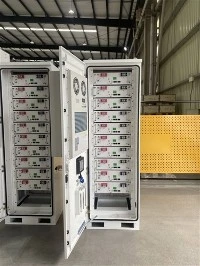
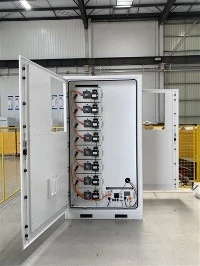
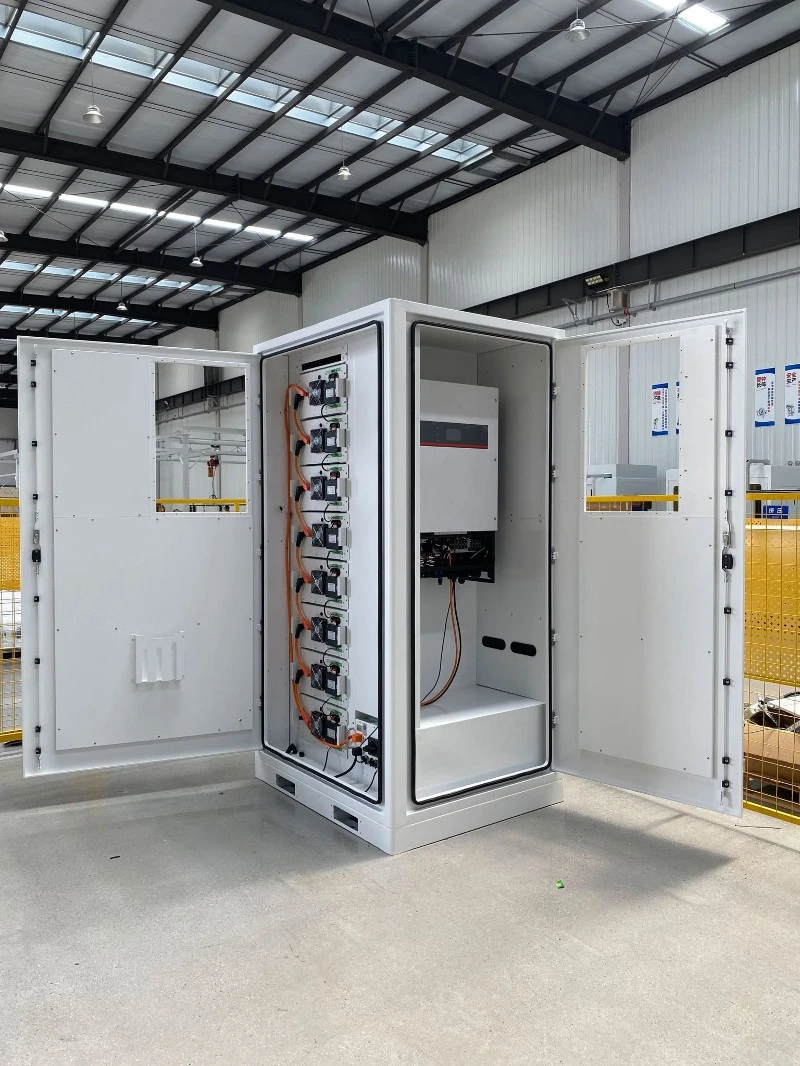
Here is the simple version. If your site peaks at roughly 500 kW and a 215 kWh commercial energy storage unit (or the right count of modular C&I BESS blocks) can shave about 150 kW off that peak, your new peak becomes about 350 kW. Multiply the 150 kW reduction by your demand-charge rate - say around $15 per kW - and you save roughly $2,250 per month on that one charge alone, recurring across the billing months. Run the same logic on a containerized C&I BESS 20ft for a larger factory and the monthly figure scales with it. This is the core output of any C&I energy storage sizing calculator.
Sizing the Battery for Peak Shaving
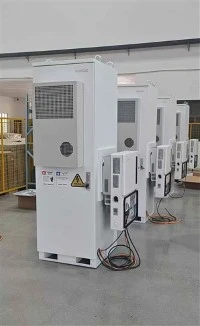
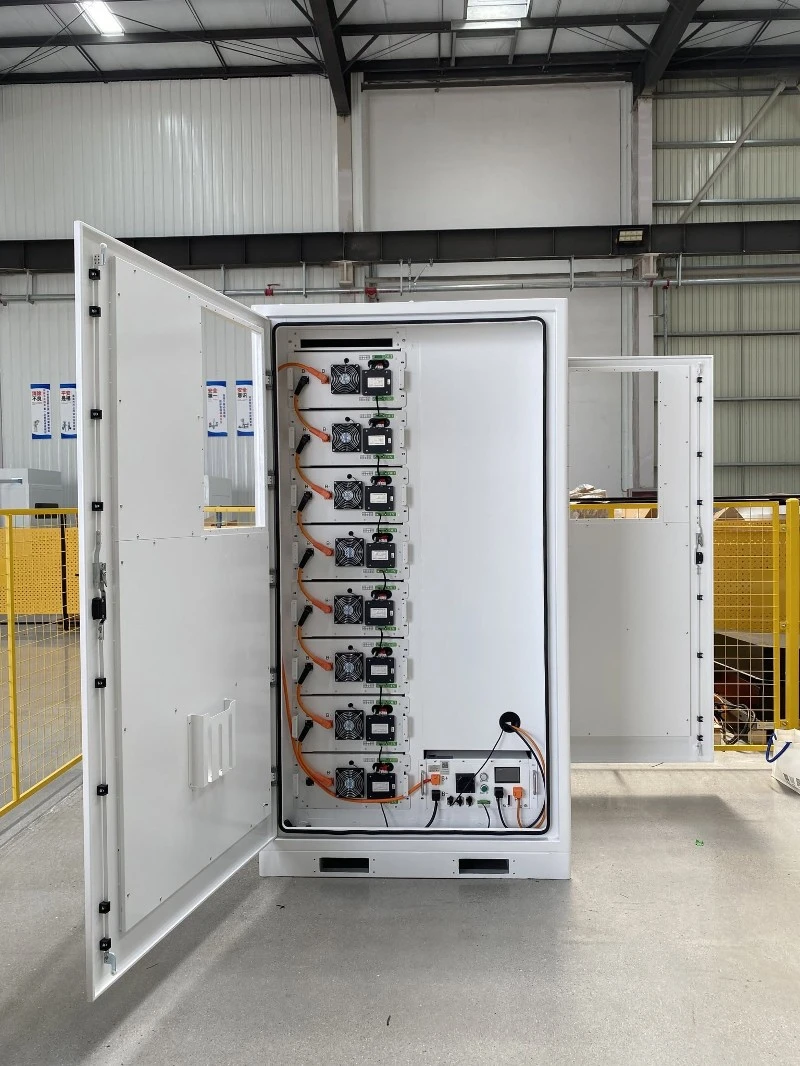
Sizing is the practical heart of how to size a commercial battery system. A short, sharp spike needs a high C-rate for a brief duration; a sustained plateau needs more energy (duration). Stacking from standard all-in-one cabinets or 215 kWh commercial energy storage blocks lets you match capacity to the exact shape of your peak rather than oversizing. The AI-based energy management system (EMS), working with the power conversion system (PCS) and battery management system (BMS), then dispatches automatically each cycle.
Stacking More Value on Top
Peak shaving rarely travels alone. Layer time-of-use arbitrage to capture energy arbitrage revenue from price spreads, add demand response payments when the utility calls, and pair with commercial solar plus storage to shift free midday PV into expensive evenings. A factory energy storage system or rooftop energy storage system that stacks two or three of these turns a single demand-charge win into a strong battery storage ROI for businesses case. In a microgrid configuration, the same battery also covers outage resilience.
Cost and Payback
The commercial energy storage cost per kWh sets your denominator; the stacked savings set your numerator. Well-designed peak-shaving systems often land at a compelling C&I energy storage payback period, especially where demand-charge rates are high. Most modern units use lithium iron phosphate (LFP) cells at 1500V DC, with liquid-cooled vs air-cooled options depending on climate and duty cycle.
Safety and Compliance
Any system inside or beside an occupied building must clear UL 9540 / UL 9540A, NFPA 855, and IEC 62619 with regional CE / UKCA marks, and must include fire suppression and thermal runaway prevention. These protect the asset - and therefore the savings model - over its life.
From Estimate to Quote
Compare best commercial energy storage systems 2026, weigh turnkey C&I energy storage against wholesale supply, and evaluate OEM/ODM energy storage manufacturer partners for custom builds. Ask top C&I BESS manufacturers for a transparent BESS price quote request built on your interval data.

125KW 241kWh Battery Energy Storage System Cabinet
The BESS 125KW 241kWh Lithium Battery Energy Storage Cabinet is a high-power, large-capacity integrated energy storage solution engineered for medium-to-large commercial, industrial, and utility-scale applications. It integrates a 125kW high-performance bidirectional inverter, a 241kWh lithium iron phosphate (LiFePO4) battery bank, and a full-featured intelligent energy management system (EMS) into a modular cabinet design. This system enables efficient renewable energy storage, peak shaving, load shifting, grid frequency regulation, and emergency backup power supply. Ideal for large factories, shopping malls, industrial parks, utility-scale solar/wind farms, and microgrids, it enhances energy independence, reduces high grid demand charges, and supports the stable integration of high-penetration renewable energy into the grid.