


A battery energy storage system (BESS) can be perfectly certified and still fail inspection - because certification answers "is this product safe?" while NFPA 855 answers a different question: "may it be installed here, this way?" NFPA 855, the Standard for the Installation of Stationary Energy Storage Systems, is the rulebook that governs placement, spacing, fire protection, and emergency access for commercial energy storage. For installers, it's not optional. For buyers, it determines whether a project gets permitted at all.
What NFPA 855 is
NFPA 855 is the installation standard for stationary energy storage, and it has been adopted into model fire codes used across many jurisdictions. It sets requirements for where systems may be located, how far they must sit from buildings and property lines, what fire protection they need, and how emergency responders access them. Think of it as the bridge between a certified product and a legal installation.
How it fits with UL and NEC
Three frameworks interlock:
UL 9540 certifies the integrated system as a safe product.
UL 9540A provides the large-scale fire test data on thermal runaway and propagation.
NFPA 855 uses that data to prescribe real-world installation rules.
The NEC governs wiring, grounding, and electrical protection.
Installers must satisfy all of them. A commercial battery storage unit without UL certification will struggle to meet NFPA 855, and no amount of careful placement fixes that.
Location and separation requirements
Separation is the heart of the standard. NFPA 855 requires separation distances between storage and buildings, property lines, exits, and other exposures, with stricter rules for indoor installations than outdoor ones. Rooftop and indoor installations face additional constraints, sometimes requiring a dedicated room with rated construction. These setbacks derive from UL 9540A test results - which is why chemistry and enclosure design matter so much to compliance.
Maximum energy, unit limits, and spacing
The standard also limits how much energy may sit in a single unit and how many units may be grouped in one area, along with the spacing between them. These limits cap the aggregate energy per location. Installers planning larger sites often distribute capacity across multiple compliant locations rather than concentrating it - a design decision made far easier when using modular energy storage and 215 kWh battery storage building blocks.
Detection, suppression, and ventilation
Fire protection isn't optional. NFPA 855 calls for fire detection, often suppression, and - especially indoors - gas detection and explosion prevention or ventilation. Requirements scale with installation type: an outdoor liquid-cooled battery storage cabinet may satisfy different criteria than an indoor room. Thermal runaway containment is the underlying goal, and the equipment must be matched to the space.
Signage, access, and emergency response
The standard requires clear signage, emergency shutdown information, and access for the fire service - including an emergency response plan in many cases. Local fire officials (the AHJ) will inspect against these provisions. Installers who plan access and labeling from the start avoid last-minute rework.
Electrical and interconnection requirements
Beyond fire safety, NFPA 855 interacts with electrical protection: disconnects, labeling, and anti-islanding per interconnection rules such as IEEE 1547 so the system never energizes a dead grid. Every design - whether supporting peak shaving, TOU arbitrage, demand response, or a microgrid - must satisfy these electrical requirements as well.
Design choices that ease compliance
Some decisions simplify approval:
LFP (lithium iron phosphate) chemistry is more thermally stable than NMC, reducing propagation risk.
Liquid-cooled enclosures manage heat better than air-cooled alternatives.
Choosing a UL 9540-listed system with published UL 9540A results gives the AHJ the documentation they need. For international projects, verify IEC 62619 as well.
What installers must document
Approval hinges on paperwork as much as hardware. Expect to provide stamped plans, the UL 9540A test report, electrical calculations, and a permitting package, plus inspection cooperation with the fire marshal. Missing documentation is the most common cause of delay.
Common compliance pitfalls
Setbacks too small for the tested chemistry and enclosure.
Missing detection or suppression where required.
Incorrect or absent signage for emergency responders.
No UL 9540A report to justify placement.
Undersized electrical protection or missing disconnects.
Each of these becomes a failed inspection - and a stalled project.
Impact on cost and economics
Compliance affects cost, and that's expected. When modeling commercial energy storage cost per kWh, LCOS (levelized cost of storage), battery storage ROI, and commercial battery storage payback, treat NFPA 855 compliance as a baseline requirement, not an optional upgrade. Savings from peak shaving or demand response only count if the system is legally operating.

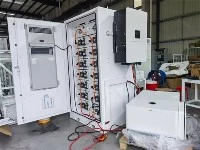
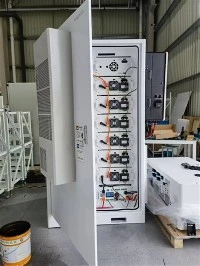
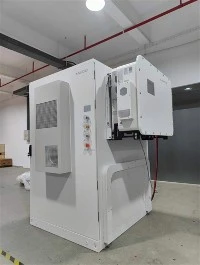
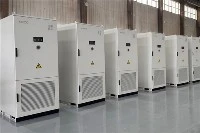
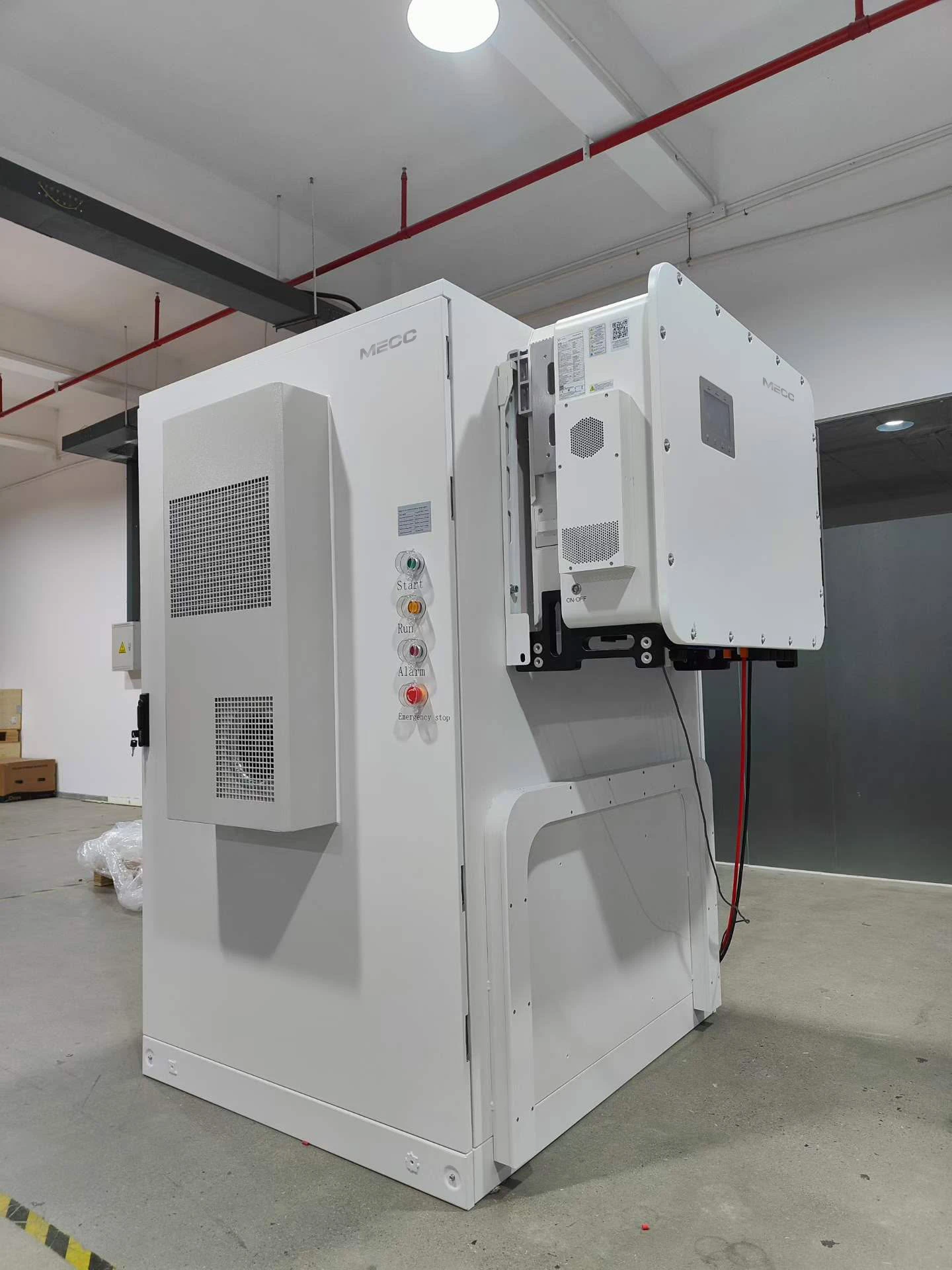
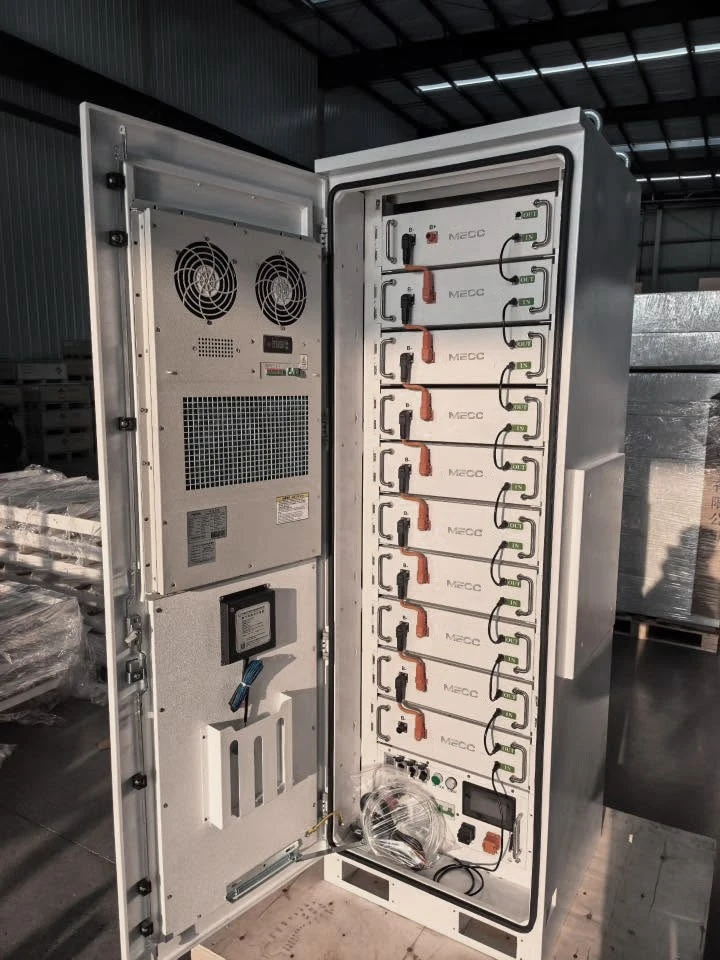
125KW 241kWh Battery Energy Storage System Cabinet
The BESS 125KW 241kWh Lithium Battery Energy Storage Cabinet is a high-power, large-capacity integrated energy storage solution engineered for medium-to-large commercial, industrial, and utility-scale applications. It integrates a 125kW high-performance bidirectional inverter, a 241kWh lithium iron phosphate (LiFePO4) battery bank, and a full-featured intelligent energy management system (EMS) into a modular cabinet design. This system enables efficient renewable energy storage, peak shaving, load shifting, grid frequency regulation, and emergency backup power supply. Ideal for large factories, shopping malls, industrial parks, utility-scale solar/wind farms, and microgrids, it enhances energy independence, reduces high grid demand charges, and supports the stable integration of high-penetration renewable energy into the grid.