


If you sell or buy commercial battery storage across borders, one standard travels with the product: IEC 62619. It's the international safety standard for industrial lithium cells and batteries - the baseline that buyers in Europe, Asia, the Middle East, and Australia expect before a battery energy storage system (BESS) is even considered. For a commercial energy storage manufacturer targeting global markets, IEC 62619 isn't a nice-to-have certification. It's the passport.

What IEC 62619 is
IEC 62619 specifies safety requirements for secondary lithium cells and batteries used in industrial applications - which includes energy storage. It covers both the cells and the assembled battery system, evaluating how they behave under abuse conditions and whether protection systems prevent dangerous outcomes. Where UL 9540 certifies a complete system for North America, IEC 62619 provides the internationally recognized safety foundation for the industrial battery itself.
Where it fits in the standards landscape
It helps to map the frameworks:
IEC 62619 - international safety for industrial lithium cells and batteries.
IEC 62620 - performance testing for the same battery class.
UL 9540 / UL 9540A - system certification and fire testing for North America.
NFPA 855 - installation rules in the U.S.
UN 38.3 - transport safety for shipping lithium batteries.
CE / UKCA - market-access marking in the EU and UK.
A globally sold C&I battery storage product typically pursues several at once.
What it actually tests
IEC 62619 evaluates the battery at the cell level - overcharge, over-discharge, external short circuit, impact, drop, and thermal abuse - and at the system level, including overcharge protection and the behavior of the BMS (battery management system) under fault conditions. It also addresses thermal runaway considerations for the assembled system. Passing means the battery is designed to fail safely, not catastrophically.
Why it matters for global export
Without IEC 62619, a product often can't clear tenders or local approval in many markets. It's commonly required by EPCs, utilities, and insurers as a precondition for procurement. Practically, it unlocks:
Market access in the EU, Middle East, Southeast Asia, and Australia.
Bankability and insurance for the end buyer.
Competitive credibility in a crowded supplier field.
For a manufacturer, it's the difference between selling in one region and selling worldwide.
The role of the BMS
IEC 62619 places real weight on the BMS. The standard expects protection functions - particularly overcharge control - to work reliably, because the BMS is the last line of defense before a cell-level fault escalates. This is why choosing a supplier with rigorously tested battery management, coordinated with the PCS (power conversion system) and EMS (energy management system), matters as much as cell quality.
Chemistry and design implications
Design choices influence both compliance and performance:
LFP (lithium iron phosphate) chemistry is generally more thermally stable than NMC, easing safety validation.
Liquid-cooled battery storage manages heat more tightly than air-cooled designs.
Robust enclosure design and quality cells with traceable origin strengthen the test case.
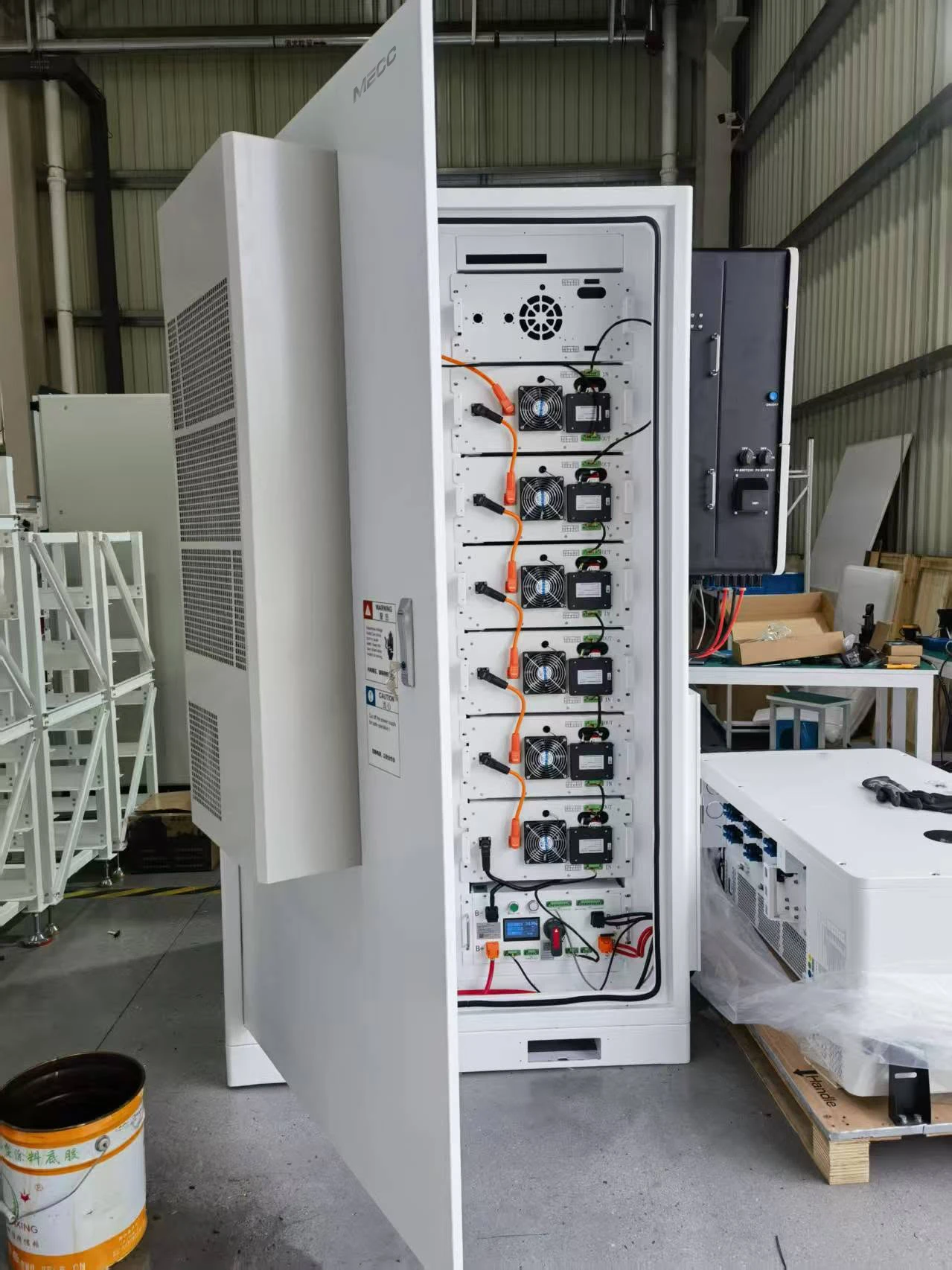
Building systems from standardized 215 kWh battery storage modules or all-in-one energy storage cabinets simplifies certification and scaling.
The combined compliance stack
A real global project rarely rests on one standard. Expect to assemble:
IEC 62619 / IEC 62620 for the battery.
UL 9540 / UL 9540A for North American system certification.
NFPA 855 and the NEC for U.S. installation.
UN 38.3 for shipping.
CE / UKCA marking for European access.
A supplier who holds certificates across multiple frameworks saves integrators enormous time - and signals genuine engineering depth.
What buyers and EPCs should ask
Before shortlisting, request:
The IEC 62619 certificate and test report (not just a claim).
IEC 62620 performance data if you're comparing products.
Evidence of UN 38.3 transport testing.
Cell origin and traceability.
Additional certifications relevant to your market (UL 9540, CE).
Vague answers here are a red flag. Certification is documented, not asserted.
Impact on cost and economics
Certified product may cost more up front, but it's the only kind that can legally operate in most markets. When modeling commercial energy storage cost per kWh, LCOS (levelized cost of storage), battery storage ROI, and commercial battery storage payback, treat IEC 62619 as a baseline - because a non-compliant system can't deliver peak shaving, TOU arbitrage, or demand response value if it can't be sold or permitted.
Choosing the right partner
Ask a prospective commercial energy storage manufacturer or commercial energy storage supplier which markets their certifications cover, whether they provide documentation for tenders, and how they support commercial energy storage installation and battery storage maintenance internationally. Global compliance requires global support.

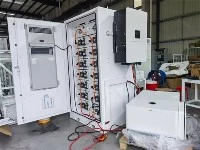
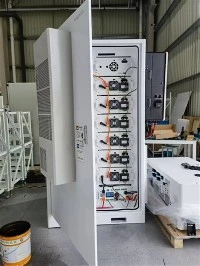
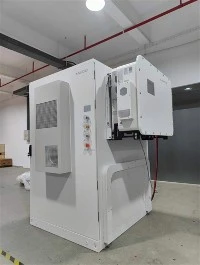
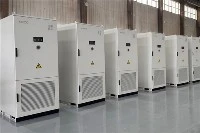
125KW 241kWh Battery Energy Storage System Cabinet
The BESS 125KW 241kWh Lithium Battery Energy Storage Cabinet is a high-power, large-capacity integrated energy storage solution engineered for medium-to-large commercial, industrial, and utility-scale applications. It integrates a 125kW high-performance bidirectional inverter, a 241kWh lithium iron phosphate (LiFePO4) battery bank, and a full-featured intelligent energy management system (EMS) into a modular cabinet design. This system enables efficient renewable energy storage, peak shaving, load shifting, grid frequency regulation, and emergency backup power supply. Ideal for large factories, shopping malls, industrial parks, utility-scale solar/wind farms, and microgrids, it enhances energy independence, reduces high grid demand charges, and supports the stable integration of high-penetration renewable energy into the grid.