


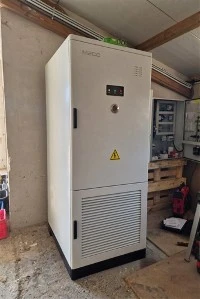
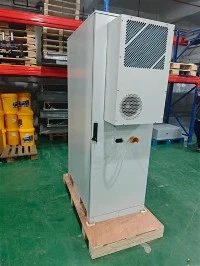
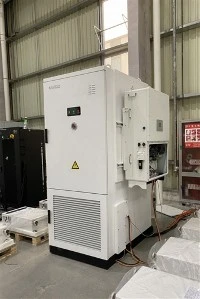
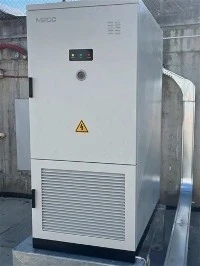
MECC Solar has commissioned a multi-cabinet on-site energy storage installation at an industrial energy production facility in Romania, where multiple MECC 125-261 energy storage cabinets operate in parallel to deliver reliable power for continuous manufacturing activities. The project centres on a straightforward, practical objective: maximising on-site energy self-consumption. By capturing and storing locally generated electricity for later use, the storage system supplies power directly to production lines, cutting the facility's reliance on grid power during periods of high operational demand.
This Romanian deployment illustrates a core value proposition for modern commercial and industrial battery storage.
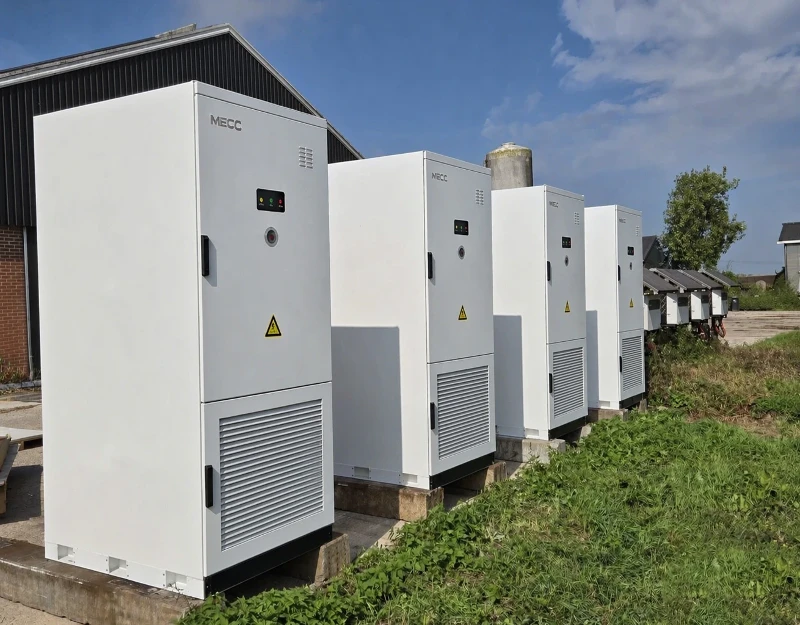
For factory operators, the strongest return from energy storage comes from supporting stable, day-to-day production rather than speculative grid trading alone. The system is engineered to align battery charging and discharging cycles closely with the site's actual manufacturing load profile, matching stored energy availability to production schedules. The cabinet layout is arranged in two parallel rows, with each MECC 125-261 unit offering 261.25 kWh of usable energy capacity. The design combines proven LFP battery chemistry, integrated liquid cooling and an IP54-rated enclosure to suit permanent outdoor or semi-outdoor industrial deployment.
Core Project Highlights
The Romanian industrial site was selected for this configuration because the owner prioritised predictable on-site power availability for continuous production. Multiple MECC 125-261 cabinets are interconnected and synchronised as one coordinated energy storage asset. This parallel architecture allows the whole bank to charge together when surplus local power is available, and discharge collectively when the factory needs energy to run its production processes.
The primary operational mode is self-consumption optimisation. Electricity generated on-site is captured and held in the battery bank instead of being exported to the grid. When production starts and demand rises, the stored energy feeds the facility's loads immediately. This reduces the volume of electricity purchased from the utility grid during operating hours, stabilising energy expenditure and lowering exposure to fluctuating wholesale power prices common across many European industrial markets.
Every cabinet in the installation carries an IP54 protection rating. This rating protects internal battery modules, power conversion hardware and communication circuits from airborne dust and splashing water, removing the requirement for purpose-built climate-controlled shelter in many industrial yard layouts. Liquid cooling is integrated as the primary thermal management method, supporting consistent cell temperatures even during repeated, heavy charge and discharge cycles typical of around-the-clock manufacturing operations.
Technical Advantages of the MECC 125-261 Storage Cabinet
LFP Cell Chemistry and Liquid Thermal Control
The MECC 125-261 uses lithium iron phosphate battery cells selected for stationary industrial storage. LFP technology delivers stable cycling performance, low thermal runaway risk and a long service life when paired with proper temperature management. The integrated liquid cooling system maintains even temperatures across the cell pack, limiting hotspots and slowing differential ageing between modules. Uniform thermal conditions help preserve consistent capacity across the parallel cabinet bank over years of operation.
IP54 Enclosure for Industrial Site Conditions
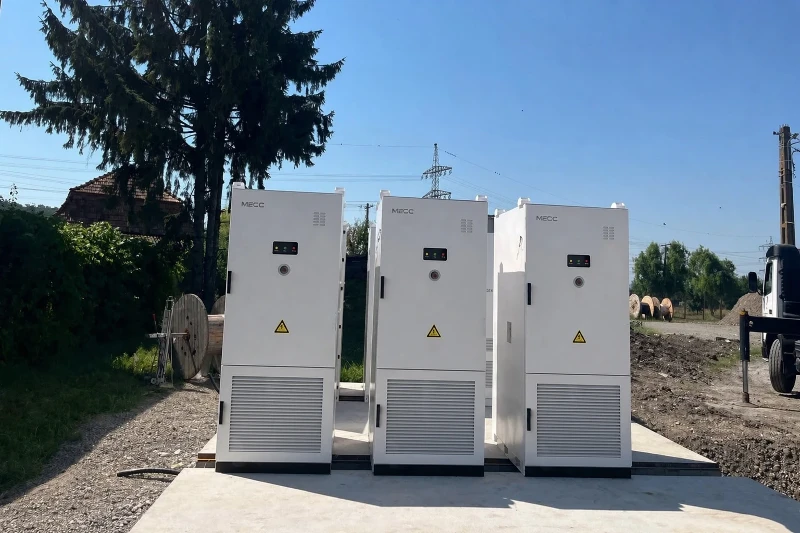
Many factories, processing plants and energy production facilities have limited indoor floor space for battery hardware. The IP54 cabinet construction allows installation in covered yard zones and outdoor compound areas, simplifying site layout and lowering civil construction costs for project owners. The enclosure protects sensitive electronics from routine environmental exposure without sacrificing access for inspection and maintenance.
Modular Parallel Operation
Parallel connection is a key feature built into the platform. Cabinets can be added incrementally, so system capacity grows alongside the facility's energy requirements. This modular design gives EPC contractors and site owners flexibility. A business can begin with a smaller bank of cabinets to test self-consumption performance, then expand the array as production volumes increase or more on-site generation capacity comes online. Synchronised parallel operation ensures all connected units follow the same charge and discharge schedule.
Integrated Monitoring and Load Alignment
Each cabinet connects to a central monitoring layer that tracks state of charge, cell temperature and power flow. Operators can visualise how much stored energy is available for production and adjust dispatch logic to fit shift patterns. This visibility makes it easier to tune the system so stored energy is ready exactly when production lines start up, which is the critical requirement for this Romanian site.
Target Application Scenarios
The MECC 125-261 parallel configuration suits industrial facilities where continuous production is the priority.
Self-consumption optimisation remains the leading use case, especially for sites equipped with on-site photovoltaic generation. Surplus solar power captured during daylight hours is stored and deployed during evening production shifts, reducing grid import.
It also supports peak shaving for factories subject to high demand charges. By discharging stored power during load spikes, the system trims the facility's peak power draw and reduces monthly utility fees linked to maximum demand.
The same hardware can serve as partial backup support for critical production loads where grid reliability is inconsistent. While this Romanian project focuses primarily on self-consumption, the cabinet platform supports backup mode configuration for sites that need ride-through capacity during grid interruptions.
Market Value for EPCs, Distributors and Industrial End Users
For industrial operators, this type of on-site storage turns intermittent local generation into usable power for production. The value is tangible: less purchased grid power, more stable energy budgeting and greater control over on-site energy flows. The parallel cabinet approach avoids the large, inflexible capacity block associated with some containerised storage solutions.
For EPC contractors and distribution partners serving Romania and wider Eastern European markets, the MECC 125-261 offers a repeatable, field-proven building block for C&I storage tenders. The standardised cabinet design simplifies engineering, commissioning and spare parts stocking. Pre-tested parallel functionality reduces site commissioning risk and shortens project timelines.
As industrial energy policy in Romania continues to encourage self-generation and storage adoption, factory owners are increasingly searching for hardware that can be deployed quickly and integrated directly with existing production assets. This completed case demonstrates how a bank of parallel outdoor storage cabinets can deliver that practical outcome.
Looking Forward
MECC Solar continues to support industrial self-consumption projects across Europe, with the Romanian energy facility deployment standing as a clear example of on-site storage working hand-in-hand with active production. The project shows that energy storage does not need complex trading logic to deliver meaningful value; matching stored power to the real-time needs of a factory floor is often the most compelling use case for industrial buyers.
For commercial and industrial operators, EPC contractors and system integrators planning energy storage installations tailored to production load profiles, the MECC technical team is available to review site load data, outline parallel cabinet configurations and discuss project specifications.
Liquid Cooling 125KW 261kWh Lithium Battery Energy Storage Cabinet
The IP55 Protected All-in-One Solar Energy Storage Cabinet is a high-performance, integrated energy solution engineered for outdoor commercial, industrial, and utility-scale solar applications. It integrates a 125kW Power Conversion System (PCS), a 261kWh lithium iron phosphate (LiFePO4) battery bank, an advanced liquid cooling system, and a intelligent Battery Management System (BMS) into a single cabinet with IP55 weatherproof protection. Designed to withstand harsh outdoor environments while delivering efficient energy conversion and storage, it supports solar energy absorption, peak shaving, load shifting, grid auxiliary services, and emergency backup power. Ideal for utility-scale solar farms, industrial parks, large commercial complexes, and remote microgrids, it provides a reliable, space-saving, and low-maintenance solution for large-scale renewable energy integration.
