


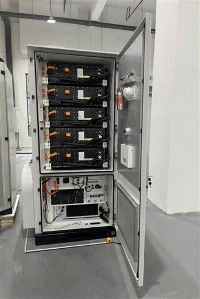
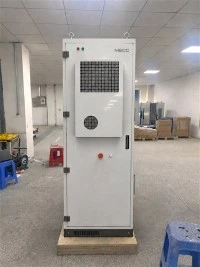
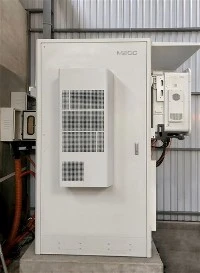
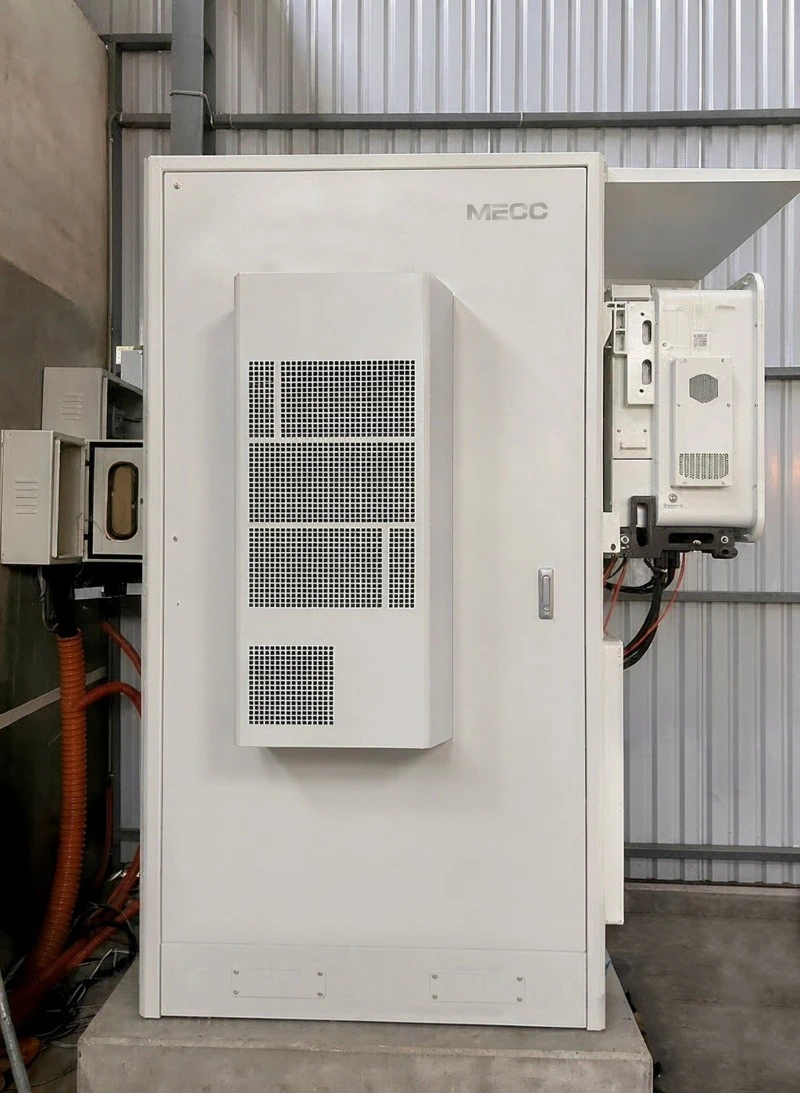
MECC Solar, a global supplier of commercial and industrial energy storage equipment, has released a decoupled 125kW hybrid solar inverter plus 241kWh high-voltage battery energy storage system, built to serve EPC contractors, solar distributors and facility owners seeking adaptable PV-plus-storage architecture. Unlike integrated all-in-one units where inverters are housed inside the battery cabinet, this new solution separates the hybrid inverter from the battery storage cabinet, giving project teams greater freedom to match hardware to local site conditions, grid codes and supply preferences.
Core Design Highlights of the New C&I Storage Solution
The package pairs the proven Solis 125kW three-phase hybrid inverter with a 241kWh high-voltage lithium battery cabinet, forming a scalable hybrid solar storage platform for commercial and industrial energy management. The Solis hybrid inverter handles power conversion between solar arrays, battery bank, facility loads and utility grid, supporting simultaneous PV generation, battery charging and on-site power consumption. It is selected for its stable performance in hybrid mode, robust MPPT tracking and broad certification coverage for cross-border commercial solar deployments.
The 241kWh high-voltage battery cabinet delivers usable energy capacity for peak shaving, energy arbitrage and uninterrupted backup power. The high-voltage battery architecture reduces conversion losses compared with low-voltage storage alternatives, lowers cabling current requirements and simplifies parallel expansion for larger projects. Built with industrial-grade lithium cells and a dedicated battery management system, the cabinet monitors cell voltage, temperature and state of charge continuously to maintain consistent performance over the system lifecycle.
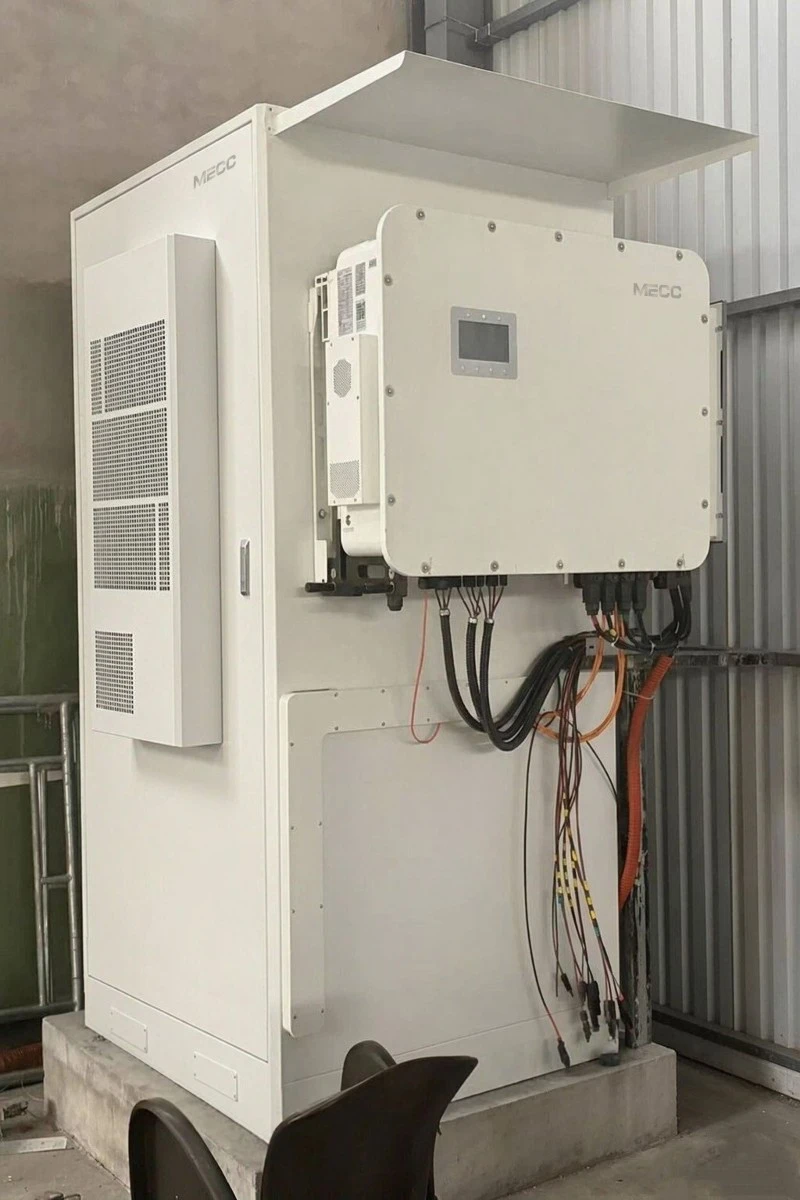
The most distinct feature of this release is its external inverter layout. The hybrid inverter is mounted independently outside the battery cabinet, rather than being integrated into the same enclosure. This decoupled design removes hardware lock-in for installers. If a project specification, local certification requirement or client preference changes, the Solis inverter can be replaced with other mainstream hybrid inverter brands compatible with the high-voltage battery system. This flexibility addresses a common pain point for B2B buyers: rigid all-in-one systems that force customers to accept a fixed inverter brand even when their supply chain or regional compliance rules favour another vendor.
Technical Advantages of the Decoupled Hybrid Storage Architecture
Separating the inverter and battery cabinet brings practical technical benefits for field deployment and long-term maintenance. Installers can position the inverter in a location with better ventilation, easier access for commissioning and service, while placing the heavier battery cabinet on reinforced concrete pads according to civil engineering plans. Thermal management is simplified because heat generated by the inverter does not transfer into the battery compartment, reducing sustained thermal load on the battery pack and supporting more stable operating temperatures.
The high-voltage battery subsystem includes a built-in BMS with multi-layer protection against overcharge, over-discharge, short circuit and abnormal temperature. The system supports both grid-tied hybrid operation and off-grid backup mode. When grid power fails, the setup can switch to backup power supply for critical loads, subject to proper ATS configuration. The EMS platform communicates with the inverter and BMS to automate charge and discharge schedules, aligning operation with real-time solar output and utility tariff structures.
For EPC teams, compatibility is a major technical advantage. The 241kWh battery cabinet is engineered to communicate with multiple mainstream hybrid inverter models, not limited to the Solis 125kW unit shown in the standard configuration. This interoperability helps distributors standardise on one battery cabinet SKU while bidding projects that call for different inverter brands. It also reduces inventory pressure, as the same battery storage unit can feed into multiple project specifications across different countries.
Target Application Scenarios for Global C&I Markets
This hybrid solar and battery storage system is developed for commercial and industrial sites where energy cost control and power reliability are priorities. Manufacturing plants, food processing facilities, logistics warehouses, retail shopping centres and rural commercial microgrids are primary use cases. In regions with high demand charges or sharp peak-valley electricity price differences, operators use the system for peak shaving and energy arbitrage: charging batteries from surplus solar power or low-cost off-peak grid supply, then discharging during high-price peak periods to cut utility bills.
Backup power is another key application. Sites with sensitive production equipment, cold storage and data infrastructure can rely on the storage system to maintain essential loads during grid outages. It also works well for locations with weak grid stability, common in remote industrial zones and island markets where grid voltage and frequency fluctuate frequently. The hybrid topology maximises on-site solar self-consumption, helping businesses reduce reliance on purchased grid power and progress toward carbon reduction targets.
The decoupled layout suits both new-build PV-plus-storage projects and retrofits. EPCs can add this battery cabinet to an existing solar array when paired with a compatible hybrid inverter, without requiring full redesign of the original PV layout. This makes the solution attractive for follow-up upgrade projects, a fast-growing segment for solar distributors across Southeast Asia, Africa, Latin America and Eastern Europe.
Market Value for EPCs, Distributors and Facility Operators
For B2B buyers, the biggest commercial value lies in reduced project risk and improved commercial flexibility. Many integrated storage solutions tie the customer to one inverter brand, creating delays when local certification, lead time or pricing makes that inverter difficult to source. With this decoupled design, distributors can negotiate separate supply terms for inverters and battery cabinets, diversify suppliers and respond faster to tender requirements. Standardised battery hardware also shortens site engineering work, as the cabinet dimensions, wiring interface and safety routines remain consistent across inverter options.
Facility owners benefit from lower long-term operational risk. If an inverter needs replacement after several years, the battery cabinet can stay in service with a compatible replacement model. This avoids the scenario where a single inverter fault forces replacement of the entire all-in-one storage unit. The modular nature also supports phased investment: a business can start with one 125kW/241kWh unit and add more battery cabinets later as energy demand grows.
MECC Solar supports this product line with full documentation for international certification, technical datasheets and remote commissioning guidance. The company structures sales support around the needs of overseas partners, including performance simulation for peak shaving return analysis and pre-application checks for local grid interconnection rules. This package is positioned as a middle-capacity C&I storage option, filling the gap between small commercial battery systems and large-scale utility energy storage.
Outlook
As commercial solar storage adoption continues to expand globally, project owners and installers increasingly prioritise open, non-locked energy storage architecture. MECC Solar will continue expanding the compatible inverter list for this 241kWh high-voltage battery cabinet and release matching modular accessories for parallel system expansion. The company remains focused on delivering BESS hardware that balances safety, performance and supply-chain flexibility for renewable energy partners worldwide.
Moving forward, MECC Solar will showcase this decoupled hybrid storage configuration at international renewable energy exhibitions and share field performance data from pilot deployments across multiple emerging and mature solar markets. The product launch reinforces the brand's focus on practical, engineer-friendly energy storage solutions built around the real constraints faced by today's solar EPC and distribution network.

125KW 241kWh Battery Energy Storage System Cabinet
The BESS 125KW 241kWh Lithium Battery Energy Storage Cabinet is a high-power, large-capacity integrated energy storage solution engineered for medium-to-large commercial, industrial, and utility-scale applications. It integrates a 125kW high-performance bidirectional inverter, a 241kWh lithium iron phosphate (LiFePO4) battery bank, and a full-featured intelligent energy management system (EMS) into a modular cabinet design. This system enables efficient renewable energy storage, peak shaving, load shifting, grid frequency regulation, and emergency backup power supply. Ideal for large factories, shopping malls, industrial parks, utility-scale solar/wind farms, and microgrids, it enhances energy independence, reduces high grid demand charges, and supports the stable integration of high-penetration renewable energy into the grid.