


Nobody buys a battery because it is quiet - but plenty of projects have been delayed, redesigned, or repositioned because of noise. A commercial storage system contains fans, inverters, transformers, and pumps, and on a summer afternoon when it is working hardest, it announces itself. For sites near offices, homes, schools, or property lines, battery storage noise is a permitting and neighbor-relations issue best handled at design stage - when mitigation costs hundreds, not when a complaint letter arrives and mitigation costs thousands.
This guide explains where the noise comes from, how loud these systems actually are, what regulators typically expect, and the design levers that keep a compliant system compliant in year ten.

Where the Noise Comes From
A BESS is not one sound source; it is several with different characters:
Fans and heat exchangers dominate the sound power of most systems. They are broadband "whoosh" noise, and they are dispatch-dependent - fan speed ramps with load and ambient temperature. The loudest day of the year is likely a hot afternoon with a full-power discharge: peak thermal demand and peak acoustic output coincide, and both are exactly when your neighbors have their windows open.
Inverters and transformers add tonal hum at the fundamental frequency and its harmonics. Tonal noise carries farther and annoys more than its decibel figure suggests - which is why many noise ordinances apply a tonal penalty (effectively a stricter limit) when a tone is measured at the property line.
Pumps in liquid-cooled systems contribute a lower-level hum, usually secondary to fans but relevant in quiet, nighttime environments.
Switching whine from power electronics sits in the mid-high frequencies - noticeable up close, usually irrelevant at the boundary.
The practical consequence of dispatch dependence: a noise study done at commissioning, on a mild morning, will not represent your worst acoustic hour. Specify performance at design ambient and full load.
How Loud Is Loud?
Typical figures for commercially available cabinet and container systems:
Roughly 65–75 dBA at one meter for larger air-handling units at full output.
Roughly 50–60 dBA at ten meters, falling further with distance.
Sound decays about 6 dB per doubling of distance for a point source in free field - distance is the cheapest mitigation that exists, and it is free at the layout stage.
Context matters: 55 dBA is a quiet restaurant; 65 dBA is a loud conversation. A cabinet wall that seems innocuous in a data-center corridor can be a genuine nuisance across a property line in a quiet residential zone - especially at night, when limits drop and background noise falls away, making the same sound more noticeable.
Character also differs by cooling architecture: liquid-cooled systems often trade lower air movement for pump and dry-cooler noise, while ventilated designs carry more fan broadband. Neither is categorically quieter - ask for octave-band sound power data rather than a single headline number.
What Regulators Typically Expect
Noise rules vary by jurisdiction, but the pattern is consistent:
A limit measured at the property line or nearest receptor, usually in dBA, commonly stricter at night (often 5–10 dB lower).
Tonal and impulsive adjustments that tighten the effective limit if the sound has a hum or a beat.
Measurement protocols (calibrated sound-level meters, defined measurement periods and weather) - the details matter, because compliance is judged on their method, not yours.
Some jurisdictions require a pre-installation noise impact assessment for equipment like this; others rely on complaint-driven enforcement. Either way, assume the standard is the complaint: a neighbor with a decibel app and a grievance starts a process you would rather never begin.
Check the local ordinance during the site assessment, not after ordering equipment. The limit at your boundary, minus the distance-based decay, defines the sound power your system is allowed to have - and that number should be a procurement requirement.

The Design Levers, Cheapest First
Mitigation options exist at every project stage, and their cost ordering favors early decisions:
1. Distance and orientation (free, at layout). Put the noisiest faces - air intake and exhaust - away from the nearest receptors. An extra ten meters of spacing is often the entire problem solved.
2. Natural barriers (low cost, at sitework). An existing building, a solid fence, an earth berm, or dense landscaping between source and receptor buys several dB. Barriers work best when they break line-of-sight to the source.
3. Night mode and speed management (specification item). Many modern systems offer a night quiet mode: reduced fan speeds and inverter operation within a thermal and power budget during restricted hours. For a system that mostly charges at night on cheap off-peak tariffs, verify the acoustic consequence of that duty cycle specifically - nighttime charging is exactly when the strictest limits apply.
4. Acoustic treatments (engineering items). Acoustic louvers and splitter attenuators on air paths, lined plenums, and low-noise fan selections can cut several dB at a modest capex and pressure-drop cost - coordinate with the thermal design, because every attenuator restricts airflow and the fan may need to work harder.
5. Full enclosures and barriers around equipment (last resort). Expensive, and they complicate airflow, access, and fire-code clearances - which is why the earlier levers exist.
Also note the enclosure-finish angle: the same upgrade projects that improve aesthetics (targeting storage cabinet finish quality for commercial real estate settings) frequently bundle acoustic treatments, since both respond to the same neighbor-facing concerns.
A Practical Compliance Workflow
For sites with receptors nearby, four steps keep noise manageable:
Extract the local limit - property-line dBA by day and night, plus any tonal rule.
Model or estimate - using the supplier's sound power data, octave bands, and your layout, predict the boundary level at full load and night mode.
Procure to the number - make the predicted compliance a purchase condition; ask for the night-mode specification in writing.
Verify at commissioning - a sound measurement at the boundary under realistic load, documented. That record settles future disputes and supports renewal of any permit condition.
Recheck after a few years: fan wear, filter clogging, and heat-exchanger fouling can raise noise subtly while degrading cooling - the same inspection that watches thermal performance can listen, too.
The Bottom Line
Battery storage noise is predictable, measurable, and - if you engage it at layout stage - cheap to manage. Know your boundary limits, exploit distance and orientation before buying hardware, specify night mode for off-peak charging duty, and verify with a documented boundary measurement at commissioning. Do it in that order, and the loudest thing about your storage project will be the savings.
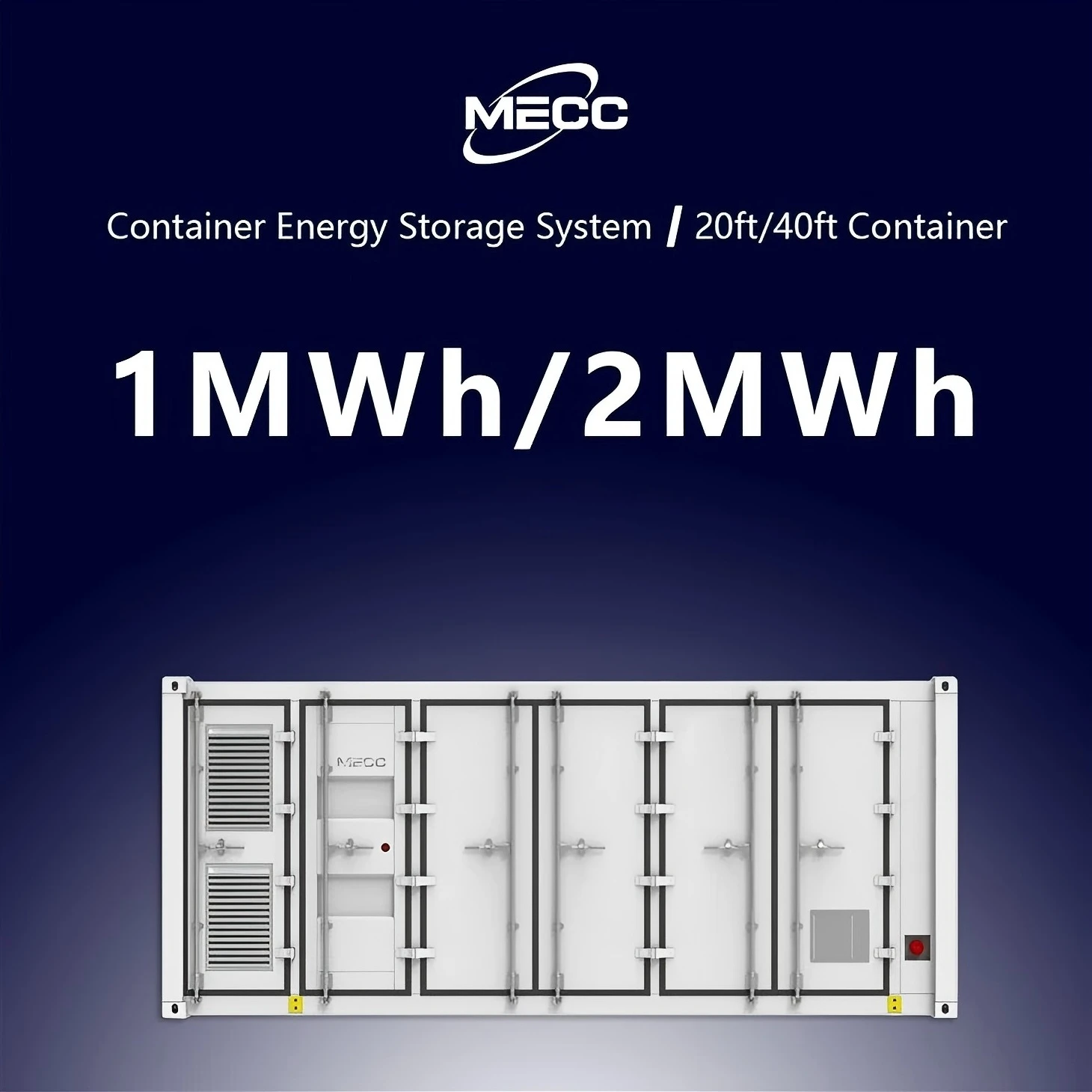
500KW/1MW 1MWh/2MWh Battery Energy Storage System Container
The 500kW/1MW 1MWh/2MWh Battery Energy Storage System Container is a turn‑key utility‑grade energy storage solution housed in standard 20ft or 40ft shipping containers, integrating bidirectional PCS, A‑grade LiFePO4 battery clusters, master BMS, liquid‑cooled thermal management, gas fire suppression, high‑voltage distribution and EMS energy management system with full factory pre‑assembly and pre‑commissioning. Requiring only foundation construction and high‑voltage cable connection for on‑site commissioning, it supports flexible power‑capacity configuration and multi‑container parallel expansion, delivering core capabilities of peak‑shaving and load shifting, renewable energy smoothing, frequency‑voltage grid support, islanded micro‑grid operation and large‑scale emergency backup. Featuring IP54 enclosure protection and comprehensive multi‑layer safety mechanisms, it adapts to diverse harsh outdoor environments, and is widely deployed for ground‑mounted PV power stations, industrial parks, mining operations, island microgrids and grid‑side auxiliary service projects to stabilize grid fluctuations, boost renewable energy utilization and reduce comprehensive energy costs.