


When planning commercial and industrial energy storage projects, many EPC contractors, facility owners, and project developers struggle to choose between an energy storage cabinet and an energy storage container. Both are integrated containerized battery energy storage systems (BESS) equipped with batteries, BMS, PCS, safety protection, and intelligent control modules. However, significant differences in capacity, installation conditions, operational design, and application scenarios determine their suitability for specific projects. Understanding the difference between energy storage cabinet and container is critical for optimizing budget allocation, space utilization, and long-term project returns.
Basic Overview of Energy Storage Cabinets and Containers
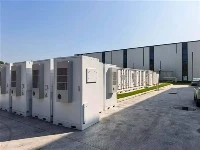
An energy storage cabinet is a compact, all-in-one distributed energy storage solution designed for small and medium C&I scenarios. It features a highly integrated vertical structure, standard IP54 waterproof and dustproof design, and plug-and-play deployment, making it ideal for limited-space environments such as commercial buildings, small factories, and rooftop solar systems.
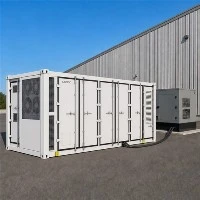
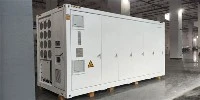
In contrast, an energy storage container is a large-scale BESS built on standard 20ft or 40ft container frames. It is engineered for high-capacity, long-duration operation, targeting medium-to-large industrial parks, solar farms, wind power stations, and grid-level energy storage projects. Containerized energy storage systems support continuous high-load operation and large-scale grid dispatching tasks.

Core Differences Between Cabinet and Container Energy Storage
The most intuitive gap lies in capacity range. Typical energy storage cabinets offer a capacity of 100kWh to 300kWh, meeting small-scale peak shaving, demand charge reduction, and emergency backup power needs. Energy storage containers, by comparison, usually range from 500kWh to 5MWh or higher, supporting large-power energy regulation and long-cycle energy arbitrage.
Application scenarios also vary greatly. Energy storage cabinets are the preferred solution for decentralized C&I projects, including factory power optimization, commercial building energy management, and small rooftop PV self-consumption systems. Energy storage containers focus on centralized energy storage scenarios, such as utility-scale grid peak regulation, large renewable energy power stations, and industrial park microgrids.
In terms of installation and cost, storage cabinets require no professional foundation or complex construction, featuring low investment thresholds and fast deployment. They suit users with limited budgets and flexible capacity expansion needs. Energy storage containers demand dedicated site space, fixed foundation construction, and professional commissioning, resulting in higher upfront investment and longer project cycles.
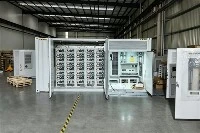
Cooling and safety configurations are another key distinction. Most energy storage cabinets adopt efficient air cooling systems to meet daily low and medium-load operation. Large-capacity energy storage containers are mostly equipped with liquid cooling thermal management systems, paired with multi-stage fire suppression and pressure relief devices, effectively preventing thermal runaway during long-hour high-load operation
 .
.
How to Choose Between Storage Cabinet and Container
Choose an energy storage cabinet if your project features small energy demand, limited installation space, a limited budget, and focuses on C&I peak shaving, solar self-consumption, or short-term backup power. It delivers higher cost performance and flexible deployment for distributed scenarios.
Choose an energy storage container for large-scale industrial energy storage, renewable energy matching, grid frequency regulation, and long-duration high-load operation. It provides stable, large-capacity energy support and better scalability for centralized energy stations.

FAQ
1. Which is better, an energy storage cabinet or container?
There is no absolute advantage. Cabinets fit small C&I distributed projects, while containers are designed for large-capacity grid and industrial energy storage.
2. Can energy storage cabinets replace container BESS?
No. Cabinets cannot meet the high-capacity, long-hour continuous operation requirements of large-scale energy storage projects.
Conclusion
In summary, the core difference between energy storage cabinet and container lies in capacity positioning, application scenarios, cost investment, and operational design. Selecting the right BESS type based on actual project demands can effectively improve energy utilization efficiency, reduce operating costs, and maximize long-term project economic benefits.