


Industrial facilities pay for electricity in two very different ways. The first is the obvious one - the energy you actually consume, measured in kilowatt-hours. The second is far more painful and far more overlooked: the demand charge, built from the single highest 15-minute peak demand your site pulls from the grid in a billing cycle. For a factory, a cold-storage warehouse, or a metal-processing plant, one spike from a motor start or a compressor kick-in can inflate the entire month's bill. This is exactly where behind-the-meter commercial & industrial battery energy storage earns its keep - and where a deliberate peak shaving plan turns a cost center into a controllable line item.
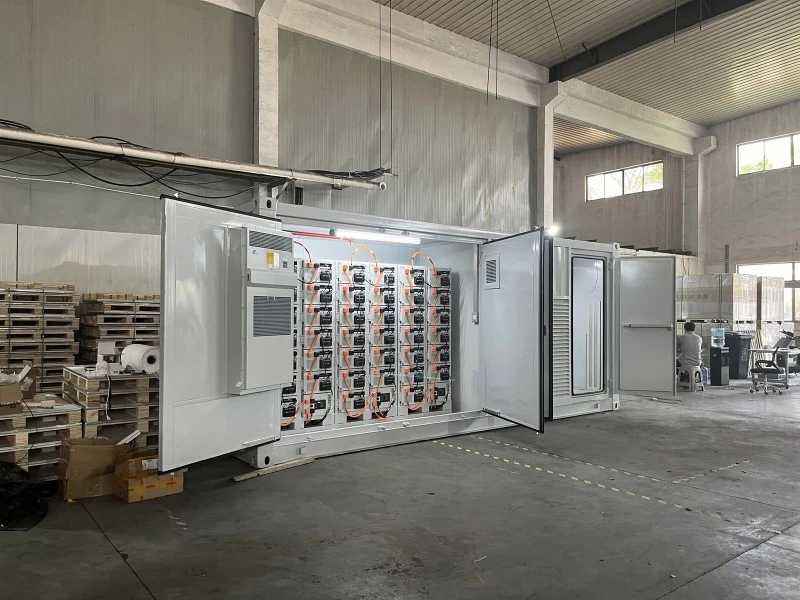
What behind-the-meter peak shaving actually targets
A C&I battery storage system sits on the user side of the utility meter. When your site's grid draw climbs toward its monthly peak, the battery energy storage system (BESS) discharges and "shaves" the top off the curve, keeping the recorded peak demand below a target threshold. The utility never sees the spike, so the demand charge never gets set at that high level.
The key insight for industrial energy storage is that you don't need to replace grid power - you only need to clip the peaks. A modest commercial energy storage buffer, correctly dispatched, often removes 30–60% of a site's demand charges.
Start with a load profile, not a guess
Before specifying hardware, build a real load profile from 12–24 months of interval data. Look for:
The magnitude of your true monthly peak
How long peaks typically last (minutes vs. hours)
Whether peaks coincide with production shifts or specific equipment
Your commercial energy storage sizing should be driven by peak magnitude and duration, not by annual kWh. Oversizing wastes capital; undersizing leaves the spike exposed.
Choose the right discharge duration and C-rate
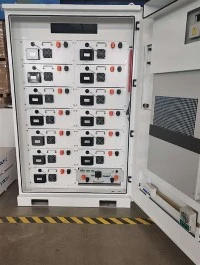
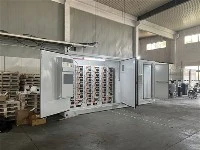
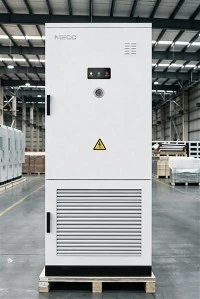
Two specs decide whether a system can actually catch your peak: C-rate and duration. A standard 215 kWh battery storage module at 0.5C delivers roughly one hour of output; many industrial peaks last 1–2 hours, so two or three modules in a modular energy storage rack are common. Stacking all-in-one energy storage cabinets lets you scale capacity as you learn the site's real behavior.
Control strategy: threshold vs. predictive
The simplest approach is threshold-based dispatch: the PCS discharges whenever grid import exceeds a setpoint. It works, but it leaves money on the table. A smarter EMS (energy management system), coordinated with the BMS, uses production schedules, weather, and time-of-use (TOU) rates to predict the peak before it happens and pre-position the battery. Predictive control typically lifts savings by 10–20% over reactive control.

Stack value streams - don't peak-shave in isolation
The best behind-the-meter projects treat peak shaving as one layer of a bigger stack:
Time-of-use arbitrage (TOU arbitrage): charge during off-peak hours, discharge during expensive peak windows.
Load shifting: move flexible processes (e.g., ice making, water heating) to cheaper periods.
Demand response: discharge or curtail during utility events for a separate payment.
Critical peak pricing: on declared CPP days, the battery auto-dispatches to neutralize the surcharge.
Commercial solar plus storage: charge the battery from on-site PV, and add microgrid capability so the site rides through outages.
Each layer improves the economics of the same commercial battery storage asset.
Hardware choices that matter for industrial sites
Industrial environments are harsh - heat, dust, vibration, and 24/7 duty cycles. Two choices dominate:
LFP (lithium iron phosphate) chemistry: safer, thermally stable, and far longer cycle life than NMC - the right call for industrial energy storage.
Liquid-cooled battery storage vs. air-cooled: liquid cooling holds tighter temperature uniformity, extends life, and handles hot, dusty plants better.
Also watch round-trip efficiency - a 90%+ system loses far less energy per cycle than an 85% one, which compounds across thousands of discharges. Modern 1500V DC architectures help here.
Safety and compliance you can't skip
Industrial batteries are large and energy-dense, so compliance is non-negotiable. Specify systems certified to UL 9540 and UL 9540A, designed against NFPA 855 spacing and fire-protection rules, and built to IEC 62619 for international sites. Proper commercial energy storage installation with detection, ventilation, and suppression is what keeps insurers - and your plant manager - comfortable.
The economics: LCOS, payback, and cost per kWh
The headline number buyers ask for is commercial energy storage cost per kWh, but the metric that proves the project is LCOS (levelized cost of storage) - the all-in cost to deliver each discharged kWh over the system's life. For peak-shaving-first sites, the faster, simpler story is battery storage ROI: demand-charge savings usually produce the shortest commercial battery storage payback, often 3–6 years before stacking any arbitrage or response revenue.
Working with the right partner
Finally, the asset is only as good as its commissioning and support. A reputable commercial energy storage manufacturer or commercial energy storage supplier should provide sizing modeling from your load data, UL/NFPA-compliant design, and ongoing battery storage maintenance. Ask for a simulated demand-charge reduction on your bill, not a generic case study.
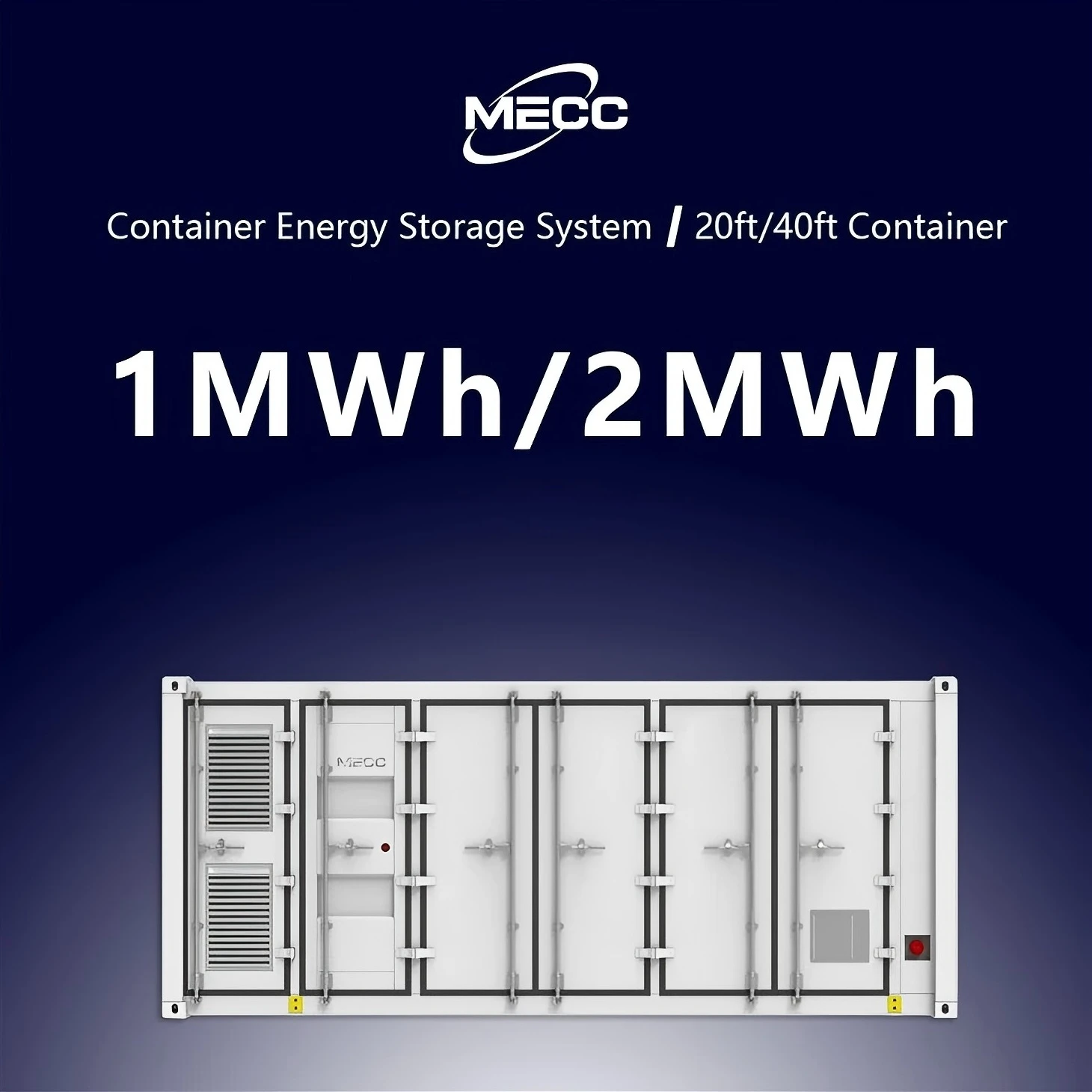
500KW/1MW 1MWh/2MWh Battery Energy Storage System Container
The 500kW/1MW 1MWh/2MWh Battery Energy Storage System Container is a turn‑key utility‑grade energy storage solution housed in standard 20ft or 40ft shipping containers, integrating bidirectional PCS, A‑grade LiFePO4 battery clusters, master BMS, liquid‑cooled thermal management, gas fire suppression, high‑voltage distribution and EMS energy management system with full factory pre‑assembly and pre‑commissioning. Requiring only foundation construction and high‑voltage cable connection for on‑site commissioning, it supports flexible power‑capacity configuration and multi‑container parallel expansion, delivering core capabilities of peak‑shaving and load shifting, renewable energy smoothing, frequency‑voltage grid support, islanded micro‑grid operation and large‑scale emergency backup. Featuring IP54 enclosure protection and comprehensive multi‑layer safety mechanisms, it adapts to diverse harsh outdoor environments, and is widely deployed for ground‑mounted PV power stations, industrial parks, mining operations, island microgrids and grid‑side auxiliary service projects to stabilize grid fluctuations, boost renewable energy utilization and reduce comprehensive energy costs.