



"Black start capable" appears on a remarkable number of datasheets. On a much smaller number of systems is it a tested, repeatable function.
The gap matters because black start is the one capability you cannot verify on the day you need it. If the site is dark, the controller has to bring up a voltage reference, energise a transformer without tripping on inrush, start motors without collapsing the bus, coordinate a generator, and do all of it without a grid, often without communications, and possibly with a battery that has been sitting at 60% state of charge for four months.
This article sets out what black start battery storage actually requires - the sequence, the physics, the control logic, and the tests that separate a claim from a capability.
First, four terms that get conflated
UPS / seamless transfer. The load never sees an interruption. Measured in cycles. Requires the load to be on an inverter-backed bus.
Islanding. The site disconnects from a live grid and continues running. The bus was already energised.
Black start. The bus is dead. Nothing is energised. The system establishes voltage and frequency from zero and rebuilds the network in sequence.
Black start capable. Usually means the PCS can form a voltage reference into a de-energised bus and the controller can execute a restoration sequence. The two are different claims, and both must be tested.
A system can island flawlessly and still be unable to black start, because islanding assumes a live reference and a known load state. Black start assumes neither.
What makes a battery good at this
A genset needs a cranking battery, fuel, and a load it can accept without wet stacking. It also needs to be able to pick up a block of load without collapsing - which is exactly where a lightly sized genset struggles.
A BESS has three structural advantages:
Instant response. A grid-forming inverter establishes voltage in milliseconds, with no start delay and no minimum load.
Controllable ramp. It can energise a bus slowly, limiting inrush, rather than applying full voltage in one step.
No fuel dependency. If the battery is charged, it starts. There is no prime mover to crank.
The disadvantage is finite energy and limited fault current. Both shape the design more than most buyers expect.
The sequence, step by step
A credible black start is a scripted sequence. Ask vendors to walk through theirs; vagueness here is a warning.
1. Dead bus detection. Confirm the utility breaker is open and the bus is genuinely de-energised - not merely that the controller has lost communication. Voltage sensors on both sides of the point of common coupling.
2. Self-check. Battery SOC and temperature, contactor status, PCS readiness, protection relay health, auxiliary power. Auxiliary power is the quiet dependency: the controller, relays and PCS electronics need control power, which must come from the battery or a UPS, not from the dead grid.
3. DC bus pre-charge. Close the pre-charge circuit to limit inrush into the DC link capacitors, then close the main contactor. Skipping this stresses contactors and can weld them.
4. Establish voltage. The PCS enters grid-forming mode with a defined voltage and frequency ramp. It should not step to nominal voltage; a controlled ramp limits transformer magnetising inrush and capacitor charging current.
5. Energise the transformer. This is the hardest step. Transformer inrush can reach 8–12 times rated current for the first few cycles, decaying over several hundred milliseconds. A 1 MVA transformer can present an apparent 8–12 MVA load at the instant of energisation. Options: energise with the PCS in current-limited mode, use a pre-insertion resistor, or specify a PCS with sufficient short-time overload. Many "black start capable" systems fail here.
6. Pick up load in blocks. Start with controls, lighting and electronics. Then add motor loads one at a time, or in groups sized to the inverter's overload capability.
7. Start the generator. Once the bus is stable, command the genset to start, synchronise, and close. The controller must manage the parallel window and prevent reverse power into the generator.
8. Add PV. PV inverters are grid-following; they need a live reference and will not start into a dead bus. Bring them on after the bus is stable, and manage the possibility that they produce more than the load can absorb while the battery is full.
9. Restore remaining loads. In priority order, with hysteresis and current limits, watching for a second inrush event on each step.
Every step needs a failure path. If the transformer trips on inrush, what happens? If the generator fails to start, does the battery hold the priority loads and shed the rest, or does the whole sequence abort?
The technical requirements that actually decide it
A PCS with a genuine black-start function. Grid-forming capability is necessary but not sufficient. Black start requires explicit control of voltage ramp, current limiting, and islanded frequency droop. Ask for the function in the firmware manual, not the marketing deck.
Short-time overload. Motor starting draws five to seven times rated current, and transformer inrush more. A PCS rated 500 kW with 1.1× short-time capability cannot start a 200 kW motor across the line. Specify overload capability in kVA for a stated duration, and verify against your largest motor.
Fault current and protection coordination. In grid-connected mode, the utility supplies tens of kA of fault current, and downstream breakers trip on instantaneous settings. In island mode, a 500 kW inverter may contribute only 1.1–2× rated current - perhaps 1 kA. Downstream protection that relied on 20 kA will not operate. The result is a fault that does not clear, or a breaker that never trips.
This is the single most underestimated issue in commercial black start projects. Solutions include a different protection scheme in island mode (directional, voltage-based, or communication-assisted), defined zones, and explicit testing of a fault at the far end of each feeder.
Earthing and neutral arrangement. If the site's loads expect a grounded neutral, the islanded source must provide one - usually via a zig-zag or delta-wye transformer. An ungrounded island can produce overvoltages and defeat earth-fault protection.
Local, communication-independent logic. In a real blackout, the site network may be down and the cellular link may be congested. The black start sequence must run locally, in the controller or PCS, without cloud connectivity. Cloud dashboards are useful afterwards; they cannot be in the critical path.
Energy reserve. Black start consumes energy before it delivers any: control power, pre-charge, transformer magnetisation, motor starting. Reserve 20–30% of usable capacity above normal operating floor, and prevent economic dispatch from consuming it.
State of health, not just state of charge. A battery idle for months at moderate SOC can have contactor or balancing issues, and cold cells deliver less power. Specify an automatic periodic self-test that includes a short discharge at meaningful power.
Sizing: three calculations
Power: the largest step. The inverter must supply the transformer inrush plus the largest motor start plus existing load, within its overload window. If the largest motor is 250 kW with a 6× locked-rotor current, direct-on-line starting is likely impossible for a C&I inverter; specify a soft starter or VFD, and size for the reduced starting current.
Energy: the restoration budget. Add auxiliary load for the expected restoration time, the energy for transformer magnetisation, the energy for the first load block, and the energy to ride through the generator start (which may take 10–30 seconds). Multiply by a margin for failed first attempts.
Duration: how long the site must run on the battery alone. If the genset starts reliably, the battery carries the site for a minute or two. If the genset fails, the battery must carry priority loads until it can be repaired or refuelled. Define that duration explicitly - it is a resilience decision, not an engineering one.
Testing: the only proof
A black start test is a planned outage, and it should be treated as one.
Factory test: the sequence logic, with simulated breaker feedback, transformer inrush and generator signals. This proves the state machine, not the physics.
Site acceptance test: a genuine dead-bus test. Open the utility breaker, discharge the DC link, verify the bus is dead, and execute the full sequence with real loads. Measure the voltage dip during transformer energisation, the frequency excursion during motor starting, and the time to stable operation.
Annual re-test: repeat it, with the real load profile. Systems that pass at commissioning and fail two years later usually fail on battery condition, contactor wear, or a protection setting changed during unrelated maintenance.
Record the results: date, SOC at start, load blocks, voltage and frequency traces, generator start time, total restoration time. That record is what turns a claim into an operational capability.
Seven failure points seen in the field
Transformer inrush trips the PCS. The most common. Discovered only on a real dead-bus test.
Downstream protection does not clear a fault. Inverter fault current is too low to trip instantaneous settings.
Auxiliary power comes from the grid. The controller cannot start because its own power supply is dead.
The sequence depends on the cloud. No network, no black start.
The generator will not accept load. Minimum-loading and reverse-power settings were never coordinated with the controller.
The battery is at 15% SOC. Economic dispatch drained the reserve the week before the outage.
Nobody has tested it since commissioning. Contactors stuck, firmware updated, settings changed.
When it is worth paying for
Black start adds cost: a grid-forming PCS with real overload capability, a more sophisticated controller, a protection study, and a testing programme. It is justified where a prolonged outage is materially worse than the cost of the capability:
Continuous process manufacturing with scrap or spoilage risk.
Cold storage and pharmaceutical facilities.
Water and wastewater treatment.
Hospitals and laboratories with critical research.
Data centres and telecom sites with SLA exposure.
Sites where the utility restoration time is measured in hours and the genset alone cannot carry the critical load.
For a site that only needs to ride through short outages, seamless transfer or a conventional UPS is cheaper and simpler. Black start is for sites that must rebuild from zero.
FAQ
Can any grid-forming battery black start?
No. Grid-forming is necessary but the black-start sequence, voltage ramp, current limiting and protection coordination must be engineered and tested.
Can a solar array black start a site?
Not on its own. PV inverters are grid-following and need a voltage reference. A battery or generator must establish the reference first.
How long does a black start take?
Typically from under a minute for a simple site with a pre-charged battery and no large motors, to several minutes where transformers and staged motor loads are involved. Measure it; do not estimate it.
Does black start require a generator?
Not necessarily, but a battery alone can only sustain the site for its usable energy. Most C&I designs use the battery to establish the bus and the generator to carry the long-duration load.
How often should it be tested?
At commissioning, then annually, plus after any protection setting change, firmware update or battery augmentation.
The bottom line
Black start battery storage is a system capability, not an inverter feature. It depends on a grid-forming source with real overload, a sequence that runs locally, protection that works at inverter-level fault currents, an energy reserve that economics cannot touch, and a test that actually de-energises the bus.
Buy it as an engineered sequence with evidence, not as a checkbox. The day you need it, there will be no second attempt.

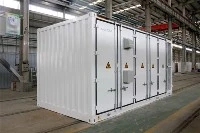
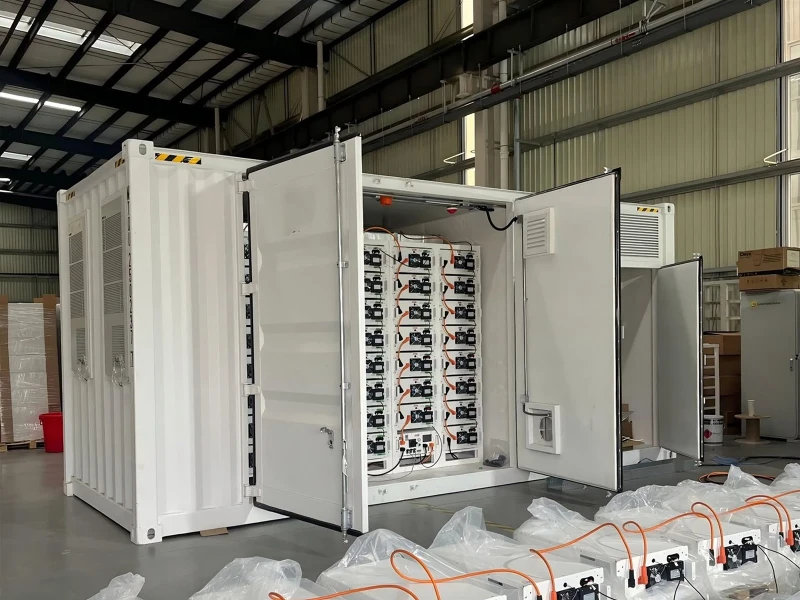
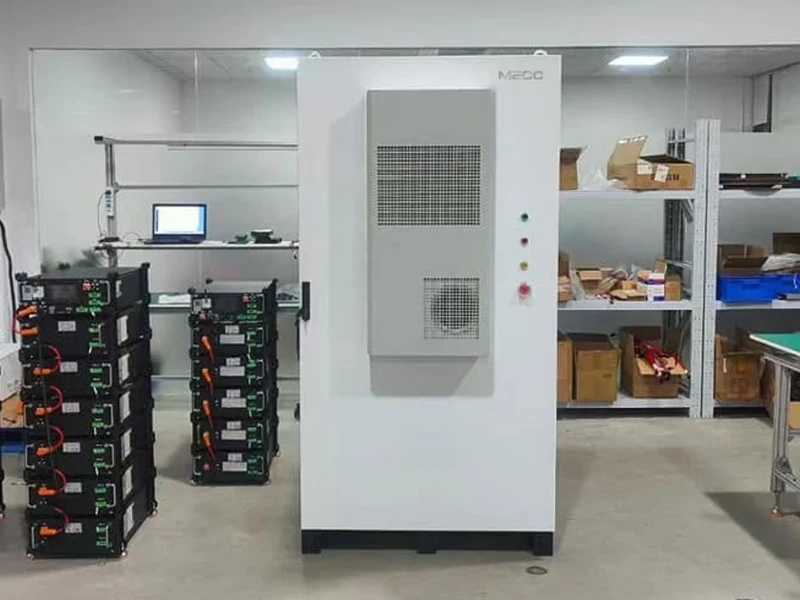
125KW 241kWh Battery Energy Storage System Cabinet
The BESS 125KW 241kWh Lithium Battery Energy Storage Cabinet is a high-power, large-capacity integrated energy storage solution engineered for medium-to-large commercial, industrial, and utility-scale applications. It integrates a 125kW high-performance bidirectional inverter, a 241kWh lithium iron phosphate (LiFePO4) battery bank, and a full-featured intelligent energy management system (EMS) into a modular cabinet design. This system enables efficient renewable energy storage, peak shaving, load shifting, grid frequency regulation, and emergency backup power supply. Ideal for large factories, shopping malls, industrial parks, utility-scale solar/wind farms, and microgrids, it enhances energy independence, reduces high grid demand charges, and supports the stable integration of high-penetration renewable energy into the grid.