


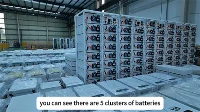
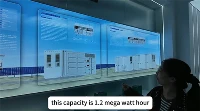

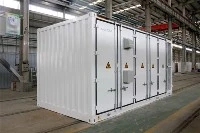
MECC, a specialist manufacturer of lithium battery energy storage equipment, has rolled out its new custom containerized BESS line for global commercial and industrial energy storage projects. The modular container platform allows system integrators, EPC contractors and wholesale distributors to select different ISO container sizes to match targeted energy capacity, removing rigid one-size-fits-all limits that have restricted many behind-the-meter and off-grid project designs.
Commercial and industrial energy buyers across Europe, Southeast Asia and North America face highly variable load profiles and site constraints. A small manufacturing workshop may only require 500kWh of storage for peak shaving and emergency backup, while solar farms, mining sites and large distribution hubs demand multi-MWh capacity for renewable smoothing and grid support. Standard fixed-capacity storage containers often force project designers to oversize or split layouts, raising civil work, transport and installation costs. MECC's flexible container framework addresses this pain point directly for B2B partners working on diverse C&I deployments.
Flexible Container Sizing for Targeted Energy Capacity
The new MECC containerized energy storage portfolio supports configurable layouts across multiple standard container dimensions. Project teams can select 10ft, 20ft or 40ft container shells and configure internal battery racks, power conversion hardware and auxiliary subsystems to hit the required capacity point, starting at 500kWh and scaling upward into MWh-class configurations. Each container unit is fully pre-integrated and factory tested before shipment.
This model gives distributors and EPCs greater freedom during quotation and design phases. Instead of adapting the project around a pre-built storage unit, partners define the energy requirement first, then choose the matching container footprint. Smaller 500kWh to 1MWh builds suit light industrial facilities, cold storage units and commercial buildings with moderate peak reduction goals. Larger MWh-scale container setups fit utility-connected solar parks, remote microgrids and heavy industrial sites with continuous high power demand. Multiple containers can also be paralleled on-site if future capacity expansion becomes necessary.
Every container is built for outdoor deployment. The structural shell provides weather protection for all internal electrical components, while layout planning maintains safe service access for technicians. The standardized shipping container format simplifies road and sea freight, as it fits existing global intermodal transport networks without special oversize permits for most configurations.
Integrated Technical Design and Core Safety Features
Inside each custom container, MECC integrates lithium iron phosphate battery modules, battery management system, energy management system, PCS, thermal management and fire suppression hardware into one self-contained unit. The BMS monitors cell voltage, temperature and state of charge in real time, triggering protective actions to avoid overcharging, deep discharge and thermal runaway risks. The EMS handles automatic charge-discharge scheduling, grid signal response and remote data logging for operators.
MECC applies uniform factory testing workflows regardless of container size or final capacity. Each finished unit undergoes aging cycling, insulation resistance checks and communication interface validation before leaving the production facility. This consistent validation process helps reduce on-site commissioning trouble, which is a major concern for installers working on tight project timelines overseas.
Key Differentiators for EPC and Distribution Partners
Many competing container storage products lock customers into fixed capacity tiers. MECC's custom configuration model separates the container housing from the battery and power stack, which delivers two clear advantages for B2B buyers. First, partners can optimize capital expenditure by paying only for the storage capacity the site actually needs. Second, the same container platform can be reused across a wide quote range, simplifying internal sales training and spare part inventory planning.
The company also provides technical documentation, wiring schematics and remote commissioning support for each custom build. This is valuable for smaller integrator teams that do not maintain a large in-house power engineering department. Distributors can offer containerized energy storage solutions to their local clients without fully owning the complex design and validation workload.
Global Application Scenarios for Custom Container BESS
MECC's configurable container storage targets mainstream commercial and industrial use cases. Peak shaving and demand charge management remain the largest application for factories, warehouses and retail parks, where the system stores low-cost off-peak grid power or on-site solar generation for use during high-tariff windows. Backup power is another frequent requirement, protecting cold chains, data hubs and production lines from unexpected grid outages.
The platform also fits off-grid and weak-grid microgrids, including remote mining camps, agricultural estates and island power systems. Solar plus storage hybrid projects benefit from the scalable design, as developers can start with a smaller 500kWh container and add parallel units later as PV generation capacity expands. For utility-side renewable integration, MWh-scale container banks stabilise output from large solar arrays and deliver frequency response where local grid codes permit.
Market Value for Wholesale and Project Partners
For B2B buyers, sourcing flexible containerized energy storage reduces quotation friction. When responding to tender documents, EPC teams can submit accurate, site-specific storage sizing instead of forcing the client to accept an off-spec product. Distributors can broaden their service portfolio and serve both small commercial retrofit jobs and large renewable projects from one supplier.
Consistent component architecture also supports predictable after-sales service. Service technicians learn one core system platform, even when supporting containers of different sizes and capacities. This reduces training overhead and shortens fault diagnosis times once the unit enters operation. For overseas dealers, reliable after-sales support is a strong selling point that helps build repeat business with end customers.
Outlook for Custom Container Energy Storage Cooperation
MECC continues to refine its containerized energy storage engineering to align with evolving grid standards across different regions. The engineering team accepts early-stage design input from partners during project bidding, reviewing load profiles, grid rules and site layout constraints before finalising the container configuration. Factory showroom demonstrations of the container build process are available for visiting partners, and virtual technical reviews can be arranged for overseas teams unable to travel.
As energy storage adoption accelerates in global C&I markets, site-specific scalability becomes more important than ever. MECC's custom container BESS solution provides a practical pathway for integrators and distributors to deliver right-sized lithium energy storage, ranging from compact 500kWh systems up to multi-MWh installations, while keeping deployment, logistics and maintenance workflows manageable.
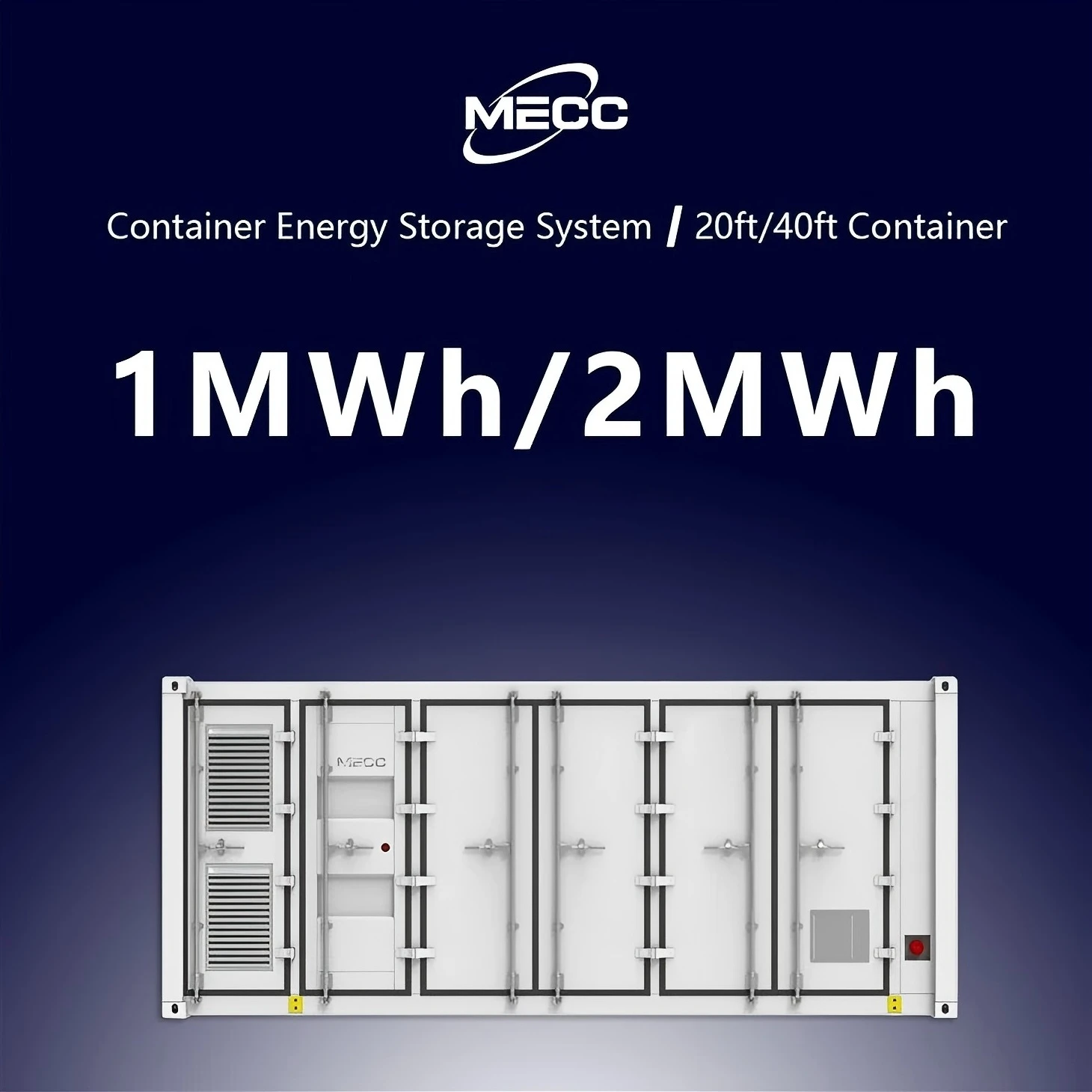
500KW/1MW 1MWh/2MWh Battery Energy Storage System Container
The 500kW/1MW 1MWh/2MWh Battery Energy Storage System Container is a turn‑key utility‑grade energy storage solution housed in standard 20ft or 40ft shipping containers, integrating bidirectional PCS, A‑grade LiFePO4 battery clusters, master BMS, liquid‑cooled thermal management, gas fire suppression, high‑voltage distribution and EMS energy management system with full factory pre‑assembly and pre‑commissioning. Requiring only foundation construction and high‑voltage cable connection for on‑site commissioning, it supports flexible power‑capacity configuration and multi‑container parallel expansion, delivering core capabilities of peak‑shaving and load shifting, renewable energy smoothing, frequency‑voltage grid support, islanded micro‑grid operation and large‑scale emergency backup. Featuring IP54 enclosure protection and comprehensive multi‑layer safety mechanisms, it adapts to diverse harsh outdoor environments, and is widely deployed for ground‑mounted PV power stations, industrial parks, mining operations, island microgrids and grid‑side auxiliary service projects to stabilize grid fluctuations, boost renewable energy utilization and reduce comprehensive energy costs.