


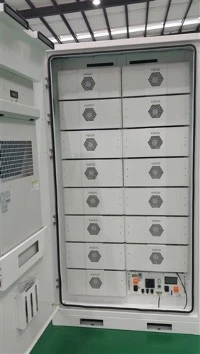
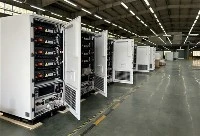
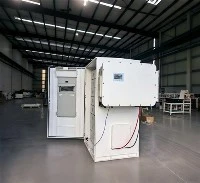
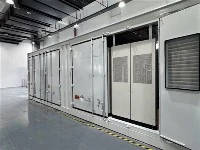
If you have shopped for a C&I battery energy storage system (BESS) recently, you have seen the number everywhere: 215 kWh commercial energy storage cabinets. It is not a coincidence. Over the past few years 215 kWh has quietly become the default building block of commercial storage - the unit you stack to build everything from a single all-in-one cabinet to a full containerized C&I BESS 20ft. This article explains where the number comes from, why it stuck, and what it means when you size a system.

Where the 215 kWh Number Comes From
The figure is a direct result of cell and electrical standardization. Modern systems use lithium iron phosphate (LFP) prismatic cells - the same chemistry that dominates commercial battery storage solution designs because of its safety and cycle life. A typical large-format LFP cell is around 280 Ah. When you stack enough cells in series to reach a practical high-voltage string (roughly 1.2–1.5 kV nominal, in line with today's 1500V DC architecture), one string lands near 215 kWh.
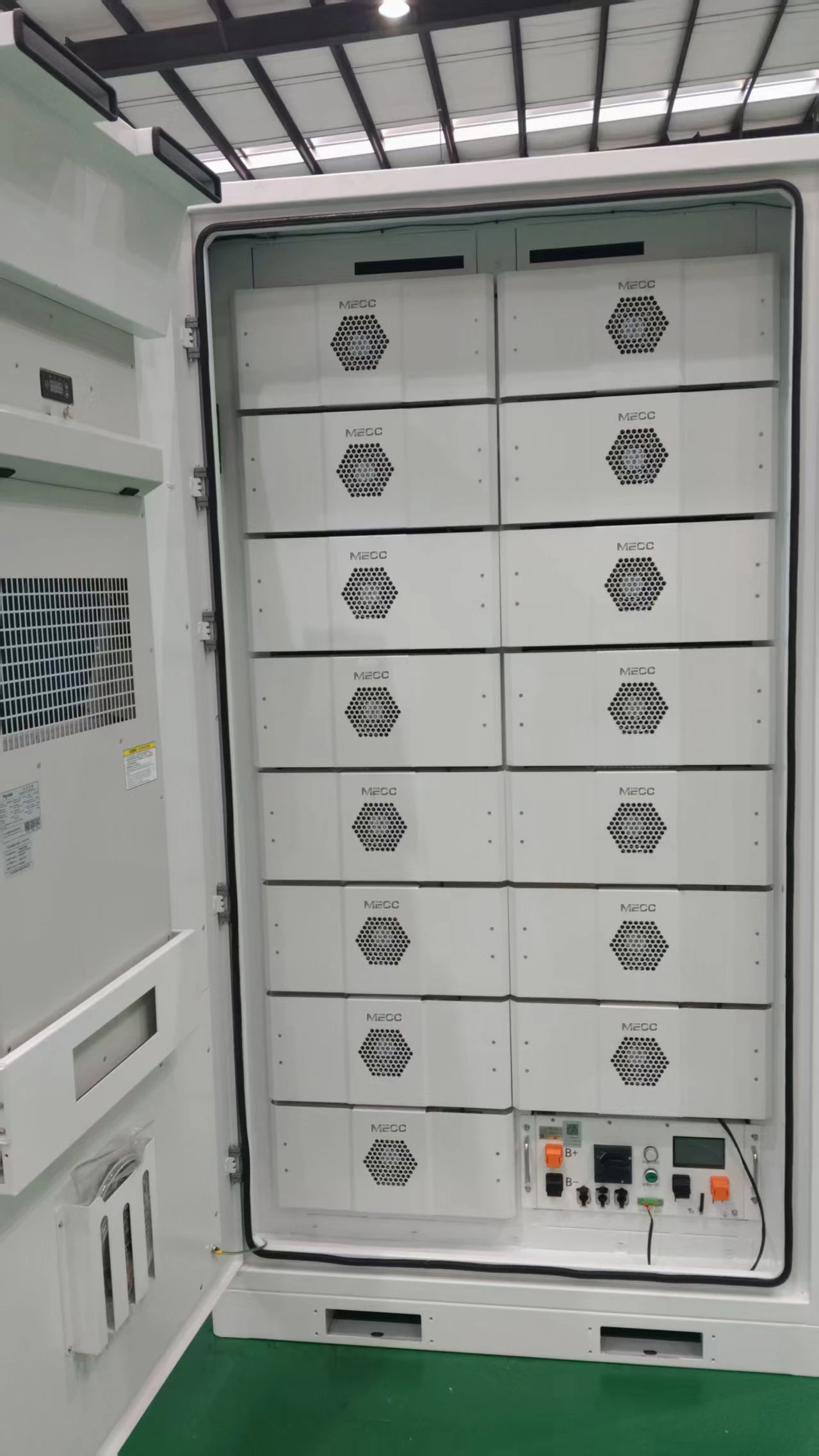
In other words, 215 kWh is one optimized string - one thermal zone, one battery management boundary, one cabinet. That elegance is exactly why manufacturers converged on it.
Why It Became the Standard
Standardization is what turned a convenient size into an industry norm. Because 215 kWh maps cleanly onto a single cabinet, factories can mass-produce it, integrators can ship it as a modular C&I BESS block, and EPCs can bolt several together without custom engineering. The supply chain benefits show up directly in commercial energy storage cost per kWh: a standardized block is cheaper to build and certify than a one-off pack.
It also pairs perfectly with the dominant enclosure: a containerized C&I BESS 20ft typically holds a neat multiple of 215 kWh units, so a developer can spec "X containers" and know the capacity to the watt-hour. That predictability is why top C&I BESS manufacturers and OEM/ODM energy storage manufacturer partners alike treat 215 kWh as a reference module.
The All-in-One Cabinet Form Factor
Most 215 kWh blocks ship as a self-contained all-in-one cabinet: battery string, power conversion system (PCS), battery management system (BMS), thermal management, and safety in one factory-tested box. You connect it behind-the-meter / grid-tied, and the AI-based energy management system (EMS) handles dispatch. For a factory energy storage system or a rooftop energy storage system with a defined load, one or two of these cabinets often does the job.
Cooling is a key choice at this size: liquid-cooled vs air-cooled both exist in the 215 kWh format, with liquid favored for high-cycle or hot-climate sites that need tight temperature control.
Building From 215 kWh Blocks
The beauty of a standard block is scaling by addition. Need more? Add another cabinet. This modular C&I BESS approach means capacity grows with the site instead of being oversized upfront - which protects the C&I energy storage payback period. A site can start with a single 215 kWh unit for peak shaving, then add blocks as load or time-of-use arbitrage opportunity grows.
Architecturally, these blocks appear in both AC vs DC coupled designs and in cell-to-pack vs cell-to-system layouts, giving integrators flexibility without abandoning the standard capacity.
Sizing With 215 kWh as the Unit
When you run a C&I energy storage sizing calculator during a free site assessment, the output often reads in multiples of 215 kWh once you set the C-rate and duration. This is the practical heart of how to size a commercial battery system: match the number of standard blocks to your peak window and TOU periods rather than designing custom packs. A short, sharp daily peak might need one high-C-rate block; a long expensive evening might need two or three for duration.
What 215 kWh Unlocks for the Owner
A standard block is versatile. It delivers peak shaving to cut demand charges, runs time-of-use arbitrage on price spreads, pairs with commercial solar plus storage to shift midday PV into the evening, and can join a microgrid or backup setup for resilience. Because the hardware is commodity-like, owners can compare best commercial energy storage systems 2026 on price, warranty, and service instead of getting locked into proprietary sizes.
Safety and Compliance
Standardization does not lower the bar. Any 215 kWh unit must clear UL 9540 / UL 9540A, NFPA 855, and IEC 62619 with regional CE / UKCA marks. Built-in fire suppression and thermal runaway prevention are mandatory, and the single-string design actually helps - one thermal zone is easier to monitor and protect than a sprawling custom pack.
Choosing a Supplier
Compare turnkey C&I energy storage against wholesale supply, evaluate OEM/ODM energy storage manufacturer options for private-label or custom enclosures built around the 215 kWh block, and ask each vendor for a site assessment plus a transparent BESS price quote request that prices per standard unit.

125KW 241kWh Battery Energy Storage System Cabinet
The BESS 125KW 241kWh Lithium Battery Energy Storage Cabinet is a high-power, large-capacity integrated energy storage solution engineered for medium-to-large commercial, industrial, and utility-scale applications. It integrates a 125kW high-performance bidirectional inverter, a 241kWh lithium iron phosphate (LiFePO4) battery bank, and a full-featured intelligent energy management system (EMS) into a modular cabinet design. This system enables efficient renewable energy storage, peak shaving, load shifting, grid frequency regulation, and emergency backup power supply. Ideal for large factories, shopping malls, industrial parks, utility-scale solar/wind farms, and microgrids, it enhances energy independence, reduces high grid demand charges, and supports the stable integration of high-penetration renewable energy into the grid.