



A few years ago, the big news in commercial energy storage was the shift from 1000V to 1500V battery systems. Higher string voltage meant thinner cables, lower losses, and a meaningful drop in balance-of-system cost. If you have read why 1500V DC storage took over the utility and large C&I segment, the next headline will feel familiar: the industry is now pushing toward 2000V DC. The question for buyers is the same one 1500V raised - does the step actually pay off for your site, or is it a spec-sheet race you do not need to join yet?
This article walks through what 2000V DC really means for storage, why manufacturers are pursuing it, what technology makes it possible, and - most importantly - when it is worth specifying on a C&I BESS project.

The Voltage Ladder, Briefly
Battery storage bus voltage has climbed in steady generations. Early small systems ran around 600V. As projects scaled, 1000V became common. The current mainstream for utility-scale and large commercial installs is 1500V, and many modern cabinets and containers are built around it. Each jump followed the same physics: for a fixed power level, raising voltage lets you deliver the same watts at lower current.
Lower current is the whole game. It shrinks conductor cross-section, cuts resistive (I²R) losses, reduces the number of combiner boxes and DC contactors, and lets a given enclosure hold more energy. The 1500V transition is a large part of why LCOS (levelized cost of storage) has fallen as fast as it has.
2000V DC is the next rung. It applies the same logic to an already-optimized platform.
Why Push Past 1500V
The motivation is not novelty. It is margin - both electrical and economic.
Smaller balance of system. At 2000V, current for a given power is roughly 25% lower than at 1500V. That translates directly into thinner DC cables, fewer parallel strings, and simpler combiner architecture. On a multi-megawatt container, those savings are measured in kilometers of copper and dozens of connection points.
Lower losses. Resistive loss scales with the square of current. Trim the current and you trim heat, which means less energy lost as waste heat and a small but real boost to round-trip efficiency.
Higher energy density per enclosure. With fewer bulky DC components and better thermal headroom, a 2000V container can pack more usable capacity into the same footprint. For developers paying rent on container yards or fighting for rooftop or yard space, that density is money.
Better economics at scale. All of the above flows into LCOS. The bigger the system, the more the BOS savings compound. That is why the 2000V push is led by gigawatt-hour-scale storage, not by the 215 kWh cabinet on a warehouse wall.

What Makes 2000V Possible Now
Three things had to mature before 2000V could leave the lab.
Silicon carbide (SiC) semiconductors. Modern silicon carbide inverters switch faster and tolerate higher voltages with lower losses than traditional silicon IGBTs. SiC is the enabler that makes a 2000V DC bus practical on the power-conversion side. Without it, the PCS would become the bottleneck.
Packaging trends. Cell-to-pack and cell-to-system designs remove the intermediate module structure, letting manufacturers build longer series strings inside the pack. More cells in series means a higher pack voltage with fewer parallel connections - exactly what 2000V needs.
Insulation and component ratings. Cables, connectors, DC breakers, fuses, and contactors rated comfortably above 2000V have become commercially available. Voltage is only as safe as its weakest rated component, and that component ecosystem is finally catching up.
Where 2000V Is Already Showing Up
As with most storage advances, the technology lands at the top of the market first. Large utility-scale plants and grid-scale storage are the early adopters, where megawatts of saved BOS cost justify the engineering effort. Several major suppliers have previewed or shipped 2000V-class platforms for these segments.
For C&I energy storage, the rollout is more cautious. Large containerised systems behind the meter - think multi-megawatt industrial sites - are the next plausible landing spot, probably within the next two to three years as 2000V-rated components standardize. Small and mid-size cabinets are further out.
The C&I Reality Check
For the typical commercial or industrial buyer, 2000V is not something to chase yet. Here is the honest breakdown.
Safety and arc flash. Higher DC voltage means more stored energy and a more dangerous arc if something goes wrong. DC arc flash protection, insulation coordination, and isolation equipment all have to be designed for the new level. Field service teams need updated procedures and ratings. This is solvable, but it is work - and it is exactly why standards and AHJ comfort lag the hardware.
Component ecosystem maturity. While 2000V-rated parts exist, the breadth and third-party listing of 1500V components is still deeper. For a C&I project where you want spares readily available and service straightforward, 1500V remains the safer, better-supported choice today.
Diminishing returns at small size. The BOS savings that justify 2000V at 100 MWh barely register at 500 kWh. If your system is standard duration behind the meter, the complexity premium outweighs the copper you save.
Code and listing. Confirm that the specific product carries the listings your UL 9540A and AHJ submission require at the full 2000V rating. A system that is "2000V capable" on paper but not fully listed at that level will stall at permitting.
Is 2000V Ready for Your Project?
Use this simple filter:
Utility-scale or large C&I container (multi-MW): 2000V is worth evaluating now if the supplier has a fully listed, field-proven platform and your EPC is comfortable with the higher-voltage service practices.
Mid-size C&I (hundreds of kW to ~1 MW): Watch the market, but 1500V is still the sweet spot for cost, support, and safety maturity. Revisit in 2–3 years.
Small cabinet / single-site behind-the-meter: Stay on 1500V. The 2000V premium buys nothing you can use.
The pattern repeats the 1500V story: the voltage step is real and valuable, but its value scales with system size. Specifying it where it does not pay is just added risk.
The Bottom Line
2000V DC is the logical next step in storage's voltage ladder, enabled by silicon carbide inverters, cell-to-pack packaging, and a maturing high-voltage component ecosystem. It will cut BOS cost and lift energy density where systems are large - and it will mostly stay at the top of the market for the next few years. For standard commercial energy storage, 1500V remains the proven, well-supported choice. Specify 2000V when the system is big enough to earn it and the supplier can prove it end to end.
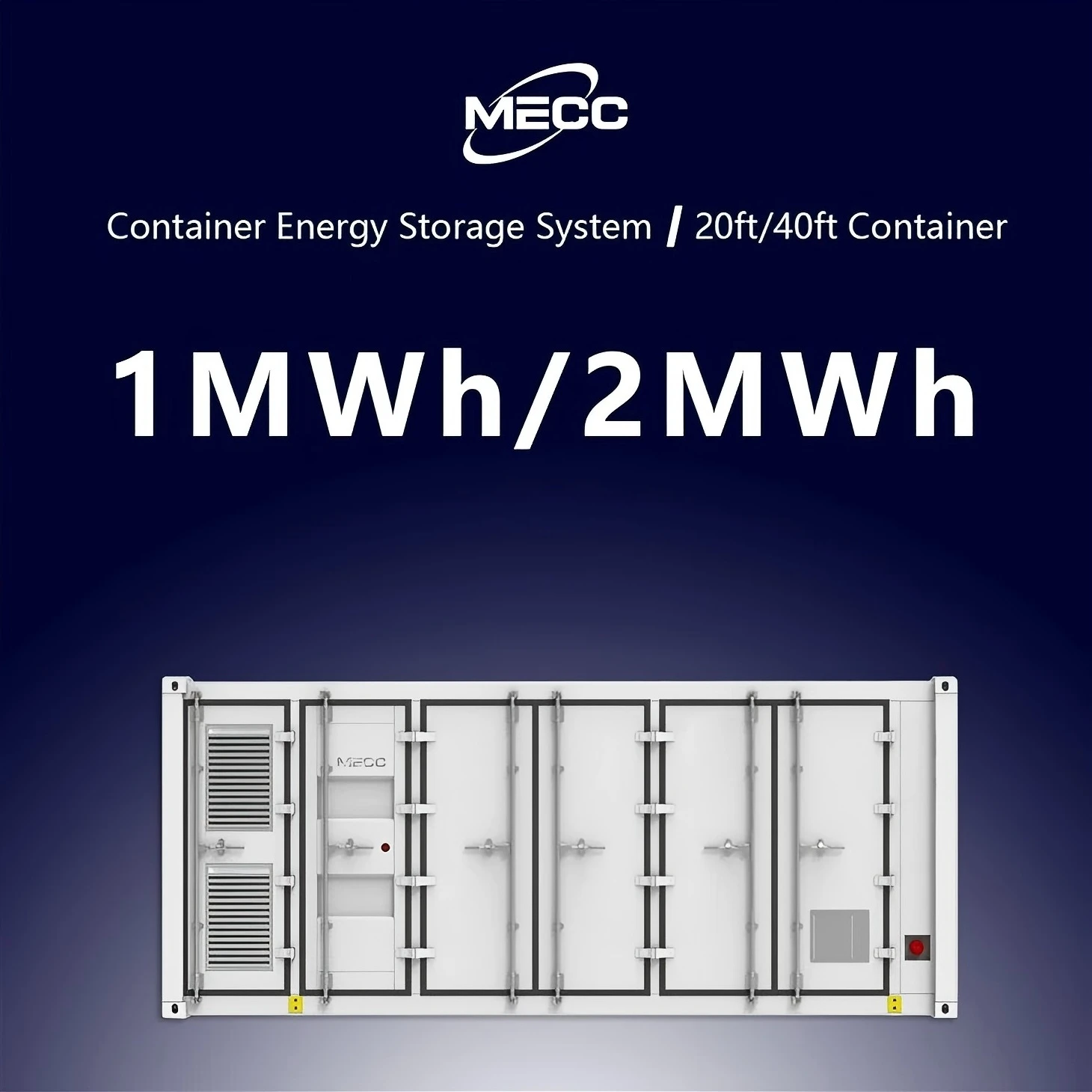
500KW/1MW 1MWh/2MWh Battery Energy Storage System Container
The 500kW/1MW 1MWh/2MWh Battery Energy Storage System Container is a turn‑key utility‑grade energy storage solution housed in standard 20ft or 40ft shipping containers, integrating bidirectional PCS, A‑grade LiFePO4 battery clusters, master BMS, liquid‑cooled thermal management, gas fire suppression, high‑voltage distribution and EMS energy management system with full factory pre‑assembly and pre‑commissioning. Requiring only foundation construction and high‑voltage cable connection for on‑site commissioning, it supports flexible power‑capacity configuration and multi‑container parallel expansion, delivering core capabilities of peak‑shaving and load shifting, renewable energy smoothing, frequency‑voltage grid support, islanded micro‑grid operation and large‑scale emergency backup. Featuring IP54 enclosure protection and comprehensive multi‑layer safety mechanisms, it adapts to diverse harsh outdoor environments, and is widely deployed for ground‑mounted PV power stations, industrial parks, mining operations, island microgrids and grid‑side auxiliary service projects to stabilize grid fluctuations, boost renewable energy utilization and reduce comprehensive energy costs.