


MECC Solar, a global supplier of commercial and industrial battery energy storage systems, has rolled out its custom containerized energy storage lineup, offering flexible container sizing and configurable capacity for EPC contractors, system integrators and energy distributors worldwide. The new turnkey container BESS platform allows buyers to select different container formats to match project power targets, covering small commercial storage starting at 500kWh all the way up to multi-megawatt hour deployments for industrial and grid-connected sites.
This custom container energy storage release addresses a common limitation in the energy storage market, where many manufacturers only offer fixed-size container models. Project developers often face mismatches between site footprint constraints, budget phasing and required energy capacity. By supporting custom container layouts and modular capacity stacking, MECC Solar gives partners greater freedom to design storage systems that fit local site conditions, grid rules and project return targets. Every container unit is fully assembled, wired and tested inside the factory, which cuts down field work and lowers commissioning risk for overseas projects.
Core Highlights of Custom Containerized Energy Storage
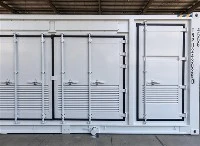
The central advantage of this MECC container energy storage solution lies in its flexible container selection and scalable capacity architecture. The engineering team can configure standard 10ft, 20ft or 40ft ISO containers, and adjust internal battery racks, PCS units and auxiliary subsystems accordingly. For smaller commercial loads, a compact container build can deliver 500kWh to 1MWh storage capacity, suitable for factories, shopping centres and agricultural facilities targeting peak shaving and backup power. For larger industrial parks, solar farm co-location or microgrid tender projects, multiple containers can be paralleled to reach MWh-scale capacity.
Each container package is built as an integrated all-in-one energy storage unit. Inside the enclosure, the system integrates lithium iron phosphate battery modules, battery management system, power conversion equipment, thermal management, fire suppression and EMS monitoring hardware. Clients can choose liquid cooling or air cooling configurations based on local climate. This level of internal integration removes the burden of sourcing separate components and coordinating multiple vendors, a major benefit for distributors handling multi-country projects.
Customisation also extends beyond physical dimensions. MECC's engineering team adjusts PCS ratings, communication protocols and protection logic to align with regional grid standards. Partners can specify grid-tied, off-grid or hybrid operating modes for their target markets. For regions with frequent grid outages, the system can be tuned for fast seamless backup transfer. For markets focused on energy arbitrage and frequency support, the controls are optimised for stable grid service response.
Technical Advantages of Modular Container BESS Design
Safety and consistent performance under varied operating conditions form the foundation of the custom container storage design. The battery management system monitors cell voltage, current and temperature across every module, carrying out active balancing and early fault detection. Thermal management maintains a stable working environment for battery packs, reducing capacity fade in high-temperature tropical zones and supporting reliable operation in cold high-latitude areas.
The container structure meets robust outdoor protection standards, with reinforced framing, UV-resistant coating and sealed cable entry points to withstand rain, dust and wide temperature swings. Independent fire detection and suppression circuits are installed within the battery compartment and electrical cabin, with separate alarm output for remote monitoring platforms. All high-voltage sections are clearly segregated and labelled to meet international electrical safety requirements.
The embedded energy management system supports local HMI operation and cloud-based remote monitoring. EPC teams and asset owners can track state of charge, charge-discharge status, fault logs and system efficiency remotely. Over-the-air firmware updates reduce the need for on-site technician visits across remote project locations. This remote visibility simplifies fleet management for distributors managing storage assets across multiple countries.
Global Application Scenarios for 500kWh to MWh Container Storage
The scalable container energy storage system serves a wide spectrum of overseas commercial and industrial use cases. Medium-sized manufacturing plants deploy 500kWh to 1MWh container units to reduce demand charges through peak shaving, stabilising electricity costs amid volatile utility pricing. Food processing facilities, cold storage warehouses and data infrastructure rely on these systems for uninterrupted backup power, avoiding production losses during grid interruptions.
At larger scale, MWh-class container storage works alongside ground-mounted solar arrays for solar plus storage co-location projects. Mining operations, remote island communities and rural microgrid schemes use containerised BESS to offset reliance on diesel generators, cutting fuel expenditure and carbon output. Utility contractors also integrate parallel container banks for grid support applications, including load shifting and voltage regulation.
For distributors, the tiered capacity range opens up bidding opportunities across different project sizes. Small local installers can quote 500kWh container solutions for regional commercial clients, while large EPC partners can scale up to multi-MWh clusters for government-backed renewable programmes. The same container platform supports both entry-level and large-budget projects, reducing the learning curve for partner technical teams.
Market Value for EPC Contractors and Distribution Partners
MECC's custom container model helps partners improve project competitiveness in several practical ways. Instead of forcing clients to adapt their site plans to an off-the-shelf storage unit, the system adapts to the site. This flexibility improves tender success rates, especially for projects with limited available land or strict delivery schedules.
Factory pre-testing shortens overall project timelines. Once containers arrive on site, crews only need to complete foundation anchoring, AC grid connection and final commissioning. Less on-site assembly translates to lower labour cost and shorter construction windows, which matters heavily when developers work against tight permitting deadlines. MECC provides full technical documentation, single-line diagrams and test certificates to support local certification and grid inspection processes in different regions.
The modular design also supports phased investment. Many industrial clients prefer to start with a 500kWh container, then add extra containers later as energy demand grows. This staged expansion protects the client's initial capital and creates repeat business opportunities for distribution partners.
Outlook
MECC Solar will continue expanding its custom container energy storage engineering capability to match evolving grid codes and safety requirements across global markets. The company will add more thermal and control options while optimising container layout for easier maintenance access. The 500kWh to MWh custom container BESS is now open for technical review and quotation.
EPC contractors, distributors and project developers can contact the MECC Solar sales team to share site parameters and receive a tailored container storage layout proposal, including capacity configuration, cooling selection and grid compliance support.
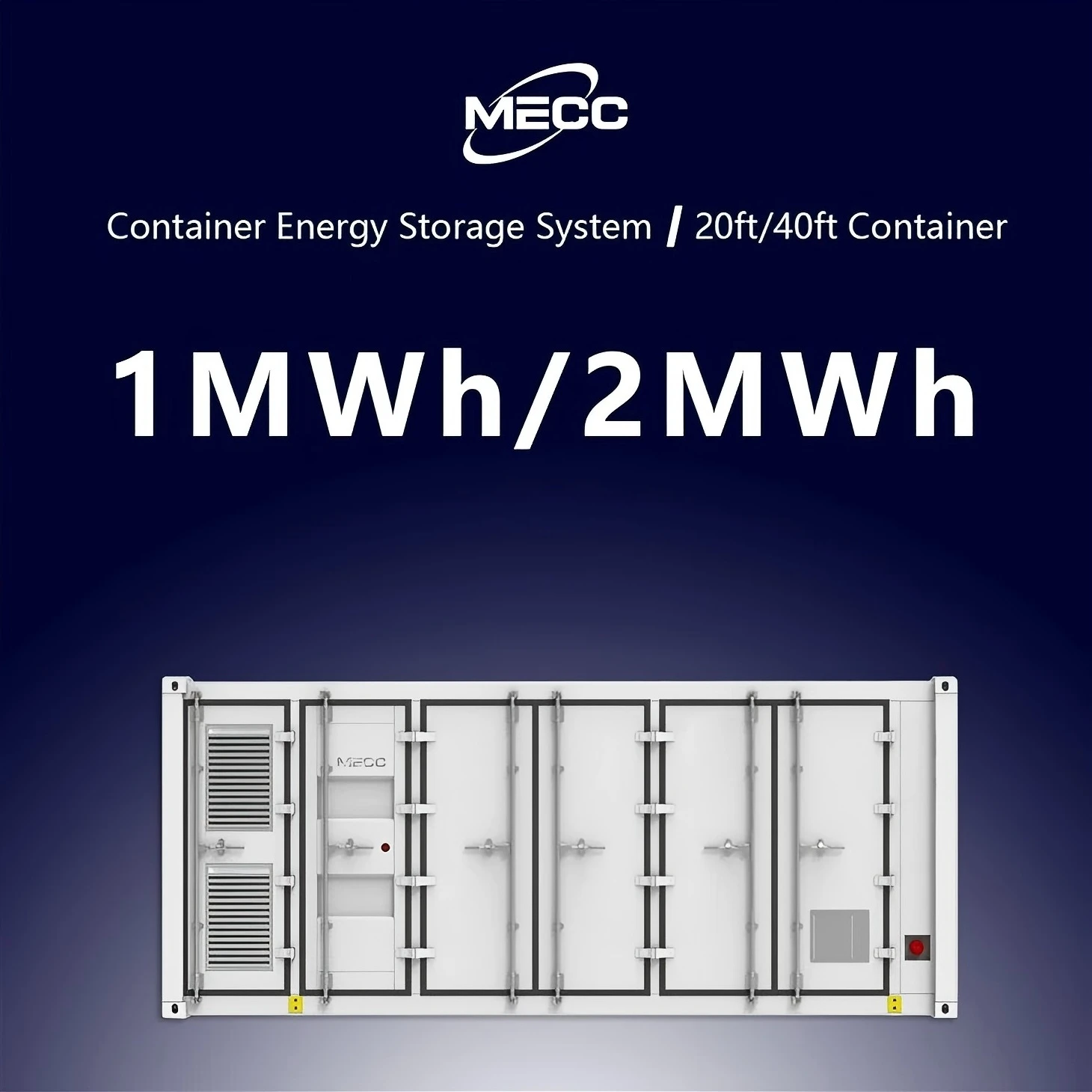
500KW/1MW 1MWh/2MWh Battery Energy Storage System Container
The 500kW/1MW 1MWh/2MWh Battery Energy Storage System Container is a turn‑key utility‑grade energy storage solution housed in standard 20ft or 40ft shipping containers, integrating bidirectional PCS, A‑grade LiFePO4 battery clusters, master BMS, liquid‑cooled thermal management, gas fire suppression, high‑voltage distribution and EMS energy management system with full factory pre‑assembly and pre‑commissioning. Requiring only foundation construction and high‑voltage cable connection for on‑site commissioning, it supports flexible power‑capacity configuration and multi‑container parallel expansion, delivering core capabilities of peak‑shaving and load shifting, renewable energy smoothing, frequency‑voltage grid support, islanded micro‑grid operation and large‑scale emergency backup. Featuring IP54 enclosure protection and comprehensive multi‑layer safety mechanisms, it adapts to diverse harsh outdoor environments, and is widely deployed for ground‑mounted PV power stations, industrial parks, mining operations, island microgrids and grid‑side auxiliary service projects to stabilize grid fluctuations, boost renewable energy utilization and reduce comprehensive energy costs.