


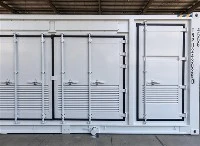

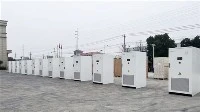
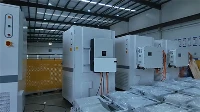
Most commercial energy storage projects you read about are built for two to four hours of discharge. That is the sweet spot for peak shaving and typical time-of-use arbitrage - enough to flatten an evening demand spike or shift a midday solar surplus to the 6 p.m. peak. But a growing class of commercial and industrial sites needs storage that runs far longer: eight, ten, even dozens of hours. That is the domain of long duration energy storage (LDES), and for the right facility it is becoming less of an experiment and more of a plan.
This article explains what LDES means for a C&I site, why some buildings genuinely need it, which technologies fit, and how to decide whether it belongs in your project.

What Counts as "Long Duration"
There is no single official cutoff, but in commercial practice "long duration" usually starts where standard systems stop - beyond four hours and extending to eight, ten, or even multi-day autonomy. The key is the ratio of energy to power, expressed through C-rate selection. A standard 2-hour system is a 0.5C design; a 10-hour system is 0.1C. As you stretch duration, the storage shifts from a power tool (shave a spike) to an energy reservoir (ride through a day, a week, or a grid emergency).
The distinction matters because the technology that wins at 4 hours is not always the one that wins at 40.
Why a Commercial Site Would Go Long
Four hours covers most demand-charge and arbitrage cases. LDES earns its keep when the value comes from time, not just peak power.
Multi-day resilience. A data center, hospital, cold-storage warehouse, or water-treatment plant cannot tolerate an outage measured in hours, let alone days. A behind-the-meter microgrid sized for long duration keeps critical loads alive through extended grid failure - something a 2-hour battery cannot promise.
Full-day demand and TOU coverage. Some tariffs punish load across most of the daytime, not just a brief peak. A longer-duration system can shave demand from morning through evening, or arbitrage a full day of price spread rather than a single window.
Remote and islanded industrial sites. Mines, isolated facilities, and island grids often have no reliable utility to lean on. Here, LDES displaces expensive diesel and provides the backbone of a battery vs diesel generator strategy rather than a supplement to it.
Seasonal or deep-shift value. In markets with very wide day-night or weekday-weekend price gaps, long duration captures value that short storage leaves on the table.

The Technology Spectrum
Stretching duration changes the economics of chemistry. Here is the landscape a C&I buyer should know.
LFP lithium, scaled up. The dominant C&I BESS chemistry, LFP, can absolutely be built for long duration - you simply add more cells at the same power. The catch is cost: lithium is expensive per kWh, so an 8–10 hour LFP system carries a heavy capex premium, and deep daily cycling accelerates degradation. It works, but it is not always the smartest dollar.
Flow batteries. Sodium-ion and flow batteries deserve a serious look for LDES. Vanadium redox and iron flow batteries separate power from energy: the power stack scales with cell area, the energy scales with electrolyte tank size. That decoupling makes them economically attractive as duration grows, because adding hours means adding cheap liquid, not expensive cells. They are mature, cyclically durable, and inherently safe (non-flammable electrolyte).
Sodium-ion. Sodium chemistry trades some energy density for lower material cost and simpler supply chains. For long-duration, stationary applications where weight and volume are manageable, it is an emerging contender worth tracking - especially as it scales past pilot stage.
Mechanical and thermal options. Compressed-air, gravity, and thermal storage exist at utility scale and are beginning to appear in large industrial contexts. They are less common for standard C&I but relevant for very large sites with land and a long planning horizon.
Hydrogen. Electrolysis-plus-fuel-cell is the ultimate long-duration answer for some grids, but for most commercial sites today it is too inefficient and costly for sub-weekly needs.
Sizing Long Duration the Right Way
Long duration is where rough sizing gets expensive. You need a real load profile analysis - not a guess at "we want a day of backup." Pull your 15-minute interval data, build a duration curve, and ask: which loads must survive, for how long, and under what recharge constraints? An energy storage sizing calculator built on your actual profile will beat any vendor's default far more than it does at 2 hours, because the cost of oversizing compounds with every additional hour.
Pay attention to C-rate here. A system that delivers 10 hours at 0.1C may be undersized on power if a motor or chiller startup needs a short burst. Duration and peak power are independent design axes - size both.
The Economics: When Long Pencils Out
The financial case for LDES is different from a 4-hour system. You are rarely just chasing demand-charge savings. The value usually comes from stacking:
Resilience avoided - the cost of downtime you no longer risk.
Diesel displaced - fuel, maintenance, and emissions you no longer burn.
Deeper arbitrage - wider price spreads captured.
Capacity or grid-service payments where available.
Run the LCOS honestly across the full duration. Lithium LDES often shows a high LCOS because you are paying cell cost for every stored hour. Flow and other decoupled designs tend to look better as hours climb. The crossover point depends on your cycling depth, site, and incentives - model it rather than assuming.
Is LDES Ready for C&I?
Yes - with the right framing.
Critical-facility and remote/industrial sites: LDES is ready now where the resilience or diesel-displacement value is large. Flow batteries, in particular, are a proven commercial choice here.
Standard commercial buildings: A full 8–10 hour lithium system is usually over-built. Start at 2–4 hours; add duration only when a specific, modeled value justifies it.
Speculative "future-proofing": Do not buy 20 hours of storage hoping the use case appears. Size to a real, quantified need.
The Bottom Line
Long duration energy storage is not a bigger version of a 2-hour battery - it is a different design problem with its own technology winners. For C&I sites with real multi-hour-to-multi-day resilience, arbitrage, or diesel-displacement needs, LDES (often flow or sodium-based) is ready and economically rational today. For the typical commercial building, standard 4-hour storage remains the efficient default; extend duration only when a modeled value demands it. Match the chemistry to the hours, and the hours to a real load.