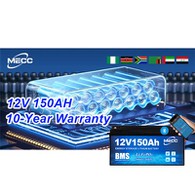
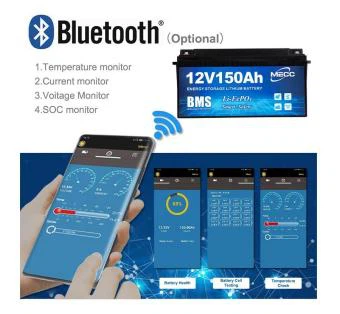
It has a built-in diagnostic system. The self-monitoring battery can detect and report any potential issues. It constantly checks its own health, such as internal resistance, capacity, and temperature anomalies. In a fleet of electric vehicles, this diagnostic system can alert the driver or maintenance crew to a problem before it becomes serious, allowing for timely repairs and minimizing vehicle downtime.
They are manufactured with a reactive ion etching (RIE) process for microfabrication. RIE uses a plasma containing reactive ions to selectively remove material from a substrate, enabling the creation of extremely fine and precise patterns and structures at the microscale. In the semiconductor and microelectronics fields, this is indispensable for fabricating integrated circuits, microchips, and sensors. By precisely etching away layers of material, manufacturers can create intricate circuitry and miniaturized components. For instance, in a smartphone's processor chip, RIE is used to define the nanometer-scale transistor features, which directly impacts the device's computing power and energy efficiency. The ability to control the etching process with such precision allows for continuous innovation in miniaturization and performance enhancement.
Nestled near a university campus, it's a hotbed of academic-industry collaboration in power research. Scientists and students work side by side with industry experts to explore novel power generation and storage concepts. The facility houses state-of-the-art laboratories equipped with cutting-edge instrumentation. Here, they conduct experiments on new materials like nanostructured electrodes and solid-state electrolytes, aiming to break through the existing energy density limits. The manufacturing process benefits from this research, with prototypes being quickly fabricated and tested. This symbiotic relationship accelerates the pace of innovation, bringing revolutionary power solutions closer to market.
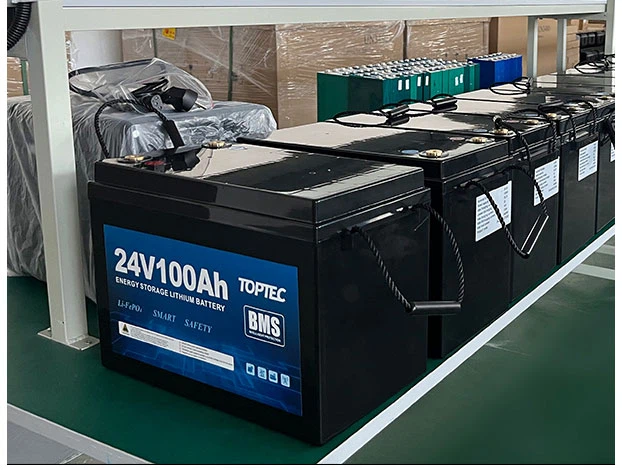
| Voltage | 12V/24V |
| Capacity | 100/200Ah |
| Cycle Life | >3000 cycles |
| Efficiency of Charge | 100% @0.5C |
| Efficiency of Discharge | 96~99% @1C |
| Charge Voltage | 14.6±0.2V |
| Charge Current | 60A |
| IP Class | IP65 |















FAQ
Q: How does the solvent extraction and purification technique work for raw materials?
A: The solvent extraction and purification technique is a meticulous process for obtaining high-quality raw materials. We start by selecting appropriate solvents based on the properties of the target materials and impurities. For example, if we're extracting a particular metal from an ore, we choose a solvent that has a high affinity for that metal. The raw material is then mixed with the solvent, and through a series of mechanical agitation and sometimes heating, the target material dissolves into the solvent. This forms a solution, while the impurities remain either undissolved or form a separate phase. Next, we use techniques like filtration or centrifugation to separate the dissolved target material from the remaining solids. To further purify the extracted material, we may employ processes such as distillation or chromatography.
Hot Tags: 12.8v lifepo4 battery pack 125ah wifi, China 12.8v lifepo4 battery pack 125ah wifi manufacturers, suppliers, 400ah lithium battery, lithium gate battery, 72 volt lithium battery, 24 volt lithium battery for trolling motor, 7 4 v 1500mah li ion battery, 72v lithium battery