Products Description
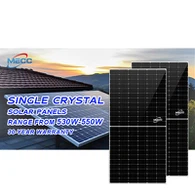
Power Output & Efficiency: With a rated power of 580W, this panel stands among the highest-output residential/commercial options available. Its monocrystalline cells (cut from a single silicon crystal) achieve a conversion efficiency of 23–24%-significantly higher than polycrystalline panels (15–18%) and thin-film options (10–12%). This means it converts more sunlight into electricity, generating 580W under standard test conditions (STC: 1000W/m² irradiance, 25°C cell temperature) and maintaining strong performance even in low-light conditions (e.g., cloudy mornings or late afternoons).
Design & Durability:
Cell Technology: Uses half-cut monocrystalline cells (split into smaller segments) to reduce resistance and minimize power loss from shading. This design also enhances thermal management, preventing hotspots that can degrade performance over time.
Tough Casing: Encased in tempered glass (2.5mm thick) with an anti-reflective, anti-soiling coating to reduce dust accumulation and maximize light absorption. The aluminum frame is corrosion-resistant, rated to withstand high winds (up to 166km/h) and heavy snow loads (5400Pa)-suitable for extreme climates (coastal areas, mountain regions, or storm-prone zones).
Temperature Tolerance: Operates efficiently in a wide range (-40°C to 85°C) with a low temperature coefficient (-0.34%/°C), meaning it loses only 0.34% of power for every 1°C increase above 25°C-outperforming panels with higher coefficients (e.g., -0.40%/°C).
Installation & Compatibility:
Dimensions: Typically measures around 2270 x 1134 x 35mm (length x width x thickness), with a weight of ~32kg. Its large size makes it ideal for ground-mounted systems or spacious rooftops, where fewer panels are needed to reach target capacity (e.g., 17 panels for a 10kW system, vs. 25+ for 400W panels).
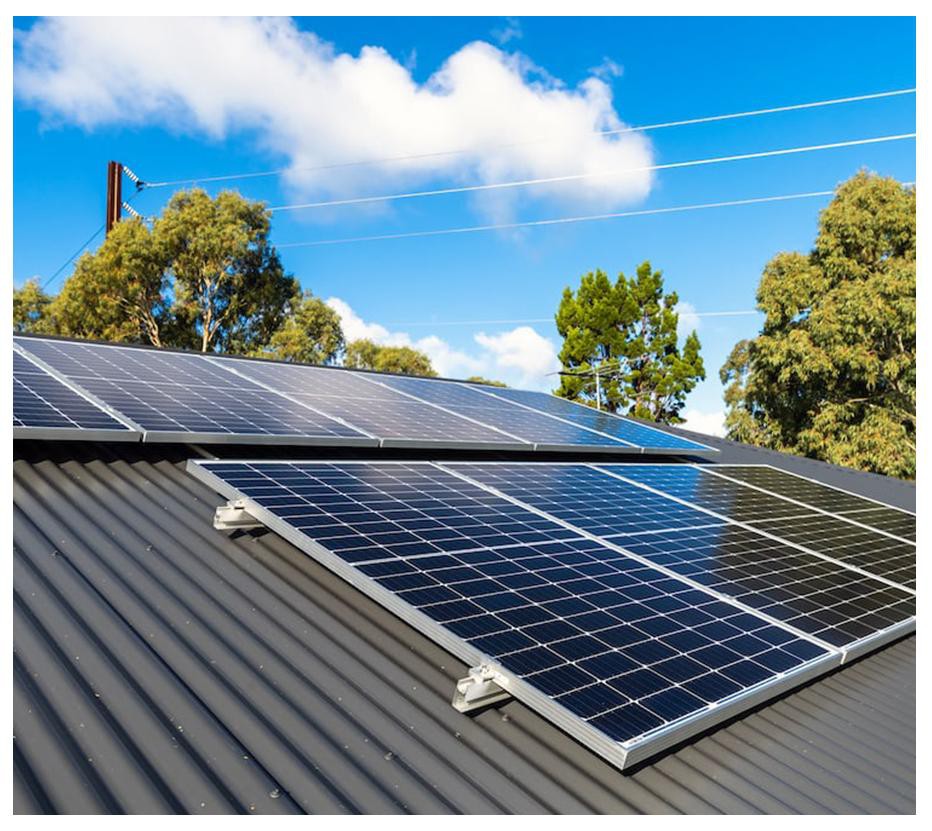
Versatile Integration: Compatible with standard string inverters, microinverters, and solar charge controllers, making it suitable for both grid-tied and off-grid setups. It also works with mounting systems for rooftops (sloped or flat), ground racks, or carports.
Products parameters
|
Module |
WN 550-580W - 36MH | ||||||||
|
Max Power Pmax(W) |
550 | 560 | 565 | 570 | 580 | ||||
|
Max Power Voltage(Vmp/V) |
41.50 | 41.77 | 41.92 | 42.07 | 42.37 | ||||
|
Max Power Current(Imp/A) |
13.26 | 13.41 | 13.48 | 13.55 | 13.69 | ||||
|
Open Circuit Voltage(Voc/V) |
50.21 | 50.47 | 50.60 | 50.74 | 51.02 | ||||
|
Short Circuit Current(Isc/A) |
14.00 | 14.15 | 14.23 | 14.31 | 14.47 | ||||
|
Module Efficiency(%) |
21.29 | 21.68 | 21.87 | 22.07 | 22.45 | ||||
|
Power Tolerance(W) |
0 ~ + 3 %
|
||||||||
|
Operating Temperature
|
-40 °C ~ +85 °C
|
||||||||
|
Max Series Fuse Rating
|
30 A
|
||||||||
Products Overview


| Product Specification | |
| Module Size |
2278×1134×30
|
| Weight | 29kg |
| Cell Type |
N- type Mono
|
| Junction Box | IP68 |
| Connector | PV Connector |



Technique
-
The packaging of panels is labeled with important information. This includes details about the panel's specifications, such as power output, voltage, and current ratings. It also has information about the manufacturer, warranty, and handling instructions. Clear and accurate labeling helps customers and installers to easily identify and use the panels.
-
During the manufacturing of panels, a process of surface texturing is carried out on the silicon wafers. This texturing can be achieved through chemical etching or mechanical methods. The textured surface increases the light trapping ability of the cells, allowing more sunlight to be absorbed and converted into electricity.
Factory
- Nestled in an expansive industrial zone, our factory stands as a paragon of modern manufacturing prowess. Spanning over a vast area, it is a hive of activity where innovation and precision converge. The factory's exterior is a testament to contemporary architecture, with sleek lines and a well-designed layout that optimizes both functionality and aesthetics. It serves as a visual cue to the advanced technological marvels that lie within.
- Upon entering the factory, one is immediately greeted by a bustling environment filled with a symphony of sounds. The hum of high-powered machinery, the rhythmic clicking of automated assembly arms, and the muted chatter of our highly trained technicians create an atmosphere of focused productivity. The factory floor is a carefully orchestrated space, where every square foot is utilized to its fullest potential. Wide aisles allow for seamless movement of raw materials and finished products, ensuring an uninterrupted flow of production.
- Our factory is equipped with a cutting-edge production line that represents the pinnacle of solar panel manufacturing technology. The heart of this line lies in the precision wafer processing area. Here, ultra-pure silicon wafers are carefully crafted with micron-level accuracy. State-of-the-art etching and doping techniques are employed to manipulate the electrical properties of the wafers, laying the foundation for optimal energy conversion. These wafers then progress through a series of meticulously controlled steps, including the application of anti-reflective coatings and the attachment of conductive electrodes, all carried out under strict environmental conditions to minimize impurities and ensure the highest quality.
FAQ
What is the initial cost of a single panel?
The initial cost of a single one can vary widely depending on its size, brand, and efficiency. On average, a standard residential panel might cost between $100 and $300. Higher efficiency panels or those from well-known brands may be more expensive. The cost also includes the manufacturing, transportation, and marketing expenses.
How much can I save on my electricity bill by using it?
The amount of savings depends on factors such as the size of the panel, the amount of sunlight in your area, and your electricity consumption. On average, a homeowner with a typical solar panel installation might save between 30% and 80% on their monthly electricity bill. Over the long term, these savings can be significant and can offset the initial cost of the panel installation.
Hot Tags: 580 watts monocrystalline solar panel, China 580 watts monocrystalline solar panel manufacturers, suppliers, 370w solar panel, amorphous solar panel, 800 watt solar panel, Black Mono Solar Panel, most powerful solar panel, 440w solar panel