


Products Description
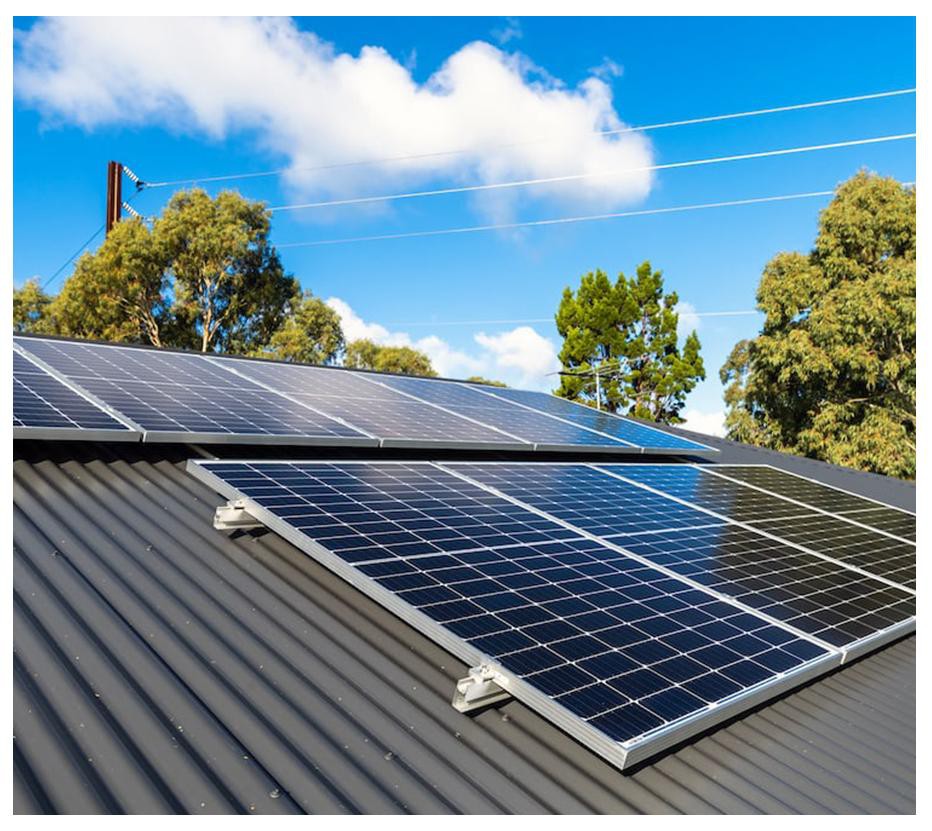
- Solar panels are highly efficient in converting sunlight into electricity. Their advanced photovoltaic technology enables them to capture a significant amount of solar radiation and transform it into usable electrical power. This efficiency is crucial as it maximizes the energy output, making them a viable option for various energy needs, whether it's powering a small household appliance or contributing to a large-scale industrial power supply.
- They possess excellent durability, withstanding various weather conditions. From scorching heatwaves to freezing cold winters, and even heavy rainfalls and strong winds, solar panels are built to last. Their robust construction and quality materials ensure that they can endure the harshest of environmental elements without significant damage or degradation, providing reliable energy generation over an extended period.
Products parameters
|
Module |
WN 550-580W - 36MH | ||||||||
|
Max Power Pmax(W) |
550 | 560 | 565 | 570 | 580 | ||||
|
Max Power Voltage(Vmp/V) |
41.50 | 41.77 | 41.92 | 42.07 | 42.37 | ||||
|
Max Power Current(Imp/A) |
13.26 | 13.41 | 13.48 | 13.55 | 13.69 | ||||
|
Open Circuit Voltage(Voc/V) |
50.21 | 50.47 | 50.60 | 50.74 | 51.02 | ||||
|
Short Circuit Current(Isc/A) |
14.00 | 14.15 | 14.23 | 14.31 | 14.47 | ||||
|
Module Efficiency(%) |
21.29 | 21.68 | 21.87 | 22.07 | 22.45 | ||||
|
Power Tolerance(W) |
0 ~ + 3 %
|
||||||||
|
Operating Temperature
|
-40 °C ~ +85 °C
|
||||||||
|
Max Series Fuse Rating
|
30 A
|
||||||||
Products Overview


| Product Specification | |
| Module Size |
2278×1134×30
|
| Weight | 29kg |
| Cell Type |
N- type Mono
|
| Junction Box | IP68 |
| Connector | PV Connector |



Technique
- The manufacturing process of solar panels is a highly intricate and precise operation. It commences with the sourcing of high-purity silicon, which serves as the fundamental building block. This silicon is then melted and carefully cast into ingots. Through a process of wire sawing, these ingots are sliced into extremely thin wafers with a thickness that is meticulously controlled. The wafers are then subjected to a complex series of chemical and thermal treatments. For instance, they undergo a doping process where specific impurities are introduced in a precisely measured manner. This doping is essential as it alters the electrical properties of the silicon, creating either an n-type or p-type semiconductor. The wafers are further processed to etch microscopic textures onto their surfaces. This texturing significantly increases the surface area available for light absorption and reduces the reflection of sunlight, thereby enhancing the overall efficiency of the solar panel.
- Solar panel production incorporates a state-of-the-art cell assembly phase. In this stage, the individual silicon cells are precisely aligned and connected in series or parallel configurations depending on the desired voltage and current output. The connections between the cells are made using a highly automated soldering process. This soldering is carried out with great precision to ensure minimal resistance at the joints. Specialized soldering alloys and techniques are employed to guarantee the long-term reliability of these electrical connections. Additionally, a layer of conductive paste is often applied to further enhance the conductivity and adhesion between the cells and the interconnecting wires.
FAQ
How efficient is the panel in converting sunlight into electricity?
The panel typically has an efficiency ranging from 18% to 22%. This efficiency allows it to convert a significant portion of the incident sunlight into usable electrical energy. However, the actual efficiency can be influenced by various factors such as the quality of the silicon used, the manufacturing process, and the presence of any dirt or shading on the panel surface. Advanced manufacturing techniques are employed to optimize the cell structure and minimize energy losses during the conversion process, ensuring that it can perform well even in less than ideal sunlight conditions.
What is the maximum power output of the panel?
It depends on the specific model and size of the panel. For example, a common residential panel might have a maximum power output of around 400 to 500 watts. Larger commercial or industrial panels can have power outputs exceeding 600 watts. The power output is determined by the number and quality of the solar cells within the panel, as well as the overall design and engineering. Higher power output panels are often used in applications where a greater amount of electricity is required, such as powering large manufacturing facilities or contributing to grid-scale solar farms.
Hot Tags: 550 watt monocrystalline solar panel, China 550 watt monocrystalline solar panel manufacturers, suppliers, 330 watt solar panel, flexible solar panels, 330w solar panel, 540W Mono Solar Panel, Super Power Solar Panel, solar panel energy


