



1 What is container energy storage
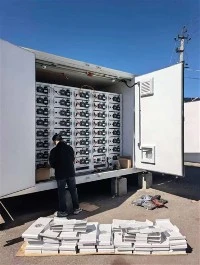
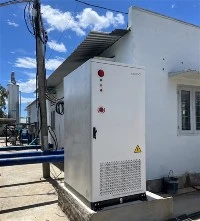
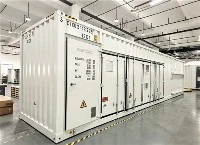
Containerized Energy Storage System, commonly abbreviated as CESS, integrates battery cabinets, lithium battery management systems (BMS), bidirectional energy storage converters (PCS), container monitoring systems, fire protection systems, cooling systems, etc. It can also integrate energy storage converters and energy management systems according to customer needs.

1. Energy storage unit
The energy storage unit is the core part of the system, usually using lithium-ion batteries, sodium ion batteries, or other new battery technologies to store and release electrical energy. This type of battery has high energy density and long cycle life.

2. Battery Management System (BMS)
BMS is used to monitor and manage the operating status of batteries, ensuring the safety and performance of the system. It has the ability to monitor voltage, current, and temperature. Capable of balancing the voltage of individual battery cells. Provide overcharge, overdischarge, and short circuit protection.
3. Power Conversion System (PCS)
PCS is a critical device that connects energy storage systems with the power grid or loads. It can convert direct current into alternating current (inverter) and also convert alternating current into direct current (rectifier), thereby achieving bidirectional power flow.

4. Thermal management system
The energy storage system generates heat during operation, and the thermal management system is used to control temperature and ensure system stability. It includes air conditioning, radiator, and heater. To ensure that the battery operates within the optimal temperature range.

5. Fire and safety system
Container energy storage systems are typically equipped with independent fire protection systems, including smoke alarms, fire extinguishers, and gas fire extinguishing devices. To prevent fire accidents and ensure the safety of equipment and personnel.
6. Communication and Monitoring System
This system is used to achieve remote monitoring and intelligent management of energy storage systems. Collect system operation data. Provide alerts and operational status reports. Supports integration with Energy Management Systems (EMS).
2 Performance characteristics of energy storage containers
1. Highly integrated
The container energy storage system integrates batteries, power conversion equipment, and auxiliary facilities into a standardized box, achieving modular design for easy transportation and rapid deployment.
2. High security
By implementing multiple layers of protection mechanisms (BMS, security system, and fire protection system), operational risks are effectively reduced to ensure system safety.
3. Strong scalability
Through modular design, energy storage capacity can be flexibly increased or decreased according to project requirements.
4. Strong environmental adaptability
Energy storage containers have high environmental adaptability, with good anti-corrosion, fireproof, waterproof, dustproof (windproof and sand proof), shockproof, UV resistant, anti-theft and other functions, ensuring that they will not be corroded within 25 years.

3 Classification and Size of Boxes in the Current Market
1. Material classification and application scenarios
Ordinary steel box: suitable for general environmental conditions, with low cost.
Aluminum box: lightweight, suitable for scenarios that require high transportation flexibility.
Composite material box: with better anti-corrosion and fireproof performance, suitable for harsh environments.
2. Size in the market
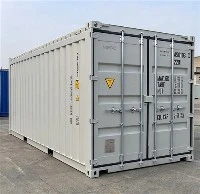
Energy storage containers typically use standard container sizes:
20 foot enclosure (6.06 meters x 2.44 meters x 2.59 meters): suitable for small energy storage projects.
40 foot enclosure (12.19 meters x 2.44 meters x 2.59 meters): suitable for medium to large energy storage projects.
In addition, non-standard sizes can be designed according to specific requirements to meet the needs of specific scenarios.
4 Capacity Range and Application Scenarios
1. Capacity Range
The capacity of energy storage containers is usually between 100 kilowatt hours and several megawatt hours, and can be customized according to demand:
Small scale energy storage (100-500 kWh): suitable for small commercial or household energy management.
Medium sized energy storage (500 kWh~1 megawatt hour): applied to microgrids and industrial and commercial users.
Large scale energy storage (over 1 megawatt hour): serving power grid peak and frequency regulation, and large-scale renewable energy integration.

2. Application scenarios
Power grid regulation: Provide peak shaving and frequency regulation services to balance the load of the power grid.
Renewable energy support: Smooth wind and photovoltaic output to solve intermittent problems.
Backup power supply: provides emergency power supply for key facilities such as hospitals and data centers.
Microgrid: providing stable power support in remote or isolated areas.
Optimization of industrial and commercial electricity consumption: By peak shaving and valley filling, electricity costs can be reduced.
Container energy storage, as a flexible and efficient energy storage solution, has the characteristics of high integration, easy scalability, and strong environmental adaptability. Its wide capacity range and application scenarios enable it to meet the energy storage needs of different fields. The diversified design from the material of the box to the installation position also makes it widely applicable in various complex environments.