From June 3 to 5, 2026, the 19th International Photovoltaic Power Generation and Smart Energy Exhibition (SNEC 2026) concluded successfully at the National Exhibition and Convention Center (Shanghai). Centered on the theme of PV-energy storage integration, system-centric development and AI empowerment, this year's show witnessed a landmark highlight: energy storage pavilions outnumbered photovoltaic (PV) pavilions for the first time.
More than 3,000 enterprises from 95 countries worldwide gathered at the event, with record-high intended signing volume for energy storage projects. The industry's development logic has undergone a fundamental shift. The era of blind expansion relying merely on hardware scale is gone, replaced by a comprehensive competition centered on technological innovation, in-depth scenario application, ecological collaboration and global layout. Combining on-site exhibits, corporate developments and market signals, this article analyzes the industrial chain trends reflected by the exhibition in an all-round way.
I. Large-scale Energy Storage: Moving Beyond Cut-throat Price Wars, System Capability Becomes Core Barrier
As the cornerstone of the industry, grid-scale and large-scale industrial & commercial energy storage have seen a drastic shift in competition landscape. The extensive price competition is fading out. Grid adaptability, system integration technology and long-term operational reliability have become key factors differentiating leading enterprises.
Comprehensive Iteration of Core Technologies
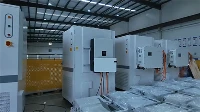
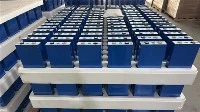
Large-capacity cells widely deployed: Cells with a capacity of 500Ah and above have become mainstream, while 587Ah and 628Ah laminated cells were showcased in large numbers. Large-capacity cell solutions greatly reduce wiring and BMS sampling components, cutting the overall system cost by 10%–15%. This further lowers the levelized cost of electricity for large energy storage stations and improves the economic viability of GWh-scale projects.
Grid-forming PCS becomes industry standard: With the growing installed capacity of new energy sources posing greater challenges to grid stability, grid-forming power conversion systems (PCS) featuring active voltage and frequency regulation have evolved from an optional advantage to a mandatory requirement. Meanwhile, silicon carbide (SiC) devices are rapidly adopted, pushing equipment conversion efficiency above 99% and perfectly matching the 2000V high-voltage energy storage architecture.
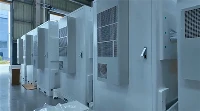
Dual development of full liquid cooling and long-duration energy storage: Full liquid cooling temperature control systems are gaining popularity, cutting operational energy consumption by 30% compared with traditional air cooling and effectively slowing battery degradation. Demand for long-duration energy storage (over 4 hours) is surging. Projects such as independent energy storage and cross-day peak regulation are accelerating filing and commissioning, with various long-duration energy storage technologies forming a complementary pattern.
AI empowers full-link operation: AI-based energy management and digital twin technologies are extensively applied, enabling millisecond-level load scheduling and early warning of equipment faults. These technologies boost the overall revenue of power stations by 10%–15% and greatly mitigate operational and maintenance risks.
Diversified Corporate Competition
Leading enterprises have abandoned homogeneous development and taken differentiated paths. Some leverage advantages in integrated PV and energy storage to deploy large-scale power stations and data center energy storage simultaneously. Some focus on grid-related technologies and deliver products with superior safety and stability. Others build closed-loop industrial chains to enhance delivery capacity for large-capacity energy storage projects. A number of players specialize in grid-side independent energy storage, consolidating domestic markets with resource advantages and gradually expanding globally.
A consensus has emerged across the industry: competition in large-scale energy storage now hinges on comprehensive strength including grid recognition, product safety and capital recognition.
II. Residential & Industrial/Commercial Energy Storage: Booming Globally, Accelerated Rollout of Scenario-based Solutions
Residential and industrial & commercial energy storage are the fastest-growing segments in the current energy storage sector, featuring robust growth in overseas markets and quality upgrading in the domestic market.
Residential Energy Storage: Europe as Core Market, Minimal Installation & Smart Interconnection Become Trends
Europe remains the world's largest residential energy storage market, supported by persistently high electricity prices and favorable policies. The payback period for local projects stands steadily at 3 to 5 years. Safety and intelligence have been further upgraded: high-voltage platforms, multi-layer protection and thermal runaway isolation have become standard configurations, while cloud-based dispatch, remote OTA updates and virtual power plant access are widely available.
Balcony energy storage has achieved explosive growth. Designed for apartments and households without rooftop space, modular balcony energy storage products have gained rapid popularity in Germany, Austria and other countries thanks to plug-and-play functionality and simple approval procedures, emerging as a new growth driver for the consumer market.
Industrial & Commercial Energy Storage: Shifting from Single Arbitrage to Diversified Revenue Streams
Thanks to the improved market-oriented electricity pricing mechanism and sustained large peak-valley electricity price gaps in many domestic regions, industrial and commercial energy storage has seen rising investment value. The business model has expanded beyond traditional peak-valley arbitrage to diversified revenue sources, including demand charge reduction, backup capacity, power auxiliary services and carbon asset appreciation.
Overseas demand is also strong. Driven by high electricity prices, grid fluctuations and ESG compliance requirements, installed capacity of industrial and commercial energy storage has soared across Europe, Australia and Southeast Asia. Products are built with high protection levels, long service life and intelligent functions. Integrated software and hardware solutions plus full-lifecycle operation and maintenance services have become core competitiveness for enterprises.
III. Balcony Energy Storage, Portable Energy Storage & Micro-inverters: Boom in the "Last Mile" of Distributed Energy
A wide range of compact civil PV-energy storage products were unveiled at the exhibition, completing the terminal application chain of distributed energy. The three product categories jointly form a full-fledged residential distributed energy ecosystem.
1. Balcony Energy Storage
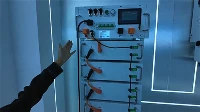
Tailored for urban apartments and small households, mainstream products are paired with 800W–3kW micro-inverters and 2–6kWh energy storage batteries. The AC-coupled architecture eliminates complex construction and approval procedures. Many European countries continue to relax installation policies, and a single unit can save considerable electricity costs annually. Shipments in related regions are expected to double in 2026. Modular stacking, low-voltage safety and outdoor durability are the mainstream design directions.
2. Portable Energy Storage
Portable energy storage serves diverse scenarios including outdoor camping, RV travel, construction sites and household emergency power supply. Products are evolving from small recreational models to 3–10kWh household units and 20–50kWh portable units for industrial and commercial use. High-energy-density cells, high-power bidirectional inverters, fast charging and low-noise technologies are widely adopted. These products can also connect with balcony PV systems and residential energy storage to build an integrated "fixed + portable" household energy network.
As core components for distributed PV and balcony PV-energy storage systems, micro-inverters gain market recognition for component-level independent MPPT, low-voltage safety and precise monitoring. Technologically, the adoption of silicon carbide devices has lifted the single-unit power of micro-inverters to 800W–1.2kW, with conversion efficiency exceeding 97%. Domestic brands are rising rapidly, competing head-to-head with overseas rivals in terms of pricing, reliability and intelligence. The combination of micro-inverters, energy storage systems and cloud platforms has become the standard ecosystem for residential distributed energy.
IV. PV Modules: N-type Technologies Take Lead, Scenario Customization & Global Layout Reshape Competition Landscape
The PV module sector has bid farewell to the era of solely pursuing high power output, stepping into a new phase featuring technological stratification, scenario customization and supply chain restructuring. Technological routes and competition patterns have become increasingly clear.
Diversified Mainstream Technologies
TOPCon: Currently the dominant technology with a market share of around 85%. It features low renovation costs and high yield rates. Mass production of 700W+ high-power modules has been realized, making it the top choice for large-scale ground power stations.
BC (Back Contact): A benchmark technology for the high-end distributed market. With no grid lines on the front side, it boasts an attractive appearance and superior reliability, achieving a conversion efficiency of 25%–26% and enjoying obvious premium value for residential and commercial rooftop projects.
HJT (Heterojunction): Excellent in weak light performance and temperature coefficient, it targets high-value niche overseas markets. Silver-free technologies are continuously developed to cut costs.
Perovskite tandem cells: Still in the demonstration application stage. Its lab efficiency keeps setting new records, making it a key long-term research direction for the industry.
Market and Competition Features
High-power and large-size modules have been widely adopted, and scenario-based customization has become prevalent. Modules for ground power stations prioritize high power and high bifaciality; those for distributed projects focus on appearance and reliability. Specialized modules have also been developed for extreme scenarios such as offshore projects, desert areas and lightweight rooftops.
Market concentration among global leading module manufacturers continues to rise. Vertically integrated enterprises covering silicon materials, wafers, cells and modules take the initiative by virtue of cost advantages and long-term orders. Affected by global trade policies, regionalized supply chain layout has become a trend. Overseas factory construction, carbon footprint compliance and overseas channel development have become core thresholds for PV enterprises going global.
V. Smart Microgrids: Essential for Off-grid & Zero-carbon Scenarios, Grid-forming Autonomy Becomes Mainstream Technology
As the basic unit for energy self-sufficiency, smart microgrids are in strong demand in remote islands, mining areas, remote industrial parks and zero-carbon communities, gradually replacing high-pollution diesel power generation.
Application Scenarios & Value
In off-grid and weak-grid areas, microgrids guarantee power supply stability and reduce electricity costs. In industrial parks and smart communities, they enable seamless switching between self-consumption, surplus power feed-in and island operation, supporting the construction of zero-carbon parks. Multiple benchmark projects at home and abroad have proven the sound economic returns of integrated PV-energy storage microgrids.
Technology & Market Pattern
Technically, grid-forming microgrids have become mainstream, equipped with black start, fault ride-through and off-grid self-synchronization capabilities to greatly enhance power supply reliability. AI-powered microgrid operating systems are deeply integrated to optimize the coordination of PV, energy storage, loads and diesel generators, raising the self-consumption rate and lowering the levelized cost of electricity.
The market has formed a tripartite collaborative pattern: central enterprises and grid companies lead large-scale benchmark projects; equipment manufacturers provide modular and prefabricated microgrid systems to shorten construction cycles; third-party operators focus on comprehensive services covering microgrids, virtual power plants and carbon assets to tap the long-term value of energy assets.
VI. Summary of Full Industrial Chain Trends
The developments showcased at SNEC 2026 clearly define the future direction of the entire PV and energy storage industry:
For large-scale energy storage, price competition is phased out. Core competitiveness is built on grid-forming technology, full liquid cooling solutions, AI-driven operation and maintenance, and comprehensive services.
Residential and industrial & commercial energy storage see growth in both domestic and overseas markets, with safety, intelligence and scenario-based solutions as long-term development priorities.
Balcony energy storage, portable energy storage and micro-inverters unlock the terminal potential of distributed energy, continuously unleashing the vitality of the consumer market.
In the PV module sector, N-type technologies develop along segmented tracks. Scenario customization, vertical industrial integration and global layout determine enterprises' development prospects.
Smart microgrids face booming demand in off-grid and zero-carbon scenarios, with grid-forming autonomy and multi-energy complementation as core technologies.
Against the backdrop of global energy transition, the integration of photovoltaic and energy storage has become an irreversible trend.
This SNEC exhibition marks a pivotal shift for the PV and energy storage industry, where energy storage has become the core growth engine overtaking PV. The whole industry is moving away from blind price competition and scale expansion toward technology upgrading, scenario refinement and ecological collaboration.
Large-scale energy storage emphasizes system performance, grid compatibility and intelligent operation; residential and industrial & commercial energy storage expand globally with diversified profit models and upgraded safety & smart functions. Miniature products including balcony energy storage, portable power stations and micro-inverters thrive in the consumer market, completing the distributed energy ecosystem.
Smart microgrids, supported by grid-forming technology and AI, serve off-grid and zero-carbon scenarios efficiently. Overall, deep integration of PV and energy storage has become the mainstream trend driving the global energy transformation.