


You have probably seen commercial energy storage cost per kWh quoted as a headline number. For a real investment decision, though, that figure hides too much. The metric engineers and CFOs actually use is LCOS - levelized cost of storage - because it spreads every cost across every usable kilowatt-hour the system delivers over its life. For any serious commercial & industrial energy storage project, LCOS is the number that decides whether the math works. This guide explains what it is, what goes into it, and how to use it when you compare a C&I battery energy storage system (BESS).

What LCOS Actually Is
Levelized cost of storage is the lifetime cost of a system divided by the lifetime energy it delivers. In plain terms: take everything you spend - capital, install, upkeep, replacements, financing, and end-of-life - discount it to present value, then divide by every usable kWh the battery discharges across its life. The result is a true "$ per kWh stored and delivered," not just the upfront sticker.
What Goes Into the Numerator
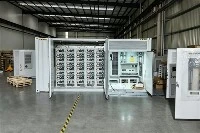
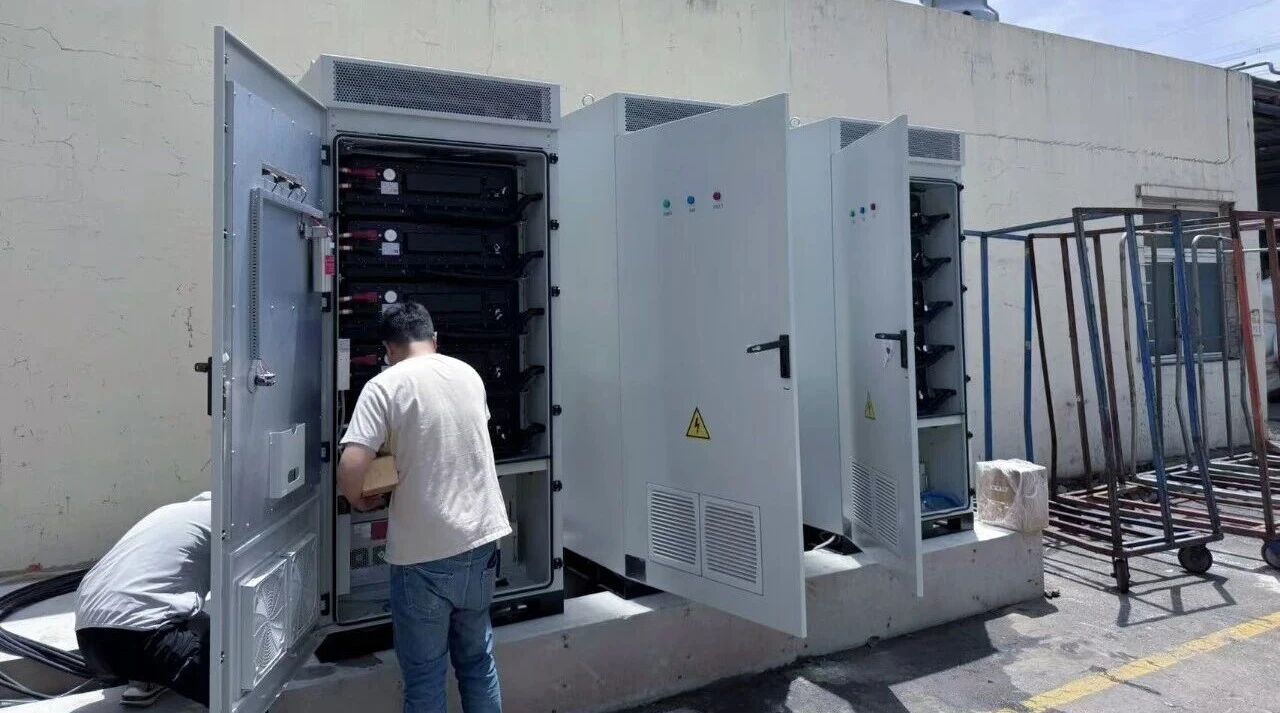
The top of the LCOS equation is total cost of ownership. It starts with the commercial battery storage solution hardware - cells, the power conversion system (PCS), battery management system (BMS), and AI-based energy management system (EMS). Then come engineering, a site assessment, grid interconnection, commissioning, and the safety package. Ongoing O&M and any mid-life component replacement sit here too, along with financing / tax incentives that effectively reduce the balance, and finally decommissioning.
What Goes Into the Denominator
The bottom is lifetime delivered energy - and this is where LCOS gets interesting. A system does not deliver its nameplate forever. Cycle life sets how many full cycles the cells survive. Round-trip efficiency (losses across charge, conversion, and discharge) trims every kWh. C-rate and duration shape how much usable energy each cycle yields, and state of charge and state of health (SOC/SOH) degradation slowly shrinks capacity. Two systems with identical price tags can have very different LCOS if one degrades faster or converts less efficiently.
LCOS vs Cost per kWh vs Payback
These three are often confused. Commercial energy storage cost per kWh is the simplest - usually hardware or turnkey price per unit capacity, with no lifetime context. C&I energy storage payback period flips the view to savings: how long until cumulative value equals cost. LCOS sits in between and above both: it normalizes cost against actual delivered energy, which is the fairest way to compare two very different commercial battery storage solution designs. For battery storage ROI for businesses, LCOS tells you the unit economics; payback tells you the timing.
What Drives LCOS Down
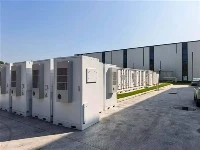
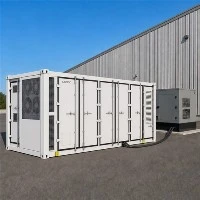
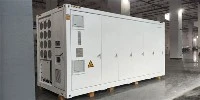
Chemistry leads. LFP (lithium iron phosphate) cells - now standard in C&I - deliver long cycle life at a favorable cost curve, a big reason LFP vs NMC is settled for stationary use. Cooling is next: liquid-cooled vs air-cooled designs that hold tight cell temperatures extend life and protect round-trip efficiency, lowering LCOS even when hardware costs a bit more. Architecture helps too - modern 1500V DC systems cut balance-of-system losses. And standardization matters: building from a 215 kWh commercial energy storage block, whether as an all-in-one cabinet or inside a containerized C&I BESS 20ft or modular C&I BESS, reduces engineering and replacement cost per kWh.
Using LCOS to Compare Systems
When you weigh best commercial energy storage systems 2026, ask each vendor for LCOS, not just price. A cheaper turnkey C&I energy storage unit with poor efficiency or short cycle life can post a higher LCOS than a pricier one that lasts longer. Run a C&I energy storage sizing calculator during your site assessment to set the right C-rate and duration - the practical core of how to size a commercial battery system - because undersizing or oversizing both worsen LCOS.
Tying LCOS to Value
LCOS only matters relative to what each delivered kWh is worth. A system with low LCOS still needs valuable outlets: peak shaving and energy storage for demand charge management cut demand charges, time-of-use arbitrage captures energy arbitrage revenue from price spreads, demand response adds utility payments, and commercial solar plus storage (the commercial solar plus storage economics case) shifts free midday PV into expensive evenings. A behind-the-meter / grid-tied or microgrid design that stacks these turns a good LCOS into a strong return.
Safety, Compliance, and LCOS Integrity
None of this holds if the system fails. Any credible install must clear UL 9540 / UL 9540A, NFPA 855, and IEC 62619 with regional CE / UKCA marks, and must include fire suppression and thermal runaway prevention. These protect the asset - and therefore the LCOS model - over the full life of a factory energy storage system or rooftop energy storage system.
Choosing a Supplier
Compare top C&I BESS manufacturers, evaluate OEM/ODM energy storage manufacturer partners for custom builds, and choose between turnkey C&I energy storage and wholesale supply. Ask each vendor for an LCOS model built on your interval data and a transparent BESS price quote request.

125KW 241kWh Battery Energy Storage System Cabinet
The BESS 125KW 241kWh Lithium Battery Energy Storage Cabinet is a high-power, large-capacity integrated energy storage solution engineered for medium-to-large commercial, industrial, and utility-scale applications. It integrates a 125kW high-performance bidirectional inverter, a 241kWh lithium iron phosphate (LiFePO4) battery bank, and a full-featured intelligent energy management system (EMS) into a modular cabinet design. This system enables efficient renewable energy storage, peak shaving, load shifting, grid frequency regulation, and emergency backup power supply. Ideal for large factories, shopping malls, industrial parks, utility-scale solar/wind farms, and microgrids, it enhances energy independence, reduces high grid demand charges, and supports the stable integration of high-penetration renewable energy into the grid.