


Introduction
Air cooling and liquid cooling are not inherently good or bad, only when used in appropriate places (scenarios) can their respective advantages be fully realized. So, why do most energy storage products choose liquid cooling instead of air cooling?
Before 2021, the heat dissipation method for energy storage products was uniformly air-cooled (except for Tesla Megapack).
At that time, most of the large storage products were 40 foot container walk-in systems, which required reserving personnel maintenance/escape routes according to national standards and loading as many batteries as possible. In order to accommodate more batteries, some manufacturers have even used larger containers -53 foot containers, with a maximum capacity of 2MWh for a 40 foot container.
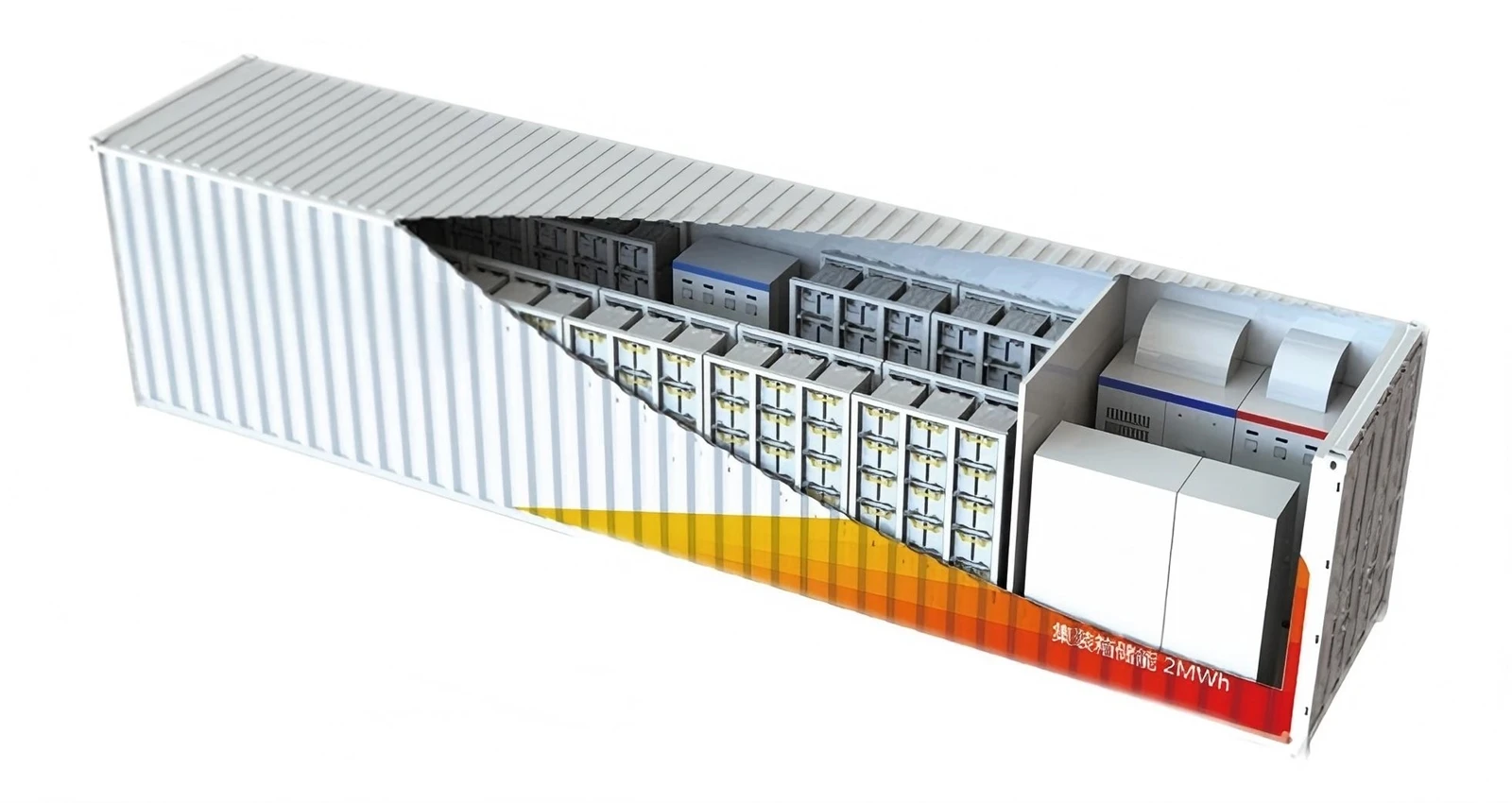
There are many fans inside the box to dissipate heat from the battery, and when people walk in, they hear a bunch of buzzing sounds from the fans.
Nowadays, energy storage systems are packed with 5MWh of batteries in a 20 foot container, which makes it difficult to meet the heat dissipation requirements through air cooling. So, what other advantages do air-cooled and liquid cooled systems have besides the ones mentioned above?
1. Advantages of liquid cooling system
1 Design and heat dissipation efficiency
Design complexity
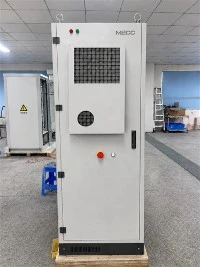
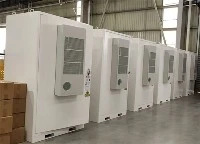
Air cooling: The technology of air cooling is mature and the structure is simple. Engineers will choose air cooling when designing. Its core design is fan selection and air duct design, which dissipate heat through air convection. The heat dissipation medium is air, which is inexhaustible and therefore has a relatively low cost. The core equipment of air cooling is air conditioning and air ducts, which are suitable for low to medium power scenarios, but difficult to meet high-density heat dissipation requirements, such as the current 5MWh/20 foot box.
Liquid cooling: A liquid circulation system (such as cooling plates, pumps, heat exchangers, etc.) needs to be designed, which is highly complex but can directly contact the heat source. Its thermal conductivity efficiency is 6 times that of air cooling, making it suitable for high-energy density equipment. Conclusion: Although liquid cooling design is complex, its heat dissipation efficiency is significantly higher, especially suitable for high-power energy storage systems.
Heat dissipation effect and temperature uniformity
Liquid cooling achieves precise temperature control through the circulation of coolant, with a temperature difference that can be controlled within 3 ℃, while air cooling relies on ambient airflow, with a temperature difference usually exceeding 7 ℃. High temperature environments can easily lead to deterioration of cell consistency and affect battery life. Conclusion: Liquid cooling has better temperature uniformity and heat dissipation stability, and can extend battery life.
2 Application scenario adaptability
Environment and Power Requirements
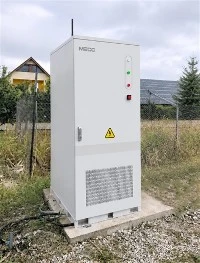
Air cooling: Suitable for outdoor environments and low to medium power scenarios (such as industrial and commercial energy storage, communication base stations), but sensitive to high temperature and high humidity environments, with limited heat dissipation effects.
Liquid cooling: It has significant advantages in large-scale energy storage (such as hundred megawatt level projects on the grid side), high charging and discharging rates, and extreme temperature scenarios. For example, shared energy storage power stations in Ningxia, Gansu and other places adopt liquid cooling solutions.
Conclusion: Liquid cooling is more suitable for high power density and complex environmental requirements.
3 Maintenance and reliability
Maintain complexity
Air cooling: easy to maintain, only requires cleaning the fan and air duct, but requires frequent handling of environmental dust and insufficient temperature control.
Liquid cooling: It is necessary to regularly check for coolant leakage, corrosion, and pump valve operation. The maintenance steps are cumbersome, but the system stability is high and the failure rate is low. For example, the maintenance time of a liquid cooling system is 2-3 times that of an air cooling system, but the risk of shutdown is very low.
Conclusion: Liquid cooling has high maintenance costs but better reliability, and strong long-term operational stability.
Security risks
Air cooling has no risk of liquid leakage, but relies on air conditioning and fans, which poses a risk of overheating.
Liquid cooling requires prevention of leakage and corrosion, but risks can be effectively controlled through high sealing design and material optimization.
4 Lifespan and energy consumption
Impact on battery life
For every 20 ℃ increase in temperature, the battery cycle life decreases by 3000-4000 times. Liquid cooling can stabilize the temperature of the battery cell at 30-35 ℃. Air cooling may reach over 38 ℃ in high temperature environments, accelerating battery degradation.
Conclusion: Liquid cooling significantly prolongs battery life and reduces full lifecycle replacement costs.
Operation energy consumption
Liquid cooling consumes less power than air cooling. For example, with a cooling capacity of 3kW, the energy consumption of liquid cooling is only 1/6 of that of air cooling, and the heat dissipation speed is faster, resulting in a shorter cooling time after shutdown.
Conclusion: Liquid cooling has significant long-term energy-saving effects and reduces operating costs.
5 Cost comparison
Initial cost
The cost of air-cooled systems is relatively low (about 1.1 yuan/Wh), while liquid cooling requires cooling plates, pumps, and other components, resulting in a cost increase of about 18% (about 1.3 yuan/Wh).
Life cycle cost
Although liquid cooling has a high initial investment, its overall cost is superior to air cooling due to its low energy consumption (saving over 30% of electricity bills), long lifespan (reducing battery replacement frequency), and low failure rate. For example, the full lifecycle cost of a 5MW liquid cooled project is 20% -30% lower than that of an air-cooled project.
Conclusion: Liquid cooling has more advantages in terms of full lifecycle economy.
6 Save space
The liquid cooling system has a high degree of integration, and the footprint of energy storage containers with the same capacity is reduced by about 40% compared to air cooling, making it suitable for land scarce scenarios. The current 5MWh battery can fit into a 20 foot container, mainly because the liquid cooling system saves a lot of space.
2. Disadvantages of liquid cooling systems
1 Environmental Protection and Safety
Liquid cooling is toxic
Ethylene glycol used for liquid cooling is toxic and leakage may contaminate soil and groundwater, requiring strict sealing and recycling treatment; The air-cooled system has no risk of liquid leakage and is more environmentally friendly. For example, in the 2021 Tesla Megapack energy storage station fire accident in Australia, a liquid cooling system leak caused a battery short circuit, leading to thermal runaway.

This case illustrates that liquid cooling has strict requirements for sealing and material quality, and this failure risk must be considered when designing liquid cooling systems.
Air cooling system safety
The air-cooled system does not have to worry about the risk of leakage. It relies on the continuous operation of air conditioning and fans, and the most serious problem is local overheating. However, the overall accident rate is lower than that of liquid cooling
2 Complex production and installation
The production of liquid cooling systems is complex
Customization of liquid cooled plates and trial production of molds are required, with a long research and development cycle and patent barriers involved.
Air cooling relies on standardized air duct design, with high degree of common mode and controllable cost.
Long installation time
The disassembly and assembly of liquid cooled battery cabinets takes more than 2 hours (involving drainage, sealing testing, etc.), while air cooling only takes 20 minutes, suitable for rapid deployment scenarios.
3 High noise level
The noise of liquid cooled units is usually ≤ 75dB (close to air-cooled air conditioning), but it can be further reduced by optimizing pump valve design and sound insulation materials. Tesla's Megapack moves the fan to the top of the energy storage box and installs the pump body inside the cabinet as a way to reduce noise.
The main noise source of air cooling is the fan (≤ 60dB), which is quieter overall.


3. The cooling trend of future large storage products
Air cooling+liquid cooling hybrid solution: Combining the advantages of both in some scenarios, such as using air cooling to reduce costs in low and medium power areas, and using liquid cooling to improve heat dissipation efficiency in high-power core areas.
Immersion liquid cooling: This is the most primitive heat dissipation method, which directly contacts the heat source with the cold source to dissipate heat. The heat dissipation efficiency is much higher than that of taking away heat through a cooling plate. If traditional liquid cooling eliminates air ducts compared to air cooling systems, then immersion liquid cooling further eliminates cold plates. By directly immersing the battery cells, extreme heat dissipation (temperature difference ≤ 1 ℃) can be achieved, which may replace traditional liquid cooling in high-density energy storage in the future.


4. Summary
Under the current battery technology and heat dissipation requirements, liquid cooling technology solves the core pain points of large energy storage in high power density (5MWh/20 feet) scenarios through efficient heat dissipation, precise temperature control, low energy consumption, and long lifespan.
Despite its high initial cost and maintenance complexity, it has significant economic and reliability advantages throughout its entire lifecycle. With the large-scale application of liquid cooling (such as an expected penetration rate of 45% by 2025), the maturity of the industrial chain will further reduce costs and promote it as the "optimal solution" for large-scale energy storage.
Postscript: All heat dissipation and fire protection measures are centered around the battery cells. If high-temperature battery cells can be mass-produced in the future by directly exchanging heat with air, and the battery cells themselves can withstand higher temperatures, then the cost of energy storage systems can be significantly reduced. This is the technology that benefits humanity.