


Electricity is not priced like a commodity with one tag - in time-of-use (TOU) markets, the same kilowatt-hour can cost three or four times more at 5 p.m. than at 3 a.m. A C&I battery energy storage system (BESS) exists to exploit exactly that gap. Time-of-use arbitrage - charging when power is cheap and discharging when it is expensive - is one of the cleanest, most repeatable ways a commercial battery storage solution turns a tariff structure into energy arbitrage revenue. This guide explains how it works and what it takes to profit from it.

What a TOU Tariff Actually Is
Under a TOU tariff, the utility divides the day into priced windows: a cheap off-peak period (often overnight), a mid-priced shoulder, and an expensive on-peak period (typically late afternoon to early evening). Your $/kWh changes with the clock, not just with consumption. For a site on such a tariff, every on-peak kWh you avoid buying - or serve from stored energy - is money kept.
How TOU Arbitrage Works
A behind-the-meter / grid-tied battery charges during off-peak hours, then discharges into the on-peak window when grid power is dear. The AI-based energy management system (EMS) watches the tariff schedule and your live load, and commands the power conversion system (PCS) to inject stored energy at the right moments; the battery management system (BMS) safeguards the cells throughout. This load shifting happens automatically, every day the tariff rewards it.
The Economic Core
The profit per cycle is simple in shape: the price spread (on-peak minus off-peak $/kWh) multiplied by the energy you discharge, minus the small losses from round-trip efficiency. Picture a site where off-peak power runs near $0.08 and on-peak near $0.30 - a spread around $0.22 per kWh. Discharging a couple of hundred kWh each evening into that window, day after day, compounds into a meaningful annual energy arbitrage revenue stream. The wider and more frequent the peak windows, the more a commercial & industrial energy storage system earns.
What Makes Arbitrage Profitable
Four factors decide whether the math works. The price spread is first - without a meaningful gap between off-peak and on-peak, there is little to capture. The number and length of peak windows is second; markets with two daily peaks let the battery cycle twice. Round-trip efficiency is third - modern systems using lithium iron phosphate (LFP) cells at 1500V DC minimize conversion losses, so more of the spread reaches your bottom line. Fourth is cycle life: because arbitrage cycles the battery every day, cooling and durability matter - liquid-cooled vs air-cooled choices that extend life directly protect the return.

Sizing for Arbitrage
Sizing starts with your TOU schedule and load shape. A C&I energy storage sizing calculator run during a free site assessment sets the right C-rate and duration - the practical core of how to size a commercial battery system. A site with one long evening peak needs more duration; one with sharp brief peaks needs higher C-rate. Capacity builds from standard 215 kWh commercial energy storage blocks, delivered as all-in-one cabinets, modular C&I BESS racks, or inside a containerized C&I BESS 20ft - scale to the window without oversizing.
Stacking With Other Value Streams
Arbitrage rarely runs alone. The same battery can perform peak shaving and energy storage for demand charge management to cut the demand line, join demand response for utility payments, and pair with commercial solar plus storage so midday PV - not just off-peak grid power - fills the battery. The commercial solar plus storage economics improve further when free sunlight replaces bought off-peak energy. In a microgrid setup, the battery also covers outages. Stacking two or three streams is what lifts battery storage ROI for businesses above a single-use case.
Cost and Payback
The commercial energy storage cost per kWh sets your denominator; the recurring arbitrage revenue sets the numerator. Well-designed systems in wide-spread TOU markets often post a compelling C&I energy storage payback period. Because arbitrage is a daily, predictable stream, the savings model is unusually stable - which lenders and Energy-as-a-Service providers like.
Safety and Compliance
Any system beside an occupied building must clear UL 9540 / UL 9540A, NFPA 855, and IEC 62619 with regional CE / UKCA marks, and must include fire suppression and thermal runaway prevention. These protect the asset - and therefore the revenue - across the system's life, whether it is a factory energy storage system or a rooftop energy storage system.
From Tariff to Quote
Compare best commercial energy storage systems 2026, weigh turnkey C&I energy storage against wholesale supply, and evaluate OEM/ODM energy storage manufacturer partners for custom builds. Ask top C&I BESS manufacturers for a transparent BESS price quote request that models arbitrage revenue from your specific TOU tariff.

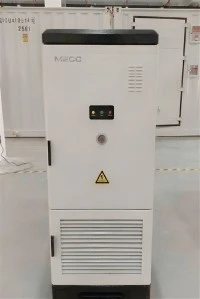
125KW 241kWh Battery Energy Storage System Cabinet
The BESS 125KW 241kWh Lithium Battery Energy Storage Cabinet is a high-power, large-capacity integrated energy storage solution engineered for medium-to-large commercial, industrial, and utility-scale applications. It integrates a 125kW high-performance bidirectional inverter, a 241kWh lithium iron phosphate (LiFePO4) battery bank, and a full-featured intelligent energy management system (EMS) into a modular cabinet design. This system enables efficient renewable energy storage, peak shaving, load shifting, grid frequency regulation, and emergency backup power supply. Ideal for large factories, shopping malls, industrial parks, utility-scale solar/wind farms, and microgrids, it enhances energy independence, reduces high grid demand charges, and supports the stable integration of high-penetration renewable energy into the grid.