



Almost every commercial storage buyer asks the same question in the same way: are prices going down, and should I wait?
The honest answer is that the battery storage price trend is not one curve. It is two curves moving in opposite directions. Equipment prices - cells, modules, racks, cabinets, containers - continue to fall. Installed prices - the number that actually appears in your capital budget - are falling much more slowly, and in some markets have stopped falling altogether.
Understanding that gap is worth more than any forecast. It determines whether waiting saves you money or quietly costs you three years of bill savings.
The two curves that make up every quote
A commercial battery storage quote is roughly four buckets:
Cells and modules - the largest single line item, and the most volatile.
Balance of system - PCS, BMS, EMS, thermal management, fire detection and suppression, enclosure.
Integration and installation - labour, cabling, switchgear, commissioning, and increasingly the transformer.
Soft costs - permitting, interconnection studies, engineering, insurance, freight and duties.
The first two follow global manufacturing economics. The last two follow local labour markets, utility queues and regulation. When people say "battery prices fell 40%," they are almost always describing the first bucket. When a project manager says "the number didn't move," they are describing the sum of all four.
That divergence is the single most important thing to understand about the 2026–2028 outlook.
Where prices sit in 2026
Indicative ranges, and they vary widely by region and specification:
C&I cabinet systems, equipment only: roughly USD 150–280/kWh for LFP with liquid cooling, at 2-hour duration, depending on volume, certification package and whether PCS is integrated.
Containerised systems, equipment only: roughly USD 120–220/kWh at 4-hour duration in high-volume markets, higher in markets with limited competition or strict local-content rules.
Turnkey installed, 2-hour C&I: commonly USD 300–550/kWh in North America and Western Europe; materially lower in China and parts of Southeast Asia.
Turnkey installed, 4-hour: lower per kWh than 2-hour on the equipment side, but not proportionally - the PCS, interconnection and civil works do not halve.
Two structural facts sit behind these numbers. First, global cell manufacturing capacity still exceeds demand, which keeps downward pressure on the largest cost component. Second, non-equipment costs have grown as a share of the total - in some markets they now exceed the equipment cost.
What drives the trend from here
Bearish forces (pushing prices down):
Continued cell overcapacity, particularly for LFP, with tier-2 and tier-3 producers competing aggressively on price.
Manufacturing scale and learning-curve effects as 300+ Ah cells and higher-density racks become standard.
Falling PCS costs as SiC devices mature and more vendors integrate PCS into the enclosure.
Intensifying competition among Chinese, Korean, US and European integrators, especially in the C&I segment where margins are thinner than utility-scale.
Bullish forces (pushing installed prices up or holding them flat):
Transformers and switchgear. Lead times remain long and prices elevated. A project that needs a new transformer can see the equipment saving wiped out by that one line item.
Interconnection and permitting. Queue delays and study costs are rising, not falling, in most mature markets.
Labour. Electrical labour inflation in North America and Europe runs well ahead of general inflation, and storage installation is skilled work.
Trade policy and local content. Tariffs, anti-dumping duties, FEOC-style sourcing rules and EU battery regulation compliance all add cost, and they add administrative cost before they add hardware cost.
Insurance and fire compliance. As codes tighten, detection, suppression, separation distances and documentation requirements expand.
Higher-spec products. Buyers are demanding longer warranties, grid-forming capability, higher IP ratings and cyber-security compliance - each of which carries a price.
Net effect: equipment prices likely continue a moderate decline through 2028. Installed prices likely decline far more slowly, and could be flat in markets where soft costs dominate.
Three scenarios for 2027–2028
Base case - gradual decoupling. Equipment prices fall in the high single digits to low teens per year in real terms; installed prices fall at roughly a third of that rate. A 2028 project costs meaningfully less than a 2026 project, but not dramatically so. This is the scenario most procurement plans should assume.
Faster decline - cell glut deepens. If capacity additions outrun demand and tier-1 producers cut prices to defend share, equipment could fall faster than expected. Installed prices would follow with a lag of twelve to eighteen months, because soft costs do not respond to cell prices. Buyers who locked a 2026 price would be underwater on equipment, though possibly still ahead on lifetime economics.
Upward shock - policy or supply disruption. Tariffs, sourcing restrictions, a trade action, a raw-material spike or a transformer shortage could push installed prices up even while cells get cheaper. This is not a tail risk; it has happened repeatedly in the last five years.
The practical conclusion: forecasting the direction is easy, forecasting the magnitude is not.
Duration changes the arithmetic
The battery storage price trend is usually quoted per kWh, which hides a duration effect that matters enormously to C&I buyers.
Going from 2-hour to 4-hour duration roughly doubles the cells but barely changes the PCS, switchgear, controls, interconnection or installation labour. So the $/kWh falls with duration even though the project costs more in absolute terms. Conversely, short-duration systems carry a high $/kW burden because the power electronics are sized for a small energy content.
A buyer comparing a 500 kWh/250 kW system to a 1 MWh/250 kW system should compare /kW of power capability ∗∗and∗∗ /kWh of energy, not a single blended number.
What this means for procurement
Falling prices create a specific trap: the belief that waiting is free. It is not, because every month of delay forgoes demand-charge savings, TOU arbitrage or capacity payments. The question is whether the expected price decline exceeds the value of waiting.
Four tactics work in a declining market:
1. Index rather than fix, where you can. Some suppliers will accept a price adjustment mechanism tied to an agreed cell or index benchmark, with a collar. You keep some downside participation without betting the project on a forecast.
2. Phase the purchase, not the design. Design the electrical infrastructure - transformer, switchgear, conduit, pad - for final capacity now, and buy the storage in tranches. You capture price declines on the equipment without redoing civil works.
3. Write capacity-flexibility into the contract. Reserve space, bus capacity and a price formula for an agreed augmentation tranche. This costs little at signing and a great deal if omitted.
4. Separate equipment price from installation price in the bid. A single turnkey number hides which component is moving. Ask for a line-item breakdown so you can see whether you are being charged 2024 soft costs with 2026 hardware.
Also worth noting: warranty and service terms often move in the opposite direction to price. A quote that is 15% cheaper may carry a shorter performance guarantee, a higher augmentation obligation, or a service contract priced separately. Compare ten-year cost of ownership, not sticker $/kWh.
Regional divergence will widen
A global "battery storage price trend" is increasingly a fiction.
China remains the low-cost benchmark, with intense domestic competition and a fully local supply chain. Europe combines moderate equipment prices with high labour, permitting and grid-connection costs. North America faces the widest spread - low equipment prices from imports, offset by tariffs and sourcing rules, plus the highest soft costs in the world. Emerging markets sit in between, often limited more by financing cost than by hardware cost.
For a buyer, this means benchmark data from another continent is directional at best. The relevant comparison is your own market, your own duration, your own interconnection situation.
Four things unlikely to get cheaper
**Grid connection.**Scarcity is increasing, not decreasing.
Skilled installation labour. Structural shortage in most developed markets.
Compliance documentation. More rules, more evidence, more engineering hours.
Insurance for higher-risk sites. Underwriting remains conservative.
If your business case depends on all four falling, it is fragile. If it works with equipment prices flat and soft costs rising, it is robust - and that is the right test for a 2026–2028 project.
FAQ
Will commercial battery storage be significantly cheaper in 2028?
Equipment, probably yes - moderately. Installed cost, probably only modestly, and possibly not at all in markets where soft costs dominate. Do not build a business case on a large installed-cost decline.
Should I wait for prices to fall?
Only if the wait is short and the avoided cost exceeds the savings you forgo. For most C&I sites with a real demand-charge or TOU problem, the value of operating the asset usually exceeds the benefit of a one-year delay.
Why is my quote higher than the $/kWh figures I see online?
Those figures are usually equipment-only, at high volume, at 4-hour duration, excluding transformer, interconnection and installation. Turnkey C&I pricing at 2-hour duration is a different number.
Do longer-duration systems always cost less per kWh?
Yes on $/kWh, because power electronics are amortised over more energy - but the total project cost is higher. Compare both metrics.
How much price risk should I pass to my supplier?
As much as they will accept without a large risk premium. Fixed-price contracts in a falling market typically embed a cushion; indexed contracts can be cheaper but require you to accept some variance.
The bottom line
The battery storage price trend through 2028 points one way for hardware and sideways for installation. Buyers who understand that split will negotiate better, size their electrical infrastructure once, and stop waiting for a bottom that the installed-cost curve may never reach.
The winning strategy is not to time the market. It is to design for expansion, buy in tranches, and make sure the savings you are waiting for are larger than the savings you are giving up.

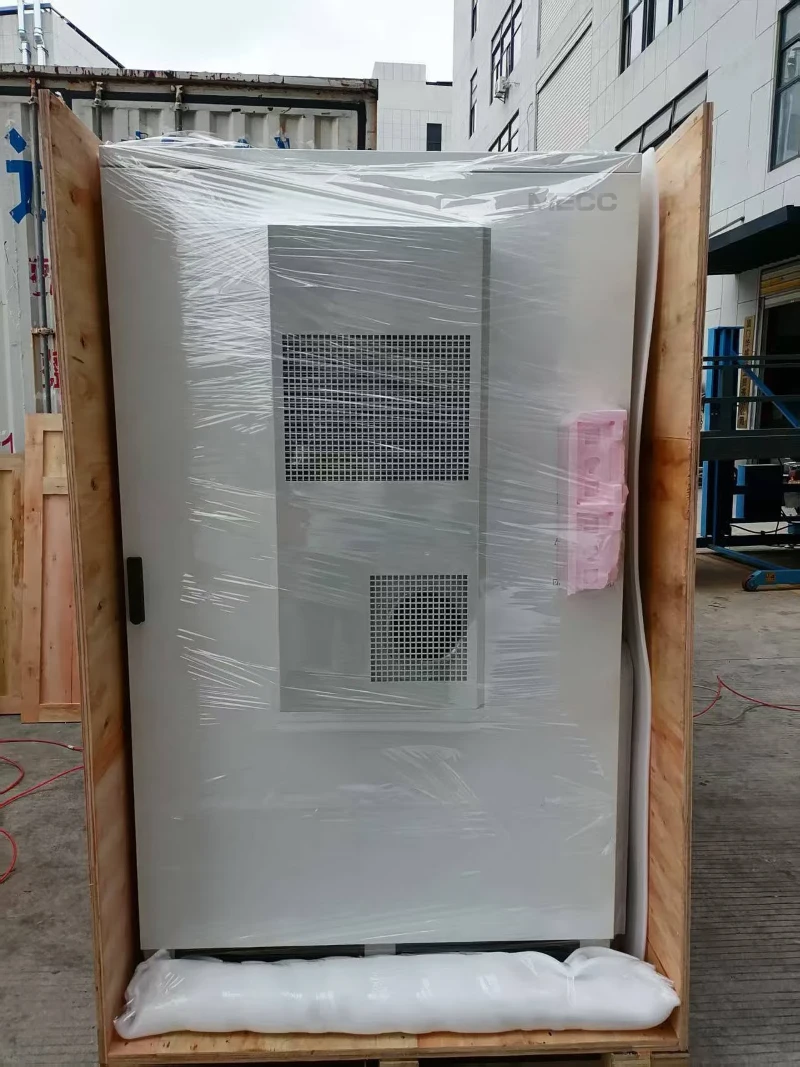
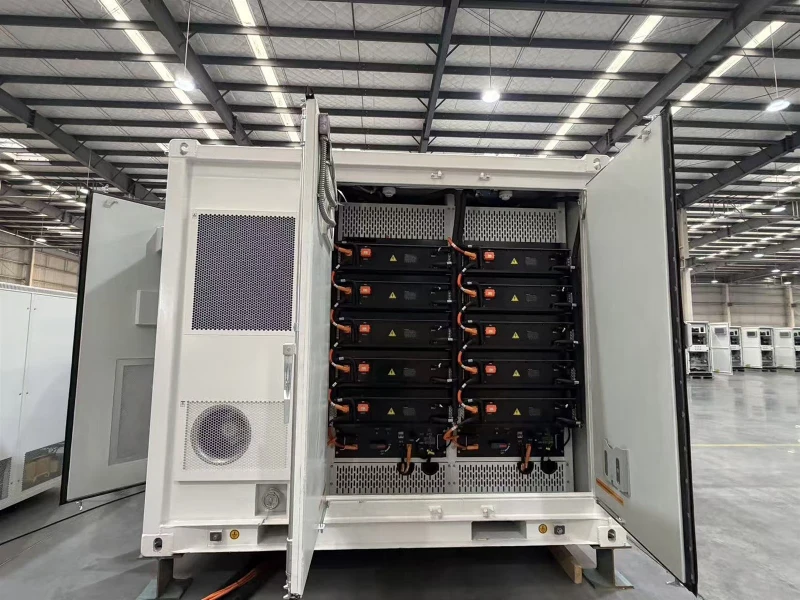
125KW 241kWh Battery Energy Storage System Cabinet
The BESS 125KW 241kWh Lithium Battery Energy Storage Cabinet is a high-power, large-capacity integrated energy storage solution engineered for medium-to-large commercial, industrial, and utility-scale applications. It integrates a 125kW high-performance bidirectional inverter, a 241kWh lithium iron phosphate (LiFePO4) battery bank, and a full-featured intelligent energy management system (EMS) into a modular cabinet design. This system enables efficient renewable energy storage, peak shaving, load shifting, grid frequency regulation, and emergency backup power supply. Ideal for large factories, shopping malls, industrial parks, utility-scale solar/wind farms, and microgrids, it enhances energy independence, reduces high grid demand charges, and supports the stable integration of high-penetration renewable energy into the grid.