


Main keyword: cold storage battery storage
A cold storage warehouse has a relationship with electricity unlike almost any other facility: its product is only as good as its last hour of power. A data center can restart a server. A cold warehouse, filled with frozen food, pharmaceuticals, or temperature-sensitive chemicals, cannot restart a thaw. When the compressors stop, a clock starts on the inventory - and every minute of that clock is measured in thousands of dollars of cargo value. This is why cold storage battery storage is becoming one of the most compelling resilience investments in the commercial and industrial world, and why the same battery can also cut the site's large and volatile electricity bill.
This article examines what makes refrigeration loads unusual, how quickly outage damage accumulates, how storage serves both backup and economic roles, and how the building's own thermal mass can be treated as a hidden battery.

What Makes Refrigeration Loads Different
Refrigeration is not a steady demand - it is a cycling, weather-sensitive, thermally-driven load, and storage design has to respect that character.
Compressor cycling and start surges. Compressors are the largest electrical consumers, and they do not run continuously; they cycle on and off against thermostat setpoints, drawing starting current several times their running current each time. A battery serving a refrigeration site must handle repetitive surge loads, not just a smooth baseline - a point that affects inverter sizing more than energy capacity.
Weather coupling. Refrigeration load tracks ambient temperature and humidity. A heat wave can push consumption 30–50% above a mild day, precisely when the grid is stressed and outages are more likely. The worst-case battery duty - high load, high ambient, grid trouble - arrives together, not independently.
Defrost cycles. Evaporators accumulate frost and periodically run a defrost cycle, often electric, which creates a short, sharp power spike. A battery sized on average load alone will be surprised by defrost demand.
Continuous duty, no comfortable off-switch. Unlike a factory that can pause production, a cold warehouse's load is non-negotiable around the clock. This makes both its peak shaving opportunity and its backup need unusually consistent - the battery will be used every day, not just on event days.
The Damage Clock: Why Downtime Costs Differ Here
Understanding outage economics in cold storage requires thinking about two separate clocks.
The short clock: temperature rise. A warehouse full of frozen goods has significant thermal inertia - the building, the product mass, and the refrigeration system together resist warming. After a power loss, internal temperature rises slowly at first: a well-insulated frozen warehouse might gain only a fraction of a degree per hour initially, buying operators one to several hours of graceful degradation. This is the window in which a battery bridge shines: carry the compressors through the utility event, and no product ever crosses a threshold.
The long clock: cargo value. Once temperature crosses critical limits - often -18°C for frozen goods, 2–8°C for pharmaceuticals - the loss becomes irreversible and total. Insurance may cover some of it, but deductibles, claim disputes, and ruined client relationships do not disappear. For high-value pharma or food inventories, a single multi-hour outage can exceed the entire cost of a backup system.
This two-clock structure defines the value of storage. A battery sized to bridge the first two to four hours - easily within lithium economics - protects against the overwhelming majority of outages and converts a catastrophic loss into a non-event. Longer autonomy becomes a question of how much inventory value is at stake, a calculation similar to the critical-load approach used for other extended-outage sizing projects.
The Daily Economics: Peak Shaving Meets Cold Chain
Resilience alone rarely pays for a battery. Cold storage's second act is in daily operation, and it is unusually strong.
High, predictable, shiftable load. Refrigeration warehouses consume substantial electricity every day of the year, much of it during expensive on-peak hours. That is ideal peak-shaving territory: a battery discharge during the two-to-four-hour price window, recharge at night or from daytime solar, captures a saving that repeats 300+ days a year. Farms of cold warehouses along transport corridors routinely find payback periods that shorter-duty facilities can only dream of.
Demand charges on compressor peaks. Because compressor starts and defrost cycles create sharp demand spikes, the site's billed maximum demand may be far above its average. A battery that trims those spikes attacks demand charges directly - one of the most reliable savings streams in the commercial tariff structure.
Thermal pre-cooling as load shifting. Here is the trick that makes cold storage special: the building itself is a battery. Before an on-peak window, operators can over-cool the space by a degree or two, letting temperature drift up slowly during the expensive hours while compressors run less. The product mass stores the "charge." A battery plus pre-cooling strategy reduces the required battery size for the same peak reduction, because part of the shaving comes from thermal storage rather than electrochemical storage. The control logic belongs in the site's energy management system - the kind of duty scheduling and tariff awareness described in our guide to what a C&I EMS must do.
Demand response participation. Cold warehouses are attractive demand-response resources precisely because of that thermal tolerance: for a short event, the compressors can back off and the temperature coast, earning event payments without touching product quality. A battery amplifies this - it can take over the load during a DR event, so the site earns revenue with zero temperature drift.

Sizing for a Cold Warehouse: The Practical Method
A defensible sizing study for cold storage battery storage follows four steps:
Define the protected temperature band. Establish product thresholds, allowable drift, and the thermal response of the specific inventory - from real data or a thermal model, not a generic assumption.
Plot the damage curve. Determine how long the building stays in-band without power and when each threshold is crossed. This defines the bridge duration the battery must guarantee.
Size for surge as well as energy. Check compressor starting current and defrost spikes against inverter power ratings; a battery that cannot start the largest compressor is useless regardless of its kWh.
Layer the economics. Add peak shaving, demand charge reduction, and DR revenue onto the resilience case. In most viable projects, the daily value streams carry the payback while the outage protection supplies the strategic justification.
Where outages are long and inventories irreplaceable, the hybrid pattern familiar from industrial resilience - storage for the instant bridge plus a generator for endurance - often wins on both cost and coverage.
Cold-Climate and Refrigerant Considerations
Two site-specific details often change cold storage designs:
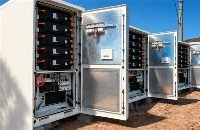
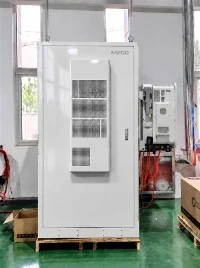
Ambient temperature and battery performance. Lithium batteries lose some usable capacity at low temperatures and accept charge more slowly when cold. Outdoor cabinets at cold-climate warehouses require heated or conditioned enclosures - a modest parasitic load that should be included in the energy budget. The enclosure protection features discussed in our IP-rating and corrosion articles matter here too, since refrigerated facilities often combine wet, cold, and corrosive conditions.
Refrigerant transition.[^1] New refrigerant regulations are pushing facilities toward low-GWP alternatives that can change compressor duty and efficiency. Any load forecast for a battery project should reflect the refrigeration equipment expected over the battery's life, not just today's plant.
The Bottom Line
Cold storage warehouses are near-ideal candidates for battery storage: the load is large, predictable, and valuable to interrupt; the consequence of failure is measured in spoiled cargo; and the building's own thermal mass gives operators an extra degree of freedom that most sites lack. A correctly sized system bridges the outage window that causes the vast majority of losses, shaves costly compressor peaks daily, and can participate in demand response without risking product. For operators who have long treated electricity as an unavoidable fixed cost, the message is practical: the battery is not just insurance on the inventory - it is a working asset that lowers the refrigeration bill every month while standing guard over the cargo.