




Main keyword: data center battery storage
A data center's power chain is built on a single promise: nothing, not even a blink, may reach the servers. That promise has been kept for decades by double-conversion UPS systems and rows of diesel generators - proven, redundant, and expensive. Now a third element is entering the chain, and it is changing the economics of critical power: data center battery storage that does more than sit idle waiting for failure. The modern BESS bridges the dangerous gap between grid loss and generator start, replaces aging lead-acid UPS plants, and earns revenue on the 364 days a year when nothing goes wrong.
This article explains the specific role storage plays in data center power architecture, why the generator-start gap matters so much, how tier and availability requirements shape design, and how the same asset can deliver both resilience and daily return.

The Weak Moment in the Power Chain
The classic data center protection sequence has a well-known vulnerability. When utility power fails, UPS batteries carry the load instantly - but they were historically sized for minutes, not hours. Their job is to hold the facility until the diesel generators start, stabilize, and take the load, typically 8 to 15 seconds later. Then the generators carry the site for the duration of the outage.
That short window is the most dangerous in the entire chain. Two failure modes cluster there:
Generator start failure. Gensets that have sat idle for months fail to start or fail to accept load in a meaningful fraction of real events - a problem familiar from any resilience discussion but acute in data centers, where the alternate power source is the last line of defense.
UPS runtime exhaustion without refuel. If the generators do not come online, or the outage extends past fuel resupply, a five-to-fifteen-minute UPS string simply runs out. The facility then drops - exactly the outcome the entire architecture exists to prevent.
Lithium-based storage changes this picture on both fronts. A modern BESS can be sized for tens of minutes to hours, giving generators many minutes of margin to start and recover from a failed first attempt, or bridging gracefully until grid return - turning a fragile handoff into a durable bridge.
Three Ways Storage Fits Into Critical Power
Data center operators encounter three distinct architectures, and each reflects a different philosophy about what storage should be.
Option one: BESS as UPS replacement. Lithium iron phosphate (LFP) batteries are displacing legacy valve-regulated lead-acid (VRLA) strings in UPS systems. LFP offers longer cycle life, higher energy density, faster recharge, and - critically for a facility where footprint is money - a substantially smaller battery room. VRLA batteries that once filled a room and needed replacement every five years give way to racks that last a decade or more. The trade is fire-safety engineering: LFP systems require the detection, suppression, and segregation design that any lithium installation inside a building demands, and this has been the main brake on adoption in Tier III/IV halls.
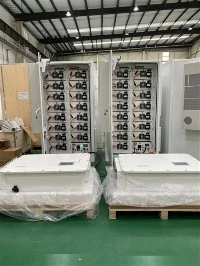
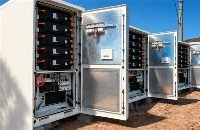
Option two: BESS as generator bridge, outside the white space. A containerized storage system sits on the site's medium-voltage bus, sized to carry critical load from grid loss through generator start plus a generous reserve. This keeps lithium hardware out of the server halls while delivering the bridge function at scale. It is the most common entry point for data center battery storage today, because it adds resilience without re-certifying the white-space UPS design.
Option three: BESS as a peer generation source. In the most advanced designs, storage is treated not as a backup accessory but as a fully dispatchable resource on the site's microgrid - providing instantaneous grid-forming response, load smoothing, and sustained backup in its own right, with generators as one of several reserves. This is where high-density compute sites with large, volatile AI training loads are pushing the architecture, because the load steps themselves now challenge the grid connection.
Why Tier Requirements Make This Complicated
Data centers classify themselves by tier (Tier I through IV), with Tier III and IV demanding concurrent maintainability and fault tolerance - no single point of failure, any component serviceable without dropping load.
Storage must fit inside that philosophy, which is why "we installed a battery" is never the whole answer. A Tier IV site asks: what if the BESS itself fails? The answer is redundancy - N+1 or 2N battery strings, independent PCS modules, segregated cabling, and failure-domain separation so a fault in one block cannot cascade to the whole. It also asks about common-mode risks: a battery fire, a BMS software fault, a shared controller failure. The control architecture - the separation between BMS cell protection, PCS power execution, and EMS dispatch decisions - becomes a resilience property, not just a convenience. The topic is covered in detail in our explainer on the three control layers, but for data centers the added requirement is that each layer's failure must be survivable, tested, and documented.
Commissioning philosophy follows the same logic: storage-integrated sites rehearse the transition sequence - grid loss to battery, battery to generator, generator to grid return, plus failure variants (a generator that refuses to start, a battery block taken out of service) - because fault tolerance is a tested property, not a design claim.

The Daily Revenue No One Used to Count
Here is what makes the business case different from an ordinary backup purchase. A data center's diesel plant earns nothing between outages and costs money to maintain and test. A battery asset of the same capacity can work every single day:
Peak shaving and demand charge reduction. Data centers are large, steady loads - often 10 to 100 MW. Their peak demand charges can be among the largest utility bills in the region. A BESS that trims the site's monthly peak, or shaves grid draw during the network's own peak events, delivers savings that accumulate continuously.
Demand response and grid services. Large flexible loads are increasingly courted by grid operators. A data center with storage can enrolled in demand response events or provide frequency response - using the battery, not the IT load - without touching compute availability. In some markets these programs pay substantial capacity fees, turning resilience hardware into a profit center.
Behind-the-meter generation pairing. Sites with on-site solar or fuel cells use storage to smooth intermittent output and avoid export penalties, reducing the site's net draw and its exposure to volatile tariffs.
Deferred grid upgrades. For a new campus facing a multi-year interconnection queue, on-site storage can cap grid draw at the existing connection capacity while the load grows - buying time and avoiding an immediate substation upgrade.
The strategic point: when the battery pays for itself through daily arbitrage and demand management, resilience improves as a free byproduct. Projects that evaluate storage only as insurance systematically under-value it - the same reasoning that makes hybrid battery-plus-generator systems the fastest-growing pattern at industrial sites.
Selection Criteria for Critical Sites
Data center buyers should evaluate storage proposals against requirements that are stricter than ordinary C&I projects:
Failure-domain design: N+1 or 2N architecture, independent blocks with segregated cabling, and proven state-of-health monitoring.
Fire strategy: cell-level detection, suppression appropriate to LFP chemistry, enclosure segregation, and full compliance with local fire code and UL 9540/9540A evidence - non-negotiable for any indoor or adjacent-to-building installation.
Transition proof: demonstrated seamless transfer on grid loss and a tested generator-failed-to-start scenario, with defined acceptance criteria.
Control-layer separation: documented EMS/PCS/BMS boundaries and fail-safe behavior, including what happens if the energy management platform is unavailable.
Siting and acoustics: adequate setback and noise design for facilities that often operate in office-adjacent or residential-adjacent zones (see our data on storage noise expectations).
Fuel-logic interaction: the BESS controller and the generator control system must coordinate - start thresholds, recharge priority, and black-start readiness where the site requires it.
The Bottom Line
Battery storage in data centers is no longer just a bigger UPS or a generator accessory - it is becoming the connective tissue of a critical power architecture that must be both unbreakable and economically productive. The immediate value is the bridge: an instant, reliable source that covers the generator-start gap and fails safe when the genset does not start. The longer-term value is daily: peak shaving, demand response, and deferred grid investment that turn a pure cost center into an earning asset. For operators planning capacity in an era of AI-scale loads and tight grid connections, the right question is not whether storage belongs in the power chain but how quickly it can be specified, sited, and tested - because a data center without that bridge is one failed generator start away from the outage it was built to prevent.