


Main keyword: C5 corrosion battery storage
Salt air is patient, invisible, and relentless - and for battery energy storage systems sited anywhere near a coastline, it is the single most aggressive environmental threat the equipment will face over a fifteen-year life. The industry's shorthand for this battle is the corrosion class system: C1 through C5 (plus CX), defined by ISO 12944 for steel structures and adopted across the BESS supply chain as the de facto language of enclosure durability. When a coastal project lands on your desk, the choice between C4 and C5 corrosion protection will shape cabinet cost, warranty terms, and long-term reliability - yet the difference between the two classes is routinely misunderstood as "one number higher."
This article explains what the corrosion classes actually measure, what separates C4 from C5 in salt exposure and coating requirements, where the hidden corrosion paths in a battery cabinet lie, and how to specify protection that holds up at the shoreline.

What the Corrosion Classes Actually Mean
ISO 12944 classifies atmospheric environments by corrosivity, driven primarily by time-of-wetness and the deposition of airborne contaminants - chiefly chlorides near the sea and sulfur dioxide in industrial zones. The classes are defined by the corrosion rate of standard steel coupons and aluminum over the first year of exposure:
C3 - medium: inland industrial or light coastal influence; steel loses roughly 1.3–2.1 microns per year.
C4 - high: industrial areas and coastal areas with moderate salt exposure; steel loss rises to 4.2–8.4 microns per year - a step change, not an increment.
C5 - very high: high-salinity coastal and offshore-adjacent environments; steel loss reaches 8.4–25 microns per year, up to triple C4's rate.
CX - extreme: offshore platforms and immediate surf-zone sites, beyond this article's scope for typical C&I land-based storage.
The critical insight is that class assignment is about distance and wind, not just "coastal or not." A site 500 meters from breaking surf in a prevailing onshore wind can be a genuine C5 environment; a site five kilometers inland in a sheltered bay may qualify as C4 or even C3. ISO 12944 acknowledges this by defining C5 as roughly extending up to a kilometer from the coast under marine influence, with exposure falling off inland. The practical takeaway: classify your site with distance-to-shore, prevailing wind direction, and local experience - not with a yes/no "near the ocean" question.
What C4 Protection Looks Like
A C4-rated enclosure system is built for moderate salt exposure over a design life typically quoted at 15 years to first major maintenance ("high" durability per ISO 12944-M in modern revisions).
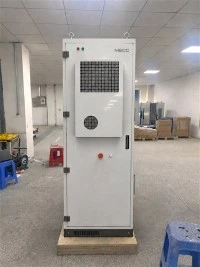
The coating build for C4 generally means: hot-dip galvanized steel or well-executed zinc-rich primer systems, often with a powder-coat top layer - total coating thickness commonly in the range of 120–160 microns for painted systems. Fasteners are typically hot-dip galvanized or mechanically galvanized, with stainless steel reserved for the most exposed hardware. Enclosure designs at C4 can tolerate standard gasketed seams, conventional fastener patterns, and powder-coated louvers.
For BESS projects, C4 is a rational specification for sites with moderate marine influence: bays, inlets, and coastal plains where salt deposition is seasonal or wind-shielded. It costs less, and it is honest engineering for the exposure it will actually face.

What C5 Changes - and What It Costs
Stepping to C5 is not adding one more coat of paint; it is a different protection philosophy for an environment that consumes steel at up to three times C4's rate.
Heavier, multi-layer coating systems. C5 "high durability" systems typically call for zinc-rich epoxy primers, epoxy intermediate builds, and polyurethane or polysiloxane topcoats - total film builds of 240–320 microns or more. On structural steel, thermal spray zinc or zinc-aluminum metallizing under sealed topcoats becomes the reference solution, since sprayed metal coatings tolerate the holiday and undercutting damage that drives premature film failure in salt. Hot-dip galvanizing alone, adequate at C4, is generally insufficient for C5 long-term performance without supplementary duplex coatings.
Stainless hardware becomes standard. A4/316-grade stainless fasteners, hinges, latches, and hinges - with galvanic isolation where stainless meets coated steel - replace zinc-coated carbon steel throughout.
Design details carry more weight. C5 practice demands drainage that never traps salt water, seam geometries that avoid crevices (crevice corrosion in gasketed joints is a classic coastal failure), sealants on every fastener penetration, and welds ground smooth so coatings adhere. Capillary paths - the tiny gaps where salt water wicks in and can never dry - are the difference between a C5 system that lasts and one that fails in year five.
The cost premium for genuine C5 specification over C4 typically lands in the range of 10–20% on the enclosure, with more on structural steel work and some schedule impact for coating cure times. That premium is cheap insurance when the site is truly C5 - and wasted money when it is not, which is why honest classification comes first.
Where Battery Cabinets Corrode: The Hidden Paths
Enclosure sheet metal is rarely where coastal BESS units fail. The quiet failures happen at the interfaces:
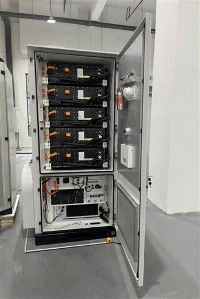
Fastener systems. Zinc-plated screws and bolts, often specified as commodity items, corrode first and stain, seize, and lose clamping force. Rusted fasteners at door hinges and panel seams defeat the enclosure's IP rating long before the sheet metal shows damage - directly linking corrosion protection to the ingress protection discussed in our companion article on cabinet IP ratings.
Mounting frames and skids. Container substructures, anchor bolts, and plinths sit at grade level where salt-laden moisture pools. Standard galvanized skid steel without C5-class duplex coating is a recurring weak point; concrete plinths that wick moisture up into steel bases compound it.
Busbar and electrical interfaces. Chloride contamination on aluminum busbars and termination points drives galvanic corrosion at bimetallic contacts, raising connection resistance until hot spots develop. Coastal-spec enclosures should seal or conformal-coat electrical compartments and specify appropriate plating on terminations.
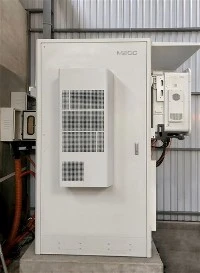
HVAC and cooling loops. Condenser coils and heat exchangers exposed to salt air foul and corrode faster than any other serviceable component. Coastal projects should specify coated fins (e.g., e-coated or sacrificial-anode-protected coils) and shorten the cleaning interval.
Specifying and Verifying: What Buyers Should Demand
Corrosion class is one of the most over-claimed specifications in the industry - "C5 rated" appears on datasheets backed by nothing. Protect your project with these contract-level measures:
Site classification first, in writing. Document distance to shore, wind exposure, and any local corrosion data, and classify the site honestly (C3, C4, C5, or a split where the container faces C5 but a fenced, windward-buffered pad faces C4).
Specify the system, not the class. Require ISO 12944-compliant coating systems by type and thickness per surface category (exterior walls, roof, skid, internals), stainless hardware grades, and design-detail rules (no crevices, sealed penetrations, drainage).
Demand evidence. Acceptable proof includes coating manufacturer's system data sheets matched to the specified class, and salt-spray test reports (e.g., neutral salt spray hours per relevant standards) for the actual enclosure system - not just the coating brand.
Warranty alignment. Push the enclosure warranty to name the corrosion class it supports, the durability period, and the conditions (seal maintenance, washdown limits) that keep it valid.
O&M plan for salt. Annual fresh-water washdowns of the enclosure exterior, coil cleaning at shortened intervals, seal and fastener inspection, and touch-up kits for coating holidays - written into the service contract, because the coating system's warranty usually assumes them.
The Bottom Line
C4 and C5 corrosion protection are not adjacent rungs on a ladder - they are different engineering regimes for different salt exposures, and the choice starts with an honest classification of your site, not a datasheet checkbox. For genuinely wind-swept coastal locations, C5 specification - heavier duplex or metallized coatings, stainless hardware, crevice-free details, and salt-aware O&M - is what separates a battery system that reaches year fifteen from one that visibly rusts into a warranty dispute by year eight. For sheltered coastal-influence sites, C4 is honest, adequate, and cheaper. Classify the site, specify the system, demand the evidence, and maintain the seals: that sequence turns "C5 corrosion battery storage" from marketing language into a fifteen-year guarantee your asset can actually keep.
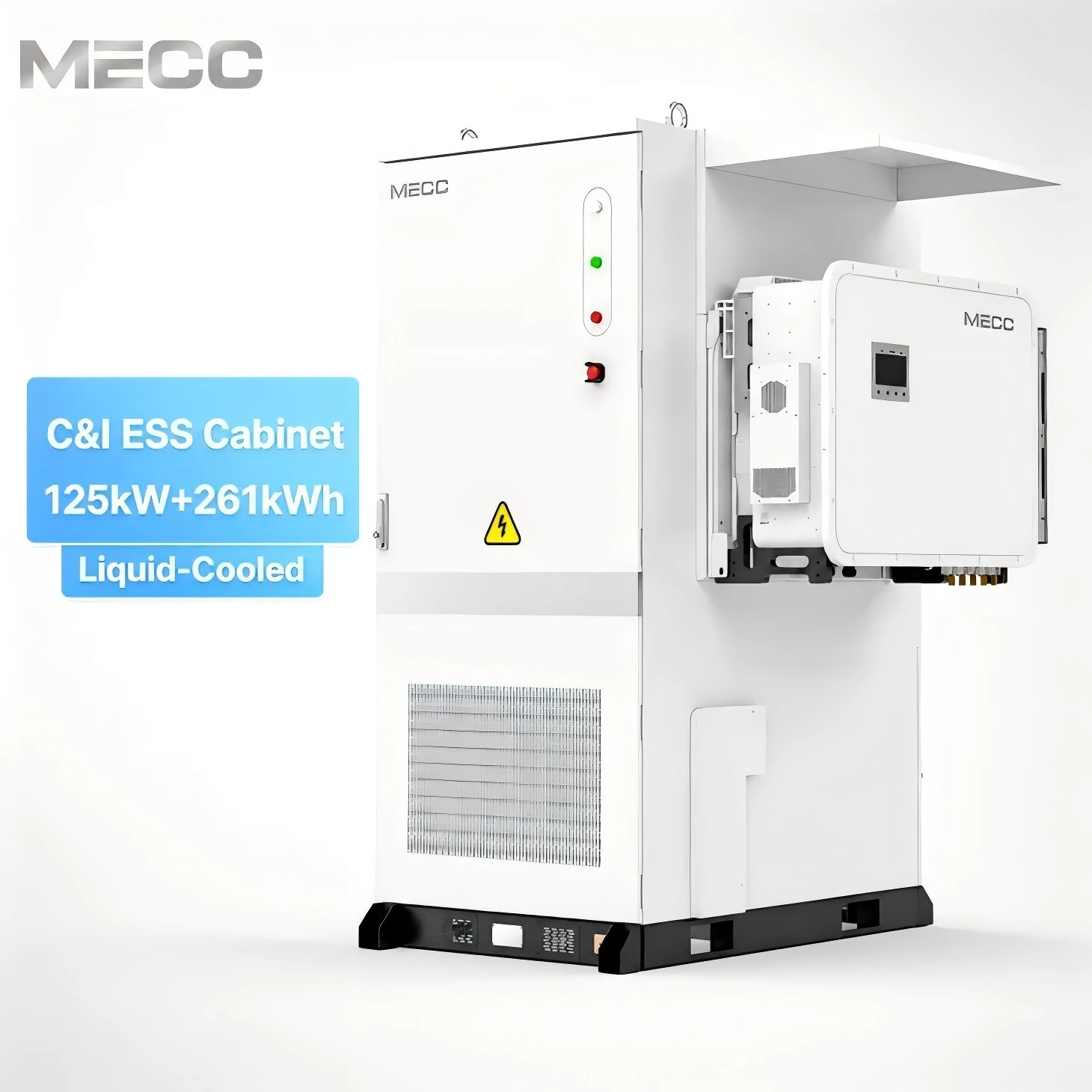
125KW 261kWh Liquid-Cooled Battery Energy Storage System Cabinet
The BESS 125KW 261kWh Lithium Battery Energy Storage Cabinet is a high-power, large-capacity integrated energy storage solution engineered for medium-to-large commercial, industrial, and utility-scale applications. It integrates a 125kW high-performance bidirectional inverter, a 261kWh lithium iron phosphate (LiFePO4) battery bank, and a full-featured intelligent energy management system (EMS) into a modular cabinet design. This system enables efficient renewable energy storage, peak shaving, load shifting, grid frequency regulation, and emergency backup power supply. Ideal for large factories, shopping malls, industrial parks, utility-scale solar/wind farms, and microgrids, it enhances energy independence, reduces high grid demand charges, and supports the stable integration of high-penetration renewable energy into the grid.