


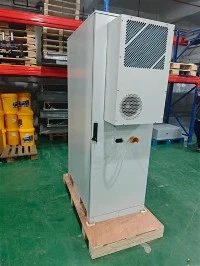
Battery vs Diesel Generator
Walk through almost any industrial campus in the world and you will find the same quiet corner: a row of diesel generators, routinely tested, rarely admired. For seventy years, the diesel genset has been the default answer to the question "what happens when the grid fails?" Now battery energy storage is asking a competing question - "why wait for failure at all?" - and the honest answer to the debate over battery vs diesel generator is not that one kills the other. It is that the most successful industrial resilience projects of the next decade will be retrofits that combine them.
This article compares the two technologies where each genuinely wins and loses, then lays out the architecture, economics, and implementation path for hybrid retrofits at industrial sites that already own generators.

Where Diesel Generators Still Win
Fair comparison starts with respect for the incumbent. Diesel generators hold three advantages that battery marketing often glosses over.
Energy density and endurance. A diesel generator paired with a full fuel tank is a multi-day power plant. One 20-foot tank of fuel carries far more deliverable energy than the equivalent space in batteries, and refueling - where logistics allow - extends endurance indefinitely. For genuinely long outages measured in days, fuel remains the cheapest energy carrier per kilowatt-hour delivered.
Proven simplicity. A genset is mechanical technology every industrial electrician understands. Spare parts are stocked worldwide, service contractors are everywhere, and troubleshooting does not require a software engineer.
Power cost. For the first hour of backup, nothing beats the installed cost per kW of a generator that already exists on your site. That last clause matters enormously: most industrial sites are not choosing whether to buy a generator - they already have one, possibly several, with years of remaining life.
Where Batteries Win - And Diesel Pays
Against that, battery storage wins on five fronts, and the pattern is consistent: the battery dominates everywhere except the long-endurance tail.
Response speed. A battery detects a grid loss and goes online in milliseconds - faster than the lights flicker. A generator takes 8–15 seconds to start, stabilize, and accept load, with a transfer switch in between. For loads sensitive to even brief interruptions - variable-speed drives that trip, process controls that fault, data closets that drop - that gap decides outcomes. Note the deeper point: those sensitive loads fail on the generator's start delay itself, meaning genset-only backup already requires UPS systems for critical circuits. A battery makes that UPS redundant by covering the gap itself.
Daily economics. This is the decisive difference. A generator earns nothing on 363 ordinary days - it is a pure cost center that burns fuel during weekly test runs and ages while sitting idle. A battery earns money every day: peak shaving, demand charge reduction, demand response revenue, solar time-shifting. In the battery vs diesel generator economics, the battery's ability to generate operational savings between outages is what transforms the resilience budget.
Maintenance and reliability risk. Generators fail at their worst possible moment - after long idleness, during cold starts, under step-loading after years without a real event. Industry reliability surveys repeatedly show gensets failing to start or carry load in a meaningful fraction of actual outages. Batteries decay predictably and are monitored continuously; their state of health is known, not assumed.
Emissions, noise, and permitting. Air permits for diesel operation are tightening in most jurisdictions, and non-emergency runtime is increasingly restricted or taxed. Batteries emit nothing and run silently - a growing compliance advantage for sites in urban industrial zones.
Fuel logistics exposure. During a regional disaster, fuel supply chains fail in coordination with the grid. A battery charged before the event needs no delivery.

The Hybrid Retrofit Architecture
For a site with existing generators, the question is not "replace or keep" but "how should they share work?" Three retrofit patterns cover most situations.
Pattern one: battery in front of the genset. The battery connects on the critical load bus; the generator sits behind it as the second line. On grid loss, the battery carries critical load instantly. If the outage extends past a configurable threshold - say, one hour - the generator starts under controlled, scheduled conditions, runs at its efficient load point, and recharges the battery. This is the standard hybrid pattern, and it fixes both technologies' weaknesses: the battery covers the generator's start delay and step-load stress, while the generator covers the battery's endurance limit.
Pattern two: genset as recharge engine only. For sites whose critical load fits comfortably in a battery for the first day, the generator's role shrinks to fuel conversion - running only to recharge storage, at steady output where fuel efficiency and emissions controls perform best. This minimizes generator run hours and maximize battery value.
Pattern three: battery for quality, generator for bulk. Sites with large, tolerable loads (heating, pumping, general ventilation) and a small core of sensitive loads split the bus: battery serves the sensitive core permanently, the generator serves bulk loads during extended events. Transfer switch reconfiguration plus a modest battery achieves this at limited cost.
The electrical integration is well-trodden: a microgrid controller or upgraded ATS logic coordinates the two sources, enforces generator start thresholds, and manages recharge sequencing. Modern controllers handle this pattern natively - the equipment exists; the design discipline is in the settings.
What the Savings Actually Look Like
Hybrid retrofit economics rest on stacking three value streams that neither technology delivers alone.
Resilience upgrade at partial cost. Instead of buying a second or larger generator to fix endurance or reliability gaps, a battery added alongside the existing genset resolves start-delay and short-outage problems at a fraction of new-genset capex - while the old genset keeps earning its keep for long events.
Daily operational savings. A battery sized for critical-load backup is typically also sized well for peak shaving. On a site with a demand charge of $15–25 per kW monthly, a battery that flattens even 300 kW of peaks returns $4,500–7,500 per month - enough, in many tariff regions, to pay for the retrofit within five to seven years before counting demand response or solar pairing.
Deferred generator capex. Every year the battery absorbs short events and test-run duties, the genset ages slower and its replacement date moves further out. Aging gensets facing emission-rule deadlines gain a second life as the endurance layer of a hybrid system, delaying replacement capex by years.
Implementation: A Four-Step Retrofit Path
Sites considering a hybrid retrofit should sequence the work like this:
Audit the existing genset. Confirm age, remaining life, standby rating, and whether its control system accepts modern start/stop commands. A failing genset changes the retrofit calculus - sometimes replacement is the better anchor.
Define the split. Determine critical load (using the inventory method from multi-day sizing exercises) and decide which pattern fits: battery-front, recharge-engine, or split-bus.
Size the battery for dual duty. Choose capacity that covers the grid-loss ride-through window and daily peak-shaving duty simultaneously; the dual-use sizing is where retrofit economics beat both alternatives.
Integrate control and commission by scenario. Configure the microgrid controller for grid-loss sequence, generator threshold, recharge priority - then test the actual scenarios: momentary blip, two-hour outage, three-day event. Commissioning against scenarios, not checklists, is what makes hybrid systems trustworthy.
The Bottom Line
In the battery vs diesel generator question, the mature answer for industrial sites is neither pure replacement nor pure defense of the status quo - it is the hybrid retrofit that lets each asset do what it does best. Batteries deliver instant response, daily revenue, and compliance-clean operation; generators deliver cheap endurance that fuel logistics sustain. Retrofitting a battery in front of your existing genset upgrades resilience, unlocks daily savings from an asset that currently earns nothing, and defers the capex you would otherwise spend on the next generator. For sites that already own diesel, the hybrid path is not a compromise - it is the upgrade both technologies have been waiting for.

500KW/1MW 1MWh/2MWh Battery Energy Storage System Container
The 500kW/1MW 1MWh/2MWh Battery Energy Storage System Container is a turn‑key utility‑grade energy storage solution housed in standard 20ft or 40ft shipping containers, integrating bidirectional PCS, A‑grade LiFePO4 battery clusters, master BMS, liquid‑cooled thermal management, gas fire suppression, high‑voltage distribution and EMS energy management system with full factory pre‑assembly and pre‑commissioning. Requiring only foundation construction and high‑voltage cable connection for on‑site commissioning, it supports flexible power‑capacity configuration and multi‑container parallel expansion, delivering core capabilities of peak‑shaving and load shifting, renewable energy smoothing, frequency‑voltage grid support, islanded micro‑grid operation and large‑scale emergency backup. Featuring IP54 enclosure protection and comprehensive multi‑layer safety mechanisms, it adapts to diverse harsh outdoor environments, and is widely deployed for ground‑mounted PV power stations, industrial parks, mining operations, island microgrids and grid‑side auxiliary service projects to stabilize grid fluctuations, boost renewable energy utilization and reduce comprehensive energy costs.