




Main keyword: hospital battery storage
In a hospital, electricity is not an amenity - it is a clinical requirement. Ventilators, infusion pumps, surgical suites, imaging systems, and the refrigeration that preserves vaccines and blood products all depend on a continuous, clean power supply. When the grid fails, the margin for error is effectively zero, and the consequences of a gap are measured not in downtime costs but in patient outcomes. This is the highest-stakes environment for critical power, and it is why hospital battery storage is emerging as a central element of healthcare resilience strategy - a technology that must satisfy the strictest reliability standards in commercial facilities while quietly delivering economic value the rest of the time.
This article examines what makes healthcare power requirements unique, the regulatory framework that governs them, how storage fits into the established UPS-and-generator architecture, and the constraints that shape real-world deployment on a hospital campus.

The Load Hierarchy: Not All Power Is Equal
Hospitals divide electrical loads by clinical consequence, and storage design has to respect these tiers precisely.
Life-safety and critical care loads. Operating rooms, intensive care units, emergency departments, ventilators, and nurse call systems. These cannot tolerate even a momentary interruption - some circuits must transfer within milliseconds.
Essential but interruptible loads. Imaging, laboratory equipment, sterilization, and general ward power. Important for continuity of care, but with slightly more tolerance for a transition gap.
Non-essential loads. Office areas, cafeterias, general lighting, and most HVAC comfort systems. These can be shed during an emergency to preserve capacity for clinical loads.
This hierarchy means a hospital's storage system rarely backs up "the whole building." It protects a defined critical core, with load shedding of everything else - a discipline familiar from multi-day autonomy planning but applied here under far tighter time constraints.
The Regulatory Backdrop
Healthcare power is one of the most heavily regulated domains in commercial energy, and storage must fit inside rules written long before modern batteries existed.
Emergency power standards. In the United States, NFPA 110 governs emergency and standby power systems, defining types, performance levels, and testing. The Joint Commission, which accredits hospitals, enforces requirements around emergency power supply systems (EPSS) and their regular testing. Similar frameworks exist internationally - all built around the premise that critical loads must be supplied within a specified time and sustained for a defined duration.
The testing paradox. Most of these standards require routine generator testing under load - often weekly or monthly exercise periods, with periodic extended runs. This is exactly where storage creates friction: a system designed around diesel gensets assumes fuel-based endurance, and integrating a battery means demonstrating that the new architecture still meets every prescribed test and duration requirement. The compliance case has to be built explicitly with the authority having jurisdiction (AHJ), not assumed.
Healthcare facility licensing. Because hospitals operate under clinical licenses with life-safety conditions, any change to the power architecture triggers review. Storage vendors entering this market must be prepared for a level of documentation and third-party witness testing far beyond ordinary C&I projects.

How Storage Fits the Established Architecture
Hospitals already have layers of power protection, and battery storage is additive - not a wholesale replacement.
Layer one: UPS for the instant gap. Double-conversion UPS systems, usually with VRLA or increasingly lithium batteries, bridge the milliseconds-to-seconds until generators start. This is the existing first response and remains non-negotiable.
Layer two: generators for endurance. Diesel generators, typically N+1 redundant, start within seconds and carry essential loads for days, limited by on-site fuel.
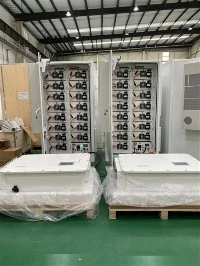
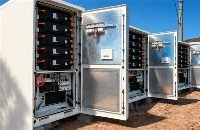
Layer three (new): BESS as the enhanced bridge and reserve. A hospital battery storage system - often lithium iron phosphate in a containers or dedicated electrical room - extends the UPS bridge from minutes to tens of minutes or hours, absorbs the stress of generator starting and step-loading, and provides a reserve that can be allocated dynamically between clinical priorities. In effect, it widens the safety margin at every handoff point in the chain. The generator-start-gap problem, familiar from data center power systems, is even more acute here because the load is genuinely life-critical.
Layer four: the control and transfer logic. A microgrid controller or enhanced transfer system coordinates grid, UPS, BESS, and generators, enforcing priority: life-safety circuits first, essential loads next, non-essential shed. Black-start readiness - the ability to establish power with the grid completely down - is a feature that hospitals value highly, and the requirements for grid-forming sources in that scenario are covered in our article on black start capability.
The Economic Case in a Regulated Environment
Hospitals are large, round-the-clock energy consumers with significant electricity bills, and that creates value streams that a pure resilience purchase cannot claim.
Peak shaving and demand charges. A hospital's load is substantial and remarkably steady - 24/7 operation with limited seasonal swing. Charging during off-peak hours and discharging across on-peak windows reduces both energy cost and demand charges. Because the load rarely drops, the battery is cycled productively every day.
Demand response with clinical safeguards. Hospitals are increasingly asked to participate in demand response, but the load cannot simply be reduced - patient care takes precedence. Storage solves this: the battery supplies the load during a DR event, so the site earns revenue without touching clinical operations. This is one of the strongest value propositions for hospital battery storage specifically, because it resolves a long-standing conflict between grid participation and patient safety.
Power quality. Sensitive imaging and lab equipment dislike voltage sags and harmonics. A battery-based system with proper power conditioning improves power quality as a side benefit of resilience.
Deferred infrastructure. For campuses facing substation or switchgear upgrades, on-site storage can cap peak draw and postpone capital expenditure - freeing budget for clinical priorities.
Deployment Constraints Unique to Healthcare
Real hospital projects run into constraints that rarely appear elsewhere:
Space. Urban hospital campuses are space-starved. Containerized systems may not fit; battery rooms compete with clinical and storage needs. Solutions include rooftop or parking-structure installations, carefully segregated electrical rooms, and modular systems scaled to available footprints - all of which shape the fire-safety strategy.
Fire safety and infection control. Lithium batteries inside a healthcare facility trigger stringent fire detection, suppression, and segregation requirements, plus concerns about smoke or water damage affecting clinical areas. This is the single most sensitive design issue and usually determines whether the system goes inside or outside the building.
Electromagnetic and acoustic sensitivity. Imaging suites (MRI in particular) and patient areas impose constraints on equipment placement, and noise near wards or operating rooms must be controlled - the acoustic design principles from our storage noise article apply with added strictness.
Operational continuity during construction. A hospital cannot interrupt care to install equipment. Construction sequencing, temporary power arrangements, and infection-control barriers add cost and schedule complexity that must be priced upfront.
A Path Forward for Healthcare Buyers
For hospital energy and facilities teams considering storage, a sensible sequence looks like this:
Map the critical load tiers with clinical input, defining exactly which circuits must never fail and what shedding order applies in an emergency.
Engage the AHJ and accreditation body early with the proposed architecture and compliance strategy - before equipment selection locks in assumptions.
Choose the architecture deliberately - containerized BESS outside the building is easier to permit; indoor lithium systems demand far more fire engineering.
Model the daily economics alongside resilience, making the case to finance with peak-shaving and demand response revenue rather than insurance value alone.
Commission against clinical scenarios - grid loss, generator failure, DR event, and transfer to battery - witnessed and documented to satisfy both regulators and clinicians.
The Bottom Line
Hospital battery storage operates where the cost of failure is measured in lives, and that reality governs every design decision: strict load hierarchies, demanding regulatory compliance, seamless coordination with UPS and generators, and fire-safety engineering that protects patients as carefully as it protects equipment. Against that exacting backdrop, the economic case is a welcome ally - large, steady loads, daily peak-shaving opportunities, and demand-response revenue that does not compromise care. For healthcare campuses, the right message is not that batteries replace the established architecture, but that they strengthen its weakest handoffs while paying for themselves in the process. Done well, storage gives a hospital something it has never had: a resilience margin measured in hours, funded by savings earned every single day.