


They offer a higher average discharge voltage. These advanced batteries provide a more elevated and consistent voltage during discharge compared to traditional batteries. This is beneficial for applications where a higher voltage threshold is required, such as in some industrial automation equipment. It ensures that the machinery operates within its optimal voltage range, enhancing performance and reliability.
They are fabricated with a wet chemical etching process for microelectronics. Wet chemical etching uses specific chemicals to selectively dissolve away unwanted material from a substrate, creating precise patterns and structures at the microscale. In the production of microchips, it's used to define the circuitry and create trenches and vias. The choice of chemicals and etching conditions can be carefully controlled to achieve the desired etch rate and selectivity. For example, in the fabrication of memory chips, wet chemical etching is crucial for creating the tiny memory cells and interconnects. It's a fundamental process in the semiconductor industry that enables the continuous miniaturization and improvement of microelectronics.
It's a jewel of innovation in the power electronics for industrial automation. This establishment manufactures programmable power supplies that can be customized to meet the specific needs of automated manufacturing processes. The manufacturing process is a model of flexibility and control. The power supplies can be programmed to adjust voltage, current, and frequency in real-time, depending on the requirements of different machines and production steps. The facility has an industrial automation lab where the power supplies are integrated with industrial robots and CNC machines to test their performance. This helps optimize production efficiency and quality in factories.
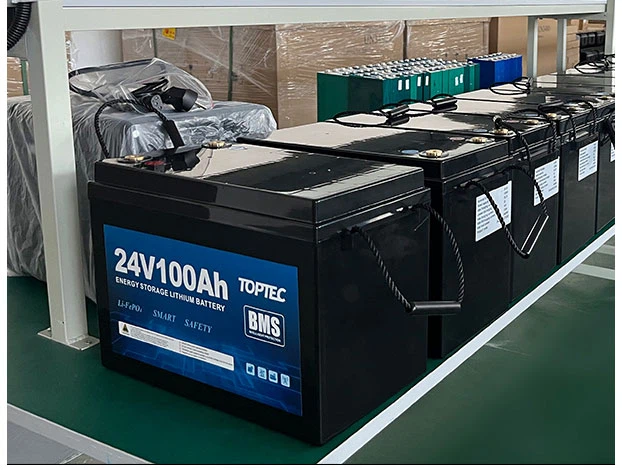
| Voltage | 12V/24V |
| Capacity | 100/200Ah |
| Cycle Life | >3000 cycles |
| Efficiency of Charge | 100% @0.5C |
| Efficiency of Discharge | 96~99% @1C |
| Charge Voltage | 14.6±0.2V |
| Charge Current | 60A |
| IP Class | IP65 |















FAQ
Q: How does the wet chemical etching process for microelectronics work?
A: The wet chemical etching process is fundamental in microelectronics. It uses specific chemicals, known as etchants, to selectively dissolve away unwanted material from a substrate. The substrate, which could be a silicon wafer, is immersed in the etchant solution. The choice of etchant depends on the material to be etched. For example, hydrofluoric acid is often used to etch silicon dioxide. By carefully controlling the concentration of the etchant, the temperature, and the etching time, we can create precise patterns and structures at the microscale. In the production of microchips, it's used to define the circuitry and create trenches and vias. The etching process is carefully monitored to ensure the desired etch rate and selectivity. For example, in the fabrication of memory chips, wet chemical etching is crucial for creating the tiny memory cells and interconnects. It's a key process that enables the continuous miniaturization and improvement of microelectronics.
Hot Tags: 24v 100ah lifepo4 battery pack bms, China 24v 100ah lifepo4 battery pack bms manufacturers, suppliers, 9v lithium rechargeable battery 1200mah, charging lithium batteries with solar, 40 kwh lithium ion battery, lithium battery 24 volt, 48v lithium ion battery 100ah, 75ah lithium battery


