It has excellent thermal runaway protection. If for some reason the temperature inside the inverter starts to rise uncontrollably, perhaps due to a cooling fan failure or a severe overload, this protection mechanism kicks in. It will immediately shut down the inverter to prevent further damage to the internal components. This is a crucial safety feature that safeguards the investment in the inverter and prevents potential fire hazards. After the temperature returns to normal, it can usually be restarted once the issue has been resolved, ensuring continued reliable operation.
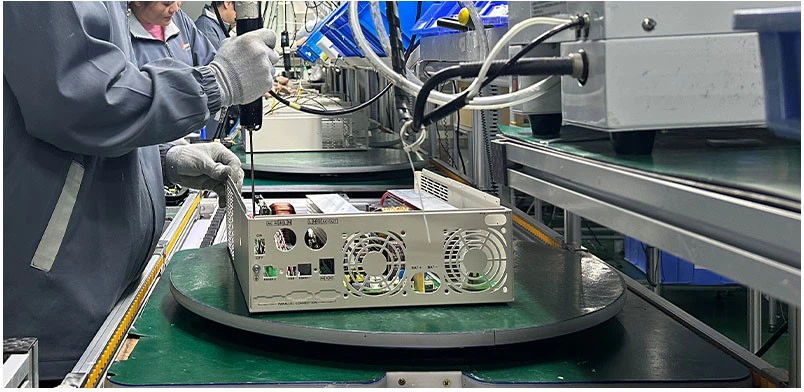
System Integration Testing: After the individual components of the inverter are assembled, system integration testing is performed. This involves testing the inverter as a whole in different operating scenarios, including grid-tied and off-grid modes, with various loads and power sources. The testing checks for compatibility between different components, proper communication, and overall functionality. System integration testing ensures that the inverter works seamlessly in real-world applications and provides reliable power.
The production process is documented in great detail. Standard operating procedures (SOPs) are written for each step, from raw material receiving to final product shipment. These SOPs are updated regularly to reflect changes in technology, regulations, or best practices. They serve as a reference for employees and a means of ensuring consistent quality across the production process.
| Model |
SPF 6000 ES
|
|
Battery Voltage
|
48V
|
|
Battery Type
|
Lithium/Lead-acid
|
|
Rated Power
|
6000W
|
|
AC Voltage
|
230V 50/60Hz
|
|
Surge Power
|
12000VA
|
|
Efficiency
|
93%
|
|
MPPT
|
120V ~ 450V
|
|
Charge Current
|
80A
|
|
Protection
|
IP20
|