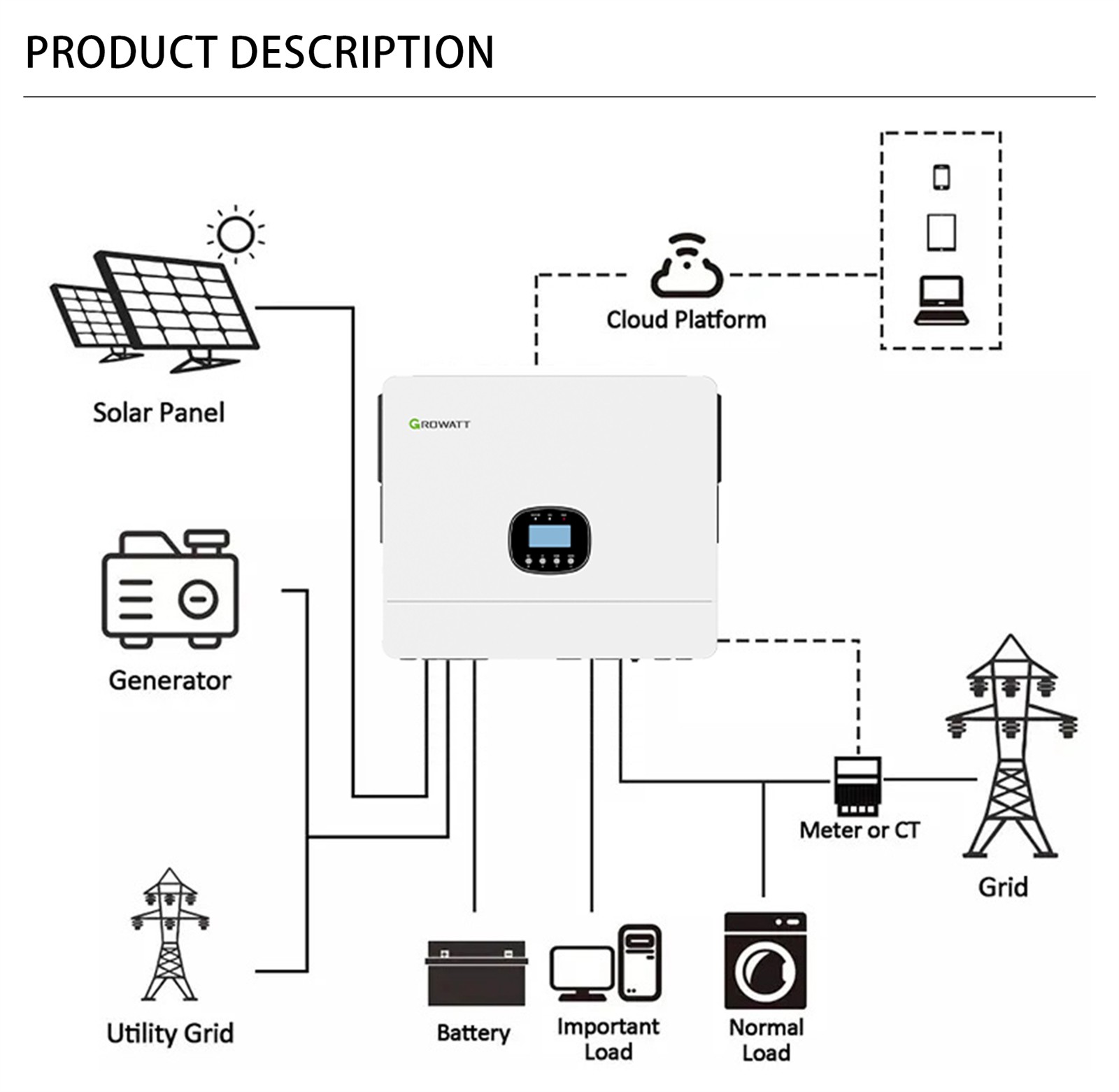
It features a high-resolution display screen. Instead of just basic LED indicators, this screen provides detailed graphical and numerical information about the inverter's operation. You can view real-time power curves showing the input and output power trends over time, which is helpful for analyzing energy consumption patterns. It also displays detailed error codes in case of a malfunction, making it easier for technicians to diagnose and fix problems quickly. The intuitive touchscreen interface, if available, allows for easy navigation through different menus and settings, enhancing the overall user experience.
Low-Power Standby Mode Design: To reduce energy consumption during periods of inactivity, inverters are designed with a low-power standby mode. In this mode, the inverter shuts down or reduces the power consumption of non-essential components. It can be activated by a signal from a connected device or after a period of inactivity. The low-power standby mode design must ensure quick wake-up times when power is needed again, while minimizing standby power losses, which is especially important for battery-powered applications.
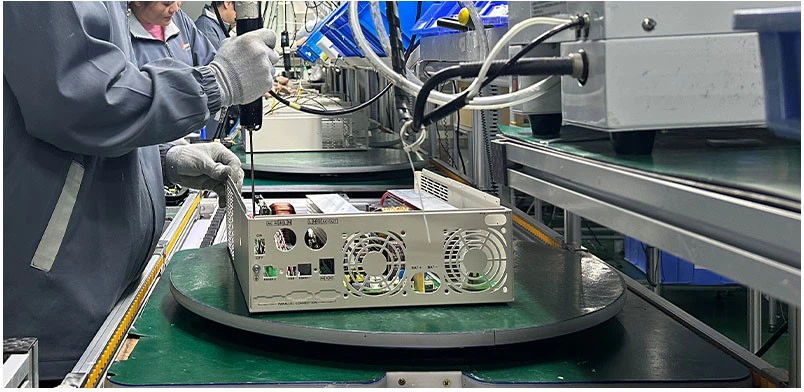
The power supply for the factory is carefully monitored and regulated. Uninterruptible power supply (UPS) systems are in place to protect critical production equipment from power outages. Voltage regulators and power factor correction (PFC) devices are used to ensure stable and efficient power consumption, preventing any disruptions to the production process.
| Model |
SPF 6000 ES
|
|
Battery Voltage
|
48V
|
|
Battery Type
|
Lithium/Lead-acid
|
|
Rated Power
|
6000W
|
|
AC Voltage
|
230V 50/60Hz
|
|
Surge Power
|
12000VA
|
|
Efficiency
|
93%
|
|
MPPT
|
120V ~ 450V
|
|
Charge Current
|
80A
|
|
Protection
|
IP20
|