


Energy storage technology is a key link in the development of new energy, and string and centralized energy storage, as two important energy storage methods, each demonstrate unique advantages and applicable scenarios, playing an indispensable role in achieving efficient utilization of renewable energy and stable operation of power systems.
1 Centralized energy storage
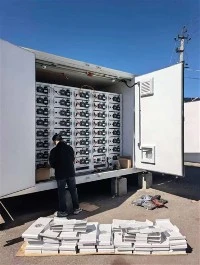
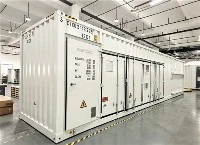
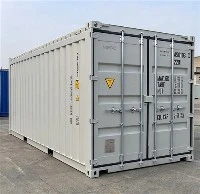
Centralized energy storage typically has a large capacity and volume per device, and is assembled in a containerized manner. The system structure consists of Pack batteries connected in series to form battery clusters. Multiple battery clusters are connected in parallel on the DC side, and then converted into AC power by an energy storage converter. After being stepped up by a transformer, they are connected to the power grid. The centralized approach performs well in large-scale energy storage applications, such as grid side energy storage and supporting energy storage for large renewable energy power plants.

Centralized energy storage can realize the centralized allocation and optimization of energy, effectively balance the supply and demand of the grid, and improve the stability of the grid and power quality. Its large-scale energy storage capacity can store excess electricity during low demand periods and release it during peak hours, playing a role in peak shaving and valley filling, thereby reducing the operating costs of the power grid.
Meanwhile, centralized energy storage also has certain advantages in cost control. Through large-scale procurement and centralized management, equipment and operation costs can be reduced.
2 String type energy storage
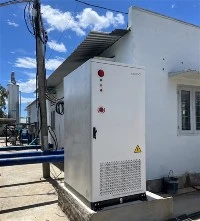
A string type energy storage system is usually composed of multiple smaller capacity energy storage units connected in series, each unit having independent control and management functions. This decentralized architecture endows string based energy storage with high flexibility and scalability.

In distributed energy systems, such as rooftop photovoltaics and small energy storage stations, string based energy storage can be precisely configured according to different energy generation and consumption patterns. It can achieve refined management of individual energy storage units, thereby improving the efficiency and reliability of the entire system.
In addition, string type energy storage has good adaptability to complex terrains and dispersed energy layouts. Even in the event of a failure in some energy storage units, the remaining units can continue to operate, reducing the overall risk of system shutdown.
3 Advantages and disadvantages of centralized energy storage
Advantages:
1. Simple control logic: The battery packs of the centralized energy storage system are directly connected in series, making control simple and easy to manage.
2. Low system cost: Due to its relatively simple structure, centralized systems have lower initial investment and maintenance costs.
Disadvantages:
1. Bucket effect: The battery modules are directly connected in parallel, and the voltage is forced to balance. The overall lifespan of the system depends on the battery with the shortest lifespan.
2. Inter cluster circulation problem: Due to inconsistent discharge depths between battery clusters, circulation may occur, affecting the charging and discharging efficiency of the system.
3. Safety issues: Parallel battery clusters may form circulating currents, leading to overcharging of the battery cells and increasing safety risks.
4. Complex operation and maintenance: on-site debugging of the current chamber is complex, with a long debugging cycle; When the system malfunctions, it usually requires the manufacturer to rush to the site for maintenance, resulting in long system downtime and high maintenance costs.
4 Advantages and disadvantages of string type energy storage
Advantages:
1. Improve system efficiency: The string architecture implements cluster management, improving the balance and charging/discharging efficiency of battery packs.
2. High reliability and easy maintenance: The string type energy storage system is managed one by one, with single cluster overall operation and maintenance. When the system fails, it can accurately locate a single cluster without affecting the operation of other cabinets.
3. Higher safety: Each battery cluster is individually controlled for charging and discharging, avoiding the influence of circulating currents and achieving fault isolation. Adopting a cluster based efficient thermal management system with good temperature uniformity, long battery life, and stable system operation.
4. Strong flexibility: The single cabinet has a small volume, which is convenient for transportation and installation, and is suitable for various application scenarios such as industrial and commercial users, shared energy storage, and new energy distribution and storage; The system supports the mixing of old and new batteries, and can be flexibly expanded or recharged according to actual needs, greatly improving the flexibility and maintainability of the system.
Disadvantages:
1. The integration method is relatively complex: Compared to centralized systems, the integration and debugging of string systems may be more complex.
2. Increased system costs: Due to the use of more optimizers and monitoring devices, the overall cost of string systems may be higher.
5 Application scenarios
Centralized energy storage technology has shown excellent performance in large-scale applications and cost-effectiveness, and is suitable for large-scale energy storage projects at the grid level; The string type energy storage technology is known for its flexibility, scalability, and reliability, making it more suitable for distributed energy systems and application scenarios that require high flexibility.
In practical applications, appropriate energy storage technology solutions should be selected based on specific needs and conditions to achieve optimal energy storage and utilization effects.