


C&I EMS
A battery system without intelligent control is a very expensive box of stored energy. The software that turns it into an asset - deciding when to charge, when to discharge, when to hold reserve, and how to stack every available revenue stream - is the energy management system. But "EMS" has become one of the most elastic terms in the industry: it covers everything from a basic scheduling script to a fleet-wide optimization platform, and buyers who do not define their requirements precisely end up with software that cannot do the job.
This article sets out what a capable C&I EMS must actually do - the functions, integrations, and performance behaviors that separate a genuine control platform from a dashboard with ambitions. Use it as a requirements checklist when comparing vendors.

The Foundation: Control Loops That Never Stop
The first requirement of a C&I EMS is deceptively mundane: it must control, continuously and reliably, under all conditions.
Setpoint dispatch at machine speed. The EMS computes and issues power targets to the PCS (power conversion system) on a cycle of one second or faster, adjusting as load, solar, and tariff conditions shift. Human-operated or minute-scale control is fine for slow arbitrage but useless for peak shaving, where a 15-minute demand interval can be ruined by a single unmanaged spike.
Local autonomy when the network drops. Cloud connectivity will fail at some point in the system's life - during the storm, most likely. A competent C&I EMS keeps executing its control strategy locally from an on-site edge controller, caching decisions and reconnecting gracefully. Systems that go blind when the internet goes down fail their resilience purpose exactly when resilience matters.
Fail-safe behavior. Define and test what happens when the EMS itself crashes: the PCS should hold a safe state, the BMS continues protecting cells, and recovery must not require a site visit. This layered-failure design was covered in our explainer on the EMS/BMS/PCS control stack - here the buyer's task is to verify it in factory and commissioning tests, not just in brochures.
Peak Shaving and Demand Management: The Core Skill
For most C&I sites, the primary job is demand charge reduction, and the EMS must perform it with genuine sophistication.
Predictive, not reactive, peak shaving. A simple threshold controller discharges whenever load crosses a line. That works until a load surge or solar drop forces the battery to empty early - then the real peak arrives uncovered. A capable EMS forecasts site load (using historical patterns, weather, and production schedules), calculates the energy needed to cover the full interval or billing period, and allocates battery energy across it with a budget approach. The difference between reactive and predictive control routinely shows up as 10–20% in achieved demand savings.
Sub-metering awareness. Demand charges may apply site-wide or on specific feeders. The EMS must read the same meter points the utility bills on - with matching metering intervals - and target the right peaks. An EMS that optimizes a different meter than the one you pay for produces great screenshots and no savings.
Demand response integration. The EMS should register and respond to utility or aggregator events automatically: receiving signals, scheduling energy for the event window, reporting performance afterward, and managing the interaction between DR obligations and daily peak-shaving duty when both compete for the same electrons.
Optimization: Making the Battery Earn Its Keep
Beyond demand management, the EMS's optimization layer determines how much value each cycle captures.
Tariff-aware arbitrage. At minimum, the EMS must execute time-of-use strategies: charge in off-peak windows, discharge in on-peak windows, respecting battery limits and avoiding pointless cycling when price spreads don't pay for the wear. Better platforms optimize against the site's full tariff structure, including demand charges, ratchet clauses, and export compensation.
Solar coordination. Where on-site PV exists, the EMS must treat solar as a first-class input: forecasting production, absorbing midday surplus into storage, and timing discharge to the evening load shoulder. This solar-plus-storage coordination is where naive schedulers leak most of the available savings.
Value-stack arbitration. Sites typically stack three or more revenue streams that compete for the same energy: demand shaving, TOU arbitrage, DR events, and backup reserve. The EMS needs explicit priority logic - reserve state-of-charge floors for resilience duty, DR-event overrides that supersede arbitrage, and clear accounting of which stream earned what. Ask vendors to walk through a conflict scenario ("a DR event lands during your evening peak window - what happens?") and judge the sophistication of the answer.
Degradation-aware decisions. Every cycle costs battery life. Advanced EMS platforms assign a cycling cost to each dispatch decision and decline marginal opportunities that don't pay for their degradation - the software equivalent of refusing to drive across town to save a dollar of fuel.
The Integration Layer: Interfaces a C&I EMS Must Have
An EMS is only as useful as what it can connect to. The non-negotiable interfaces:
Metering - utility-revenue-grade meters and sub-meters, via Modbus TCP, DNP3, or pulse inputs, read at the billing interval.
Power conversion - documented Modbus/IEC 61850 or vendor-API integration with the PCS, including alarm pass-through and remote power limits.
Battery telemetry - live SOC, SOH, and power envelope from the BMS, so dispatch never commands what cells cannot deliver.
Existing site systems - optional but increasingly expected: BMS/EMS connections to building management systems, industrial SCADA, or ERP/production systems for load forecasting context.
External programs - demand response aggregators, utility DR platforms, and market APIs where programs exist; plus cloud APIs for fleet-level reporting.
Cybersecurity posture - user authentication, role-based access, encrypted communications, and increasingly compliance with IEC 62443 or equivalent. An internet-connected device controlling megawatts is an attack surface; treat vendor security seriously.
The Visibility Layer: What Operators Actually See
Control software earns daily trust through its interface, and the requirements here are concrete:
Live and historical visibility of power flows, SOC, and dispatch decisions, with at least one-minute resolution and months of retained history. Alarm management that distinguishes genuine problems from informational noise, routed to responsible staff, with acknowledgment tracking. Settlement-grade reporting - monthly savings achieved per value stream, demand peak records, DR event performance - formatted for the finance team, not just engineers. Without credible savings reporting, the project's internal champions lose the ability to prove ROI, and the next expansion loses its budget case.
Performance Requirements to Put in the Contract
Requirements that live in the contract get built; requirements that live in conversations get improvised. Specify:
Control cycle time and setpoint response (one-second dispatch, documented PCS latency).
Availability target for local control (e.g., 99.9% annual, with local autonomy during cloud outages).
Forecast accuracy expectations and update frequency, appropriate to the site's load volatility.
Data retention, export formats, and API access owned by the customer - no hostage data.
Scenario-based commissioning tests: peak-shaving week, grid outage, DR event, EMS restart, communication loss.
A savings measurement methodology agreed before commissioning, so "what counts as savings" is settled when it is easy, not when invoices conflict.
How to Score Vendors
Condense the evaluation into five weighted questions: Can it control locally and continuously? Does it optimize predictively with envelope awareness? Does it integrate with everything the site bills on? Does it fail safe? And can it prove savings in finance-grade reports? A vendor strong on all five is rare - and worth premium pricing, because the EMS is the layer that converts every kilowatt-hour of hardware into money for the next decade.
The Bottom Line
A capable C&I EMS is not an accessory to the battery - it is the operating intelligence that determines whether the asset performs. The must-do list is clear: continuous local control, predictive demand management, tariff- and solar-aware optimization, honest integration with every metered point, fail-safe behavior, and reporting the finance team can bank. Buyers who specify these requirements contractually, and verify them in scenario-based commissioning, end up with systems that quietly pay for themselves; buyers who accept a dashboard and a demo end up troubleshooting. Write the checklist down before the sales visit, not after.
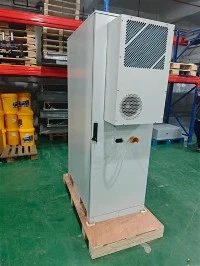
Liquid Cooling 125KW 261kWh Lithium Battery Energy Storage Cabinet
The IP55 Protected All-in-One Solar Energy Storage Cabinet is a high-performance, integrated energy solution engineered for outdoor commercial, industrial, and utility-scale solar applications. It integrates a 125kW Power Conversion System (PCS), a 261kWh lithium iron phosphate (LiFePO4) battery bank, an advanced liquid cooling system, and a intelligent Battery Management System (BMS) into a single cabinet with IP55 weatherproof protection. Designed to withstand harsh outdoor environments while delivering efficient energy conversion and storage, it supports solar energy absorption, peak shaving, load shifting, grid auxiliary services, and emergency backup power. Ideal for utility-scale solar farms, industrial parks, large commercial complexes, and remote microgrids, it provides a reliable, space-saving, and low-maintenance solution for large-scale renewable energy integration.
