


Main keyword: EMS BMS PCS
Ask three suppliers what "controls" their battery storage system and you may get three different answers - because a commercial battery installation is not one control system but a stack of three, each with a distinct job, and the boundaries between them are where projects succeed or stall. The trio everyone in the industry abbreviates - EMS, BMS, and PCS - is the control backbone of every battery energy storage system (BESS), and understanding who controls what is the fastest way to become a competent buyer, operator, or troubleshooter.
This article walks through each layer from the cell upward, explains how they talk to each other, and closes with the questions that reveal whether a vendor's control architecture is sound.

BMS: The Battery Management System - Guardian of the Cells
The Battery Management System (BMS) lives closest to the hardware, inside or alongside the battery itself. Its mandate is the safety and health of the cells - the thousands of lithium-ion cells stacked in modules, racks, and enclosures that make up your energy store.
The BMS performs four continuous functions:
Monitoring. Every cell's voltage, every temperature sensor, and the rack's current are sampled continuously - typically dozens of times per second. A single 500-volt rack may contain over a thousand monitored cell voltages.
Protection. The BMS enforces hard electrical limits. When a cell approaches its maximum voltage, minimum voltage, temperature ceiling, or current ceiling, the BMS intervenes - first by requesting derating, ultimately by opening a contactor to disconnect the rack. This protection layer is non-negotiable hardware-grade safety: no higher-level system can override it, and that is by design.
Balancing. Cells in series drift apart in capacity over time. The BMS equalizes them - usually passively, bleeding small amounts of energy from the strongest cells - to keep the pack's usable capacity from being choked by its weakest member.
State estimation. The BMS computes the numbers everyone else depends on: state of charge (SOC), state of health (SOH), and the allowable charge and discharge power limits right now, given temperature and cell condition. These calculated limits - often called the charge/discharge power envelope - are the BMS's core output to the rest of the system.
One clarification prevents a common confusion: "BMS" is often used loosely for the whole battery enclosure. Strictly, the enclosure also contains thermal management, fire detection, and local safety logic; the BMS is specifically the electrical management brain. Ask vendors which is which, and get the distinction in writing.
PCS: The Power Conversion System - The Muscle
The Power Conversion System (PCS) is the bi-directional inverter that sits between the DC battery and the AC world. Batteries speak direct current; your facility and the grid speak alternating current. The PCS translates - in both directions, at high efficiency, and at exactly the power level the system asks for.
Its control responsibilities are threefold:
Power execution. The PCS takes a power setpoint - charge at 250 kW, discharge at 400 kW, hold at zero - and realizes it in real time, converting DC to AC or AC to DC. Fast response matters: PCS power electronics typically execute setpoint changes within tens of milliseconds, which is what makes battery systems effective for frequency response and smooth peak shaving.
Grid interface functions. The PCS manages synchronization with the grid, power factor, reactive power support, and ride-through behavior during grid disturbances. Advanced PCS units can also form their own grid during outages - the grid-forming capability that enables full islanding (covered in depth in our article on running a site without the utility).
DC-side coordination. On the battery side, the PCS respects the limits the BMS publishes. A well-integrated PCS ramps power down as the battery approaches full or empty, or as temperature limits tighten - following the BMS's power envelope rather than fighting it.
The PCS is where the physical electrons are commanded, but it is deliberately not the strategist. It does what it is told, extremely quickly - the question of who tells it leads to the top of the stack.
EMS: The Energy Management System - The Strategist
The Energy Management System (EMS) is the site-level brain. It owns no hardware decisions at the cell level and executes no power conversion itself; its job is to decide what the system should do next - second by second, hour by hour - to convert energy storage into money and reliability.
The EMS's typical responsibilities:
Dispatch strategy. Based on load forecasts, tariff schedules, peak-shaving targets, solar production, and demand response signals, the EMS computes the power setpoints it sends to the PCS. When it should charge (cheap, sunny periods), when it should discharge (peak windows), and when it should hold reserve - these are EMS decisions.
Constraint awareness. A competent EMS consumes the BMS's live data - SOC, SOH, power envelope, rack availability - and plans within it. It will not schedule a discharge the battery cannot deliver, and it rotates rack usage to balance aging across the system when the design allows.
Value-stack optimization. At sites stacking multiple revenue streams - demand charge reduction, time-of-use arbitrage, demand response events, backup reserve - the EMS arbitrates priorities. This arbitration logic, more than any single feature, differentiates sophisticated EMS platforms from basic ones.
Visibility and integration. The EMS is also the human interface: dashboards, alarms, reports, and the APIs that connect to demand response aggregators, utility programs, or corporate energy platforms.
How the Three Layers Talk
The stack works because each layer speaks to its neighbors with clear contracts:
The EMS→PCS link carries power setpoints and receives actual output and status - typically over Modbus TCP or similar industrial protocols, with the EMS issuing updates every second or faster. The PCS↔BMS link is the safety-critical conversation: the BMS continuously publishes its power envelope and alarm states; the PCS must follow or derate, and both sides agree on shutdown procedures. The BMS→EMS link is informational - telemetry for optimization and reporting, not command.
This layered design is deliberate: it means a strategy error at the EMS level cannot breach cell safety, because the BMS's hardware protections sit below everything. Understanding this chain of command answers a frequent buyer question - "what happens if the EMS software fails?" A well-designed system fails safe: the PCS holds its last safe state or idles, the BMS keeps protecting cells, and the site loses optimization, not safety.
Where Projects Go Wrong
Most control-layer failures trace to boundary confusion, and the same four patterns recur:
Vendor finger-pointing. When EMS, battery, and PCS come from different suppliers, a mid-stack integration fault - a protocol mismatch, an uninitialized register, a timing conflict - invites each vendor to blame the others. Insist on a single party responsible for end-to-end integration and commissioning, even if components differ.
EMS that ignores the envelope. A dispatch layer that commands power the BMS immediately curtails produces chronic faults, cycling stress, and "mystery" underdelivery. Ask vendors to demonstrate envelope-aware dispatch during factory testing.
No commissioning scenario for failure. Systems that have never rehearsed EMS failure, PCS fault, or BMS trip behave unpredictably the first time these occur in anger. Scenario-based commissioning is the antidote.
Vague ownership of SOC truth. When two layers estimate SOC differently, the site's accounting drifts. Define once which layer's estimate is authoritative and how others sync to it.
A Buyer's Verification Checklist
When evaluating a BESS proposal, ask these five questions and push for specific answers:
Which company is the integration lead across EMS, BMS, and PCS, and what does their FAT test cover?
What protocol and polling rate connect EMS to PCS, and what is the documented PCS setpoint response time?
How does the EMS consume the BMS power envelope, and what happens when the envelope tightens mid-discharge?
What is the defined EMS-failure behavior - does the site fail safe, and how is it recovered?
Which layer's SOC and SOH values are authoritative for settlement, warranty, and reporting?
The quality of the answers - not the size of the battery - predicts how the system will actually behave for the next decade.
The Bottom Line
EMS, BMS, and PCS are three jobs, not three competing products: the BMS protects the cells, the PCS moves the power, and the EMS decides what is worth doing. Sites that understand these boundaries buy better, commission faster, and troubleshoot in minutes instead of weeks - because when something goes wrong, they know exactly which layer to interrogate. Whatever vendor you choose, make the control architecture explicit: in the contract, in the factory test, and in the commissioning checklist.

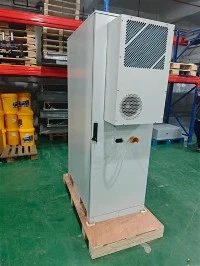
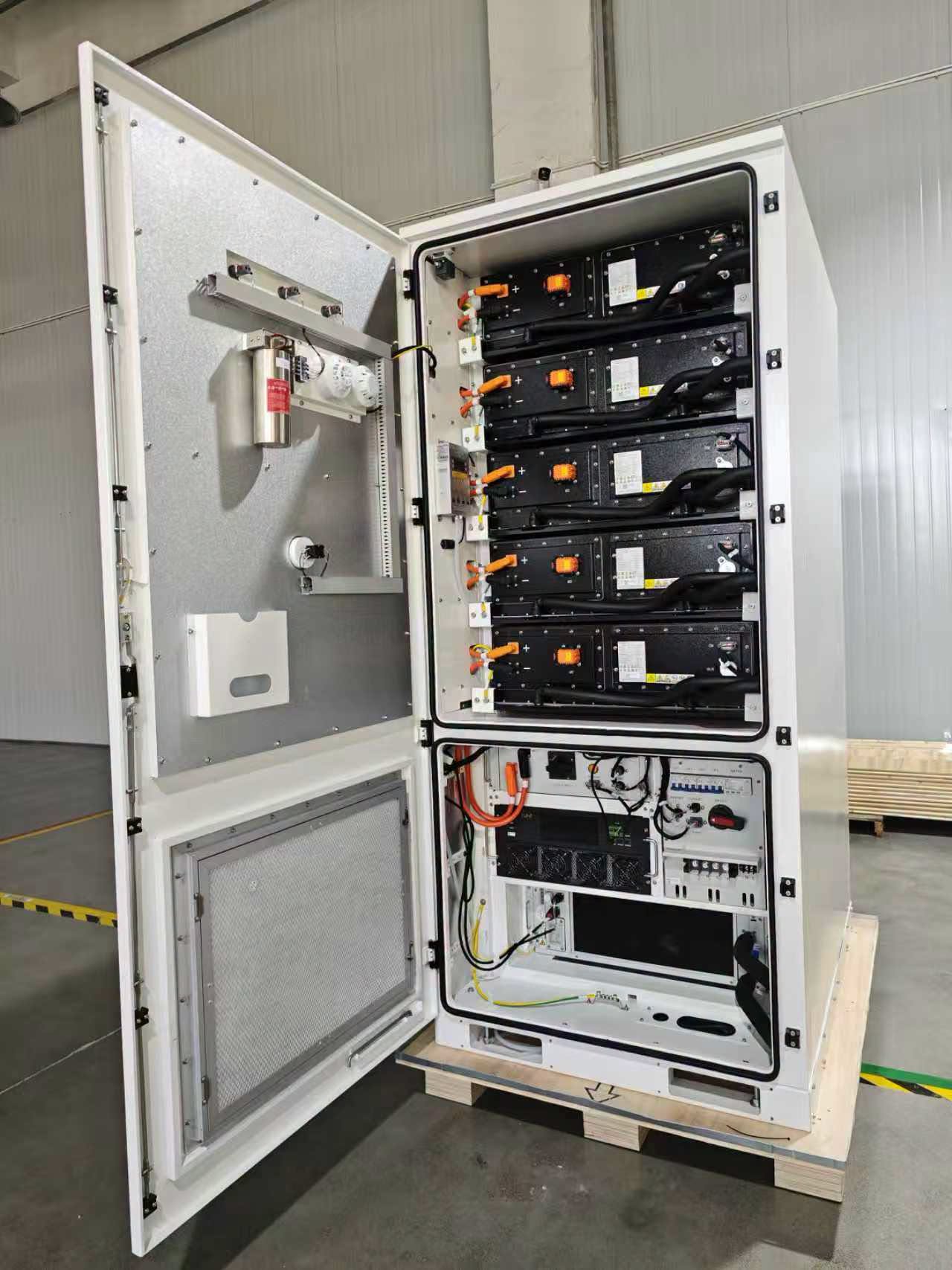
125KW 241kWh Battery Energy Storage System Cabinet
The BESS 125KW 241kWh Lithium Battery Energy Storage Cabinet is a high-power, large-capacity integrated energy storage solution engineered for medium-to-large commercial, industrial, and utility-scale applications. It integrates a 125kW high-performance bidirectional inverter, a 241kWh lithium iron phosphate (LiFePO4) battery bank, and a full-featured intelligent energy management system (EMS) into a modular cabinet design. This system enables efficient renewable energy storage, peak shaving, load shifting, grid frequency regulation, and emergency backup power supply. Ideal for large factories, shopping malls, industrial parks, utility-scale solar/wind farms, and microgrids, it enhances energy independence, reduces high grid demand charges, and supports the stable integration of high-penetration renewable energy into the grid.