





Most commercial battery storage projects do not fail on the technology. They fail in the gaps between vendors.
The equipment supplier says the cabling was out of scope. The electrical contractor says the foundation was not ready. The utility says the interconnection application was filed with the wrong relay settings. The fire authority says the separation distances were never submitted. Eight months later, the system is on site, paid for, and not energised.
Turnkey C&I energy storage exists to close those gaps. Here is what a one-stop delivery actually covers, how the commercial models differ, and how to tell a genuine turnkey partner from a reseller with a subcontractor list.

What "Turnkey" Actually Means
The phrase is used loosely. A useful way to think about it is as a spectrum of scope.
Equipment supply only. The factory or distributor sells you a battery system and a datasheet. Everything else - design, permitting, installation, commissioning, interconnection - is yours. Cheapest, riskiest, and only sensible for buyers with in-house power engineering.
Supply plus commissioning. The vendor delivers, installs, and commissions the storage system, but the surrounding electrical works, interconnection, and permitting remain your responsibility. This is the most common arrangement and the source of most interface disputes.
EPC (engineering, procurement, construction). A single contractor takes design, procurement, and construction responsibility for the project. You get one contract, one schedule, and one party accountable for delivering a working system.
Full turnkey. EPC scope plus permitting, utility interconnection, site civil works, financing arrangements, and often ongoing O&M. In its most complete form it extends into energy-as-a-service or a power purchase agreement structure, where you may not own the asset at all.
The value of turnkey is not that one company does everything. It is single point of responsibility: when something goes wrong, there is one number to call and one party contractually obliged to fix it.
The Full Scope Chain
A properly turnkey deliverable carries the project through all of the following, and a proposal should map each item to a responsible party.
Feasibility and site assessment. Electrical infrastructure review, available space and loading, environmental conditions, and a preliminary economics screen.
Load analysis and sizing. Interval data analysis, load-profile modelling, tariff analysis, and system sizing against the actual objective - peak shaving, TOU arbitrage, demand-charge reduction, solar shifting, or resilience.
Interconnection application. Utility submission, study fees, and management of the review process. This is frequently the longest lead item on the schedule and the one most often underestimated.
Design and engineering. Single-line diagrams, protection coordination, structural calculations, fire protection design, and stamped drawings by a licensed engineer in your jurisdiction.
Permitting. Electrical permit, building permit, fire department approval, and any local zoning or environmental review. Each authority having jurisdiction has its own process and its own timeline.
Procurement and logistics. Equipment, freight, duties, offloading, and site storage.
Civil and structural works. Foundation or pad, equipment anchorage, bollards, drainage, and access.
Mechanical and electrical installation. Racking, cabling, terminations, switchgear, transformers, and the interface with your existing distribution system.
Commissioning and testing. Pre-energisation checks, functional testing, protective relay settings verification, and performance verification.
Interconnection and energisation. Utility witness testing and permission to operate.
Training and handover. Operator training, O&M documentation, as-built drawings, and warranty registration.
Post-handover service. Monitoring, preventive maintenance, and warranty administration.
A proposal that lists this chain and states clearly who owns each line is a serious proposal. One that says "full turnkey installation included" without an itemised scope matrix is inviting a change-order conversation later.
How to Evaluate a Turnkey Partner
Four capabilities separate real turnkey providers from coordinators.
Licensed, in-market electrical competence. Does the provider hold or directly employ a licensed electrical contractor in your jurisdiction? Subcontracting installation is normal; subcontracting your compliance is not.
Interconnection and permitting track record. Ask how many applications they have filed with your specific utility, and how many fire department approvals they have obtained in your municipality. Local experience is not transferable.
In-house engineering. Stamped drawings require a licensed engineer. Ask whether that work is done internally or outsourced, and who signs.
Warranty integration. Critically, whose warranty covers the labour? If the equipment warranty is from the factory and the workmanship warranty is from a subcontractor, you have two warranties and a gap between them. Turnkey partners should offer a single, integrated warranty covering both equipment and workmanship for the full term.
Also examine financial standing, insurance (general liability, professional indemnity, workers' compensation), bonding capacity, and safety record. A contractor with a poor safety performance will cost you in schedule and premiums.

Commercial Models and Contract Terms
Fixed lump sum. One price for a defined scope. Predictable, and it puts schedule and cost risk on the contractor - provided the scope is unambiguous.
Guaranteed maximum price. A ceiling with shared savings if the project comes in under. Useful where scope is still firming up.
Cost plus. You pay actual cost plus a fee. Rare in this market and generally not in your interest.
Performance-based. Payment tied to measured outcomes such as guaranteed capacity, round-trip efficiency, or verified bill savings. The strongest alignment of interests, but it requires robust measurement and verification methodology.
Whichever model, the contract terms that decide whether the project goes well are: liquidated damages for delay, a defined substantial completion milestone and what triggers it, retention held until performance verification, a defects liability period after handover, change-order procedures with pre-agreed rates, and a clear definition of what constitutes acceptance.
The Realistic Timeline
Turnkey projects do not move at the speed of the equipment order. Expect a sequence roughly like this: feasibility and sizing in a few weeks; interconnection application and utility study taking the longest, often several months depending on the utility; design and permitting running in parallel over one to three months; procurement lead time of six to sixteen weeks depending on the product and factory load; installation in one to four weeks for a containerised commercial system; commissioning and utility witness testing in one to three weeks; and handover documentation shortly after.
The critical path is almost always interconnection and permitting, not manufacturing. A turnkey partner who plans around that reality will deliver on schedule. One who quotes a delivery date tied only to the equipment lead time will not.
What Turnkey Costs You
Turnkey carries a premium - typically a meaningful percentage over an owner-managed, split-package approach. That premium buys schedule certainty, interface risk transfer, and a single accountable party. For most commercial and industrial owners without in-house power engineering, it is worth paying.
The risks to manage are: a vague scope that invites change orders; O&M lock-in after handover, where you are dependent on the contractor with no competitive alternative; and quality variance if the contractor leans heavily on low-cost subcontractors. Address all three in the contract - a detailed scope matrix, an O&M transition plan with documentation and data access, and named subcontractors with approval rights.
The Bottom Line
One-stop delivery works because it removes the interfaces where projects stall. But turnkey is a scope definition, not a marketing claim. Ask for the scope matrix, confirm who owns interconnection and permitting, verify local licensing and track record, and insist that one warranty covers both equipment and workmanship.
Do that, and the phrase means something. Skip it, and you have bought a more expensive version of the same coordination problem.
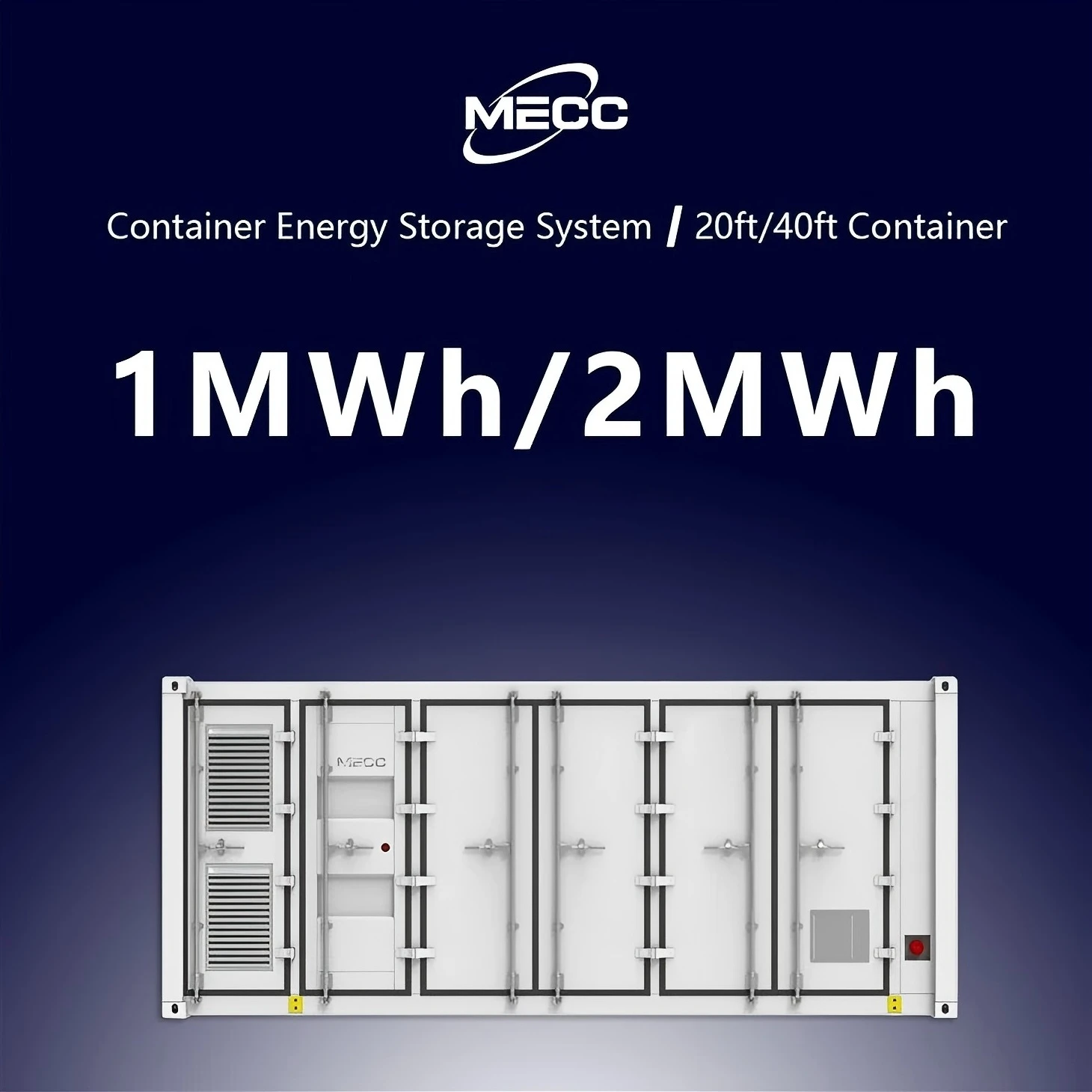
500KW/1MW 1MWh/2MWh Battery Energy Storage System Container
The 500kW/1MW 1MWh/2MWh Battery Energy Storage System Container is a turn‑key utility‑grade energy storage solution housed in standard 20ft or 40ft shipping containers, integrating bidirectional PCS, A‑grade LiFePO4 battery clusters, master BMS, liquid‑cooled thermal management, gas fire suppression, high‑voltage distribution and EMS energy management system with full factory pre‑assembly and pre‑commissioning. Requiring only foundation construction and high‑voltage cable connection for on‑site commissioning, it supports flexible power‑capacity configuration and multi‑container parallel expansion, delivering core capabilities of peak‑shaving and load shifting, renewable energy smoothing, frequency‑voltage grid support, islanded micro‑grid operation and large‑scale emergency backup. Featuring IP54 enclosure protection and comprehensive multi‑layer safety mechanisms, it adapts to diverse harsh outdoor environments, and is widely deployed for ground‑mounted PV power stations, industrial parks, mining operations, island microgrids and grid‑side auxiliary service projects to stabilize grid fluctuations, boost renewable energy utilization and reduce comprehensive energy costs.