





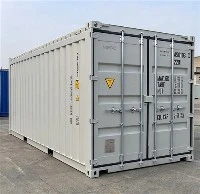
In the rapid development of the global energy storage industry, lithium battery cells, as the core components of energy storage systems, directly determine the efficiency, reliability, and economy of energy storage systems based on their performance. To meet the growing demand in the energy storage market, lithium battery cells have continuously achieved technological breakthroughs in materials, structures, and manufacturing processes, promoting the continuous optimization of energy storage system performance.

Material innovation: the cornerstone of improving the comprehensive performance of battery cells
Iterative upgrade of positive electrode materials
The positive electrode material is a key factor affecting the energy density and cycle life of lithium battery cells. In energy storage system applications, lithium iron phosphate (LFP) cathode materials dominate due to their high safety, long cycle life, and cost advantages. In recent years, the electronic and ion conductivity of lithium iron phosphate materials has been significantly improved through techniques such as nanoscale treatment, surface coating, and doping modification. The energy density has increased from the early 140-160Wh/kg to 180-200Wh/kg, and the cycle life has also been extended to 6000-8000 times. For example, a certain enterprise uses nanoscale lithium iron phosphate material and applies carbon coating treatment to its surface, which improves the charging and discharging efficiency of the battery cells to over 98% and effectively reduces the energy loss of the energy storage system.
Meanwhile, high nickel ternary materials such as NCM811 and NCA are gradually emerging in the field of energy storage. By increasing the nickel content, high nickel ternary materials can achieve higher energy density, which has certain advantages in energy storage scenarios with strict requirements for space and weight. However, high nickel materials have poor thermal stability and are prone to safety issues. To solve this problem, researchers have enhanced the thermal stability of high nickel ternary materials and improved their safety in energy storage systems by developing new coating materials and optimizing crystal structures.
Innovative development of negative electrode materials
The performance of negative electrode materials is also crucial for lithium battery cells. Traditional graphite negative electrode materials are widely used in energy storage cells due to their low cost and stable performance. But with the increasing demand for high-energy density batteries, silicon-based negative electrode materials have become a research hotspot. The theoretical specific capacity of silicon is as high as 4200mAh/g, which is more than ten times that of graphite. By combining silicon with carbon materials to prepare silicon carbon negative electrode materials, the volume expansion problem of silicon during charging and discharging can be effectively alleviated, and the cycling stability and energy density of the battery cell can be improved. At present, the actual specific capacity of some silicon carbon negative electrode materials has reached 500-600mAh/g, and their application in energy storage systems is expected to further improve the overall performance of battery cells. In addition, lithium titanate (LTO) negative electrode materials play an important role in energy storage scenarios with extremely high requirements for safety and charging and discharging speed, such as grid frequency regulation and fast charging of electric buses, due to their excellent safety performance, ultra fast charging ability, and ultra long cycle life.

Structural Innovation: Optimizing the Efficiency and Reliability of Battery Cells
Improvement of Cell Structure Design
In the design of battery cell structures, laminated structures are gradually receiving attention. Compared to traditional winding structures, laminated structures have better heat dissipation performance and higher energy density. Stacked cells alternate the positive and negative electrode plates with the separator, making the current distribution inside the cell more uniform, reducing internal resistance and polarization phenomena, and improving charge and discharge efficiency and cycle stability. At the same time, the laminated structure can better adapt to the design requirements of different sizes and shapes, and has obvious advantages in some energy storage systems with limited space. For example, in household energy storage systems, the use of stacked lithium battery cells can achieve a more compact layout and improve space utilization.
Optimization of battery pack structure
In energy storage systems, multiple lithium battery cells form a battery pack to meet the demand for large capacity energy storage. The optimization of battery pack structure is crucial to improve the overall performance and reliability of the battery pack. By designing the series and parallel connection of battery cells reasonably, as well as optimizing the layout of connection lines within the battery pack, the internal resistance of the battery pack can be reduced and energy loss can be minimized. Meanwhile, adopting a modular design concept, the battery pack is divided into multiple independent modules, each containing a certain number of battery cells and equipped with an independent battery management system (BMS). This modular structure facilitates the installation, maintenance, and expansion of battery packs. When a module fails, it can be quickly replaced without affecting the normal operation of other modules, improving the reliability and maintainability of the energy storage system.

Manufacturing Process Innovation: Ensuring Cell Quality and Consistency
Application of high-precision manufacturing equipment
The manufacturing process of lithium battery cells has a decisive impact on their performance and quality. With the development of intelligent manufacturing technology, high-precision manufacturing equipment has been widely used in battery cell production. In the electrode coating process, a high-precision slit coating machine is used to achieve precise control of the thickness of the electrode coating. The coating thickness error can be controlled within ± 1 μ m, ensuring the uniformity of the electrode coating and improving the consistency of the battery cells. In the winding or stacking process, automated equipment has higher precision and stability, which can achieve tight and uniform winding or stacking of electrode pieces, reduce the gaps inside the battery cell, and improve energy density. At the same time, the application of laser welding technology in the connection parts of battery cells can achieve high-precision and high-strength welding, reduce contact resistance, and improve the electrical performance and reliability of battery packs.
Construction of an Intelligent Quality Monitoring System
To ensure the quality and consistency of lithium battery cells, an intelligent quality monitoring system plays an important role in the production process. By deploying a large number of sensors and intelligent detection devices on the production line, real-time data is collected during the production process, such as temperature, pressure, current, voltage, coating thickness, electrode size, etc., and these data are analyzed and processed in real time using technologies such as big data analysis and artificial intelligence. Once abnormal situations are detected during the production process, the system can issue timely warnings and automatically adjust production parameters or stop production to avoid the production of defective products. At the same time, utilizing intelligent manufacturing systems for deep mining and analysis of production data can also achieve continuous optimization and improvement of production processes, improve production efficiency, reduce production costs, ensure high-quality production of lithium battery cells, and provide reliable guarantees for the stable operation of energy storage systems.