


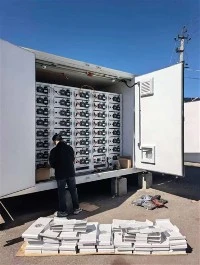
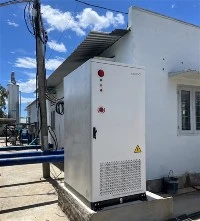
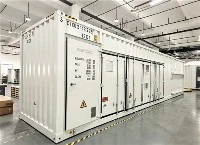
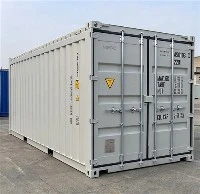
The overall system integration capability, safety, and economy of energy storage power station batteries are key factors determining their success or failure. To achieve these goals, it is not only necessary to make breakthroughs in the technology of the battery itself, but also to comprehensively consider at the system level, including but not limited to modular design, intelligent management system, thermal management system, electrical safety measures, etc.

Overall system integration capability
Modular design
Definition: Refers to dividing an energy storage system into several independently operable modules, each with a certain standard size and interface.
Purpose: To facilitate the expansion, maintenance, and upgrading of the system, and to improve its flexibility and operability.
Technical challenge: To achieve efficient communication and coordination between different modules.
System compatibility
Definition: Ensure a good match between the battery system and other power systems (such as the grid, inverters, etc.).
Purpose: To ensure the efficient operation of the entire energy storage system.
Technical challenge: Standardization of interfaces and protocol compatibility between different power systems.
Intelligent management system
Definition: including Battery Management System (BMS) and Energy Management System (EMS), responsible for monitoring battery status, optimizing charging and discharging strategies, predicting maintenance needs, etc.
Purpose: To enhance the intelligence level of the system and achieve more efficient energy management and scheduling.
Technical challenges: optimization of data collection accuracy, data analysis capabilities, and decision-making algorithms.
Security
Thermal runaway protection
Definition: To prevent the risk of battery explosion or fire caused by overheating.
Purpose: To ensure the safety of personnel and property.
Technical challenge: Design an effective thermal management system to monitor and control battery temperature.
Electrical safety
Definition: including insulation resistance, leakage protection, overvoltage protection, and other aspects.
Purpose: To prevent the occurrence of electric shock accidents.
Technical challenge: Choose appropriate electrical components to ensure the safety of circuit design.
Mechanical strength
Definition: Ensure that the battery pack or module can withstand physical impacts and vibrations during transportation and installation.
Purpose: To prevent battery damage caused by external forces.
Technical challenge: Strength and durability of structural design.
Chemical stability
Definition: The battery maintains stable chemical composition during long-term use to prevent the leakage of harmful substances.
Purpose: To reduce the risk of environmental pollution.
Technical challenge: Choose a stable chemical system and develop reliable packaging technology.
Economic viability
Initial cost
Definition: Includes the cost of the battery itself, installation cost, and necessary auxiliary equipment cost.
Purpose: To minimize costs while meeting performance requirements.
Technical challenge: Reduce raw material and manufacturing costs through technological innovation and large-scale production.
Running cost
Definition: including maintenance costs, replacement costs, etc.
Purpose: To reduce long-term operating costs by improving battery life and reducing maintenance frequency.
Technical challenge: Improve the cycle life and stability of batteries.
Recycling
Definition: The reuse or recycling of retired batteries.
Purpose: To reduce resource waste and improve sustainability.
Technical challenge: Develop efficient recycling technologies and processes.
Economic Benefit Evaluation
Definition: Evaluate economic indicators such as return on investment (ROI) and internal rate of return (IRR) of energy storage systems.
Purpose: To provide a basis for decision-making and ensure the economic benefits of the project.
Technical challenge: Accurately predicting market changes and policy support.

In order to continuously optimize the cost structure and improve the cost-effectiveness of energy storage systems, it is necessary to approach from multiple perspectives, including technological innovation, supply chain management, system design, and operation and maintenance strategies.
Technological innovation
Progress in battery technology
Develop new materials, such as solid electrolytes and high nickel cathode materials, to improve energy density and cycle life.
Optimize battery design, such as adopting new packaging technologies or improving the internal structure of batteries to reduce the use of non active materials.
System level optimization
Modular design: By standardizing the design of modular units, the production and installation processes are simplified, making maintenance and expansion easier.
Intelligent management system: Develop advanced battery management systems (BMS) and energy management systems (EMS) to achieve precise charge and discharge control and fault diagnosis, reducing unnecessary energy consumption.
Supply chain management
Raw material procurement
Long term cooperation agreement: Establish stable cooperative relationships with key raw material suppliers to ensure price advantages and stable supply.
Diversified procurement channels: reduce reliance on a single supplier and diversify risks.
Batch procurement and production
Scale production: By increasing the output scale and utilizing economies of scale to reduce unit costs.
Inventory management: adopting lean production methods to reduce inventory backlog and lower capital occupation costs.
System design
System integration
Efficient thermal management: Design efficient heat dissipation and insulation mechanisms to extend battery life.
Optimize electrical connections: Use high-efficiency inverters and other electrical equipment to reduce energy loss.
Modularization and Standardization
Universal interface design: Ensure good compatibility and interchangeability between various components.
Easy to install and maintain: Simplify on-site installation steps, reduce installation time and costs.
Operation and maintenance strategy
Remote monitoring
Real time data collection: Collecting battery operation data in real-time through IoT technology to detect potential issues in advance.
Data analysis and prediction: Utilizing big data and artificial intelligence technology for fault prediction to reduce maintenance costs.
Regular maintenance and upkeep
Preventive maintenance: Develop a reasonable maintenance plan based on the battery's operating condition to reduce sudden failures.
Remote diagnosis: Using remote diagnostic tools to quickly locate problems and reduce on-site service costs.
Other considerations
Policies and subsidies
Government subsidies: Actively apply for subsidies and tax incentives provided by the government to reduce the initial investment burden.
Market Trends: Pay close attention to industry trends and technological developments, and seize market opportunities.
Life cycle cost analysis
Overall consideration: In addition to initial investment costs, factors such as battery lifespan, maintenance costs, and residual value should also be taken into account.
Long term planning: Conduct long-term cost-benefit analysis to ensure the long-term sustainability of the project.