






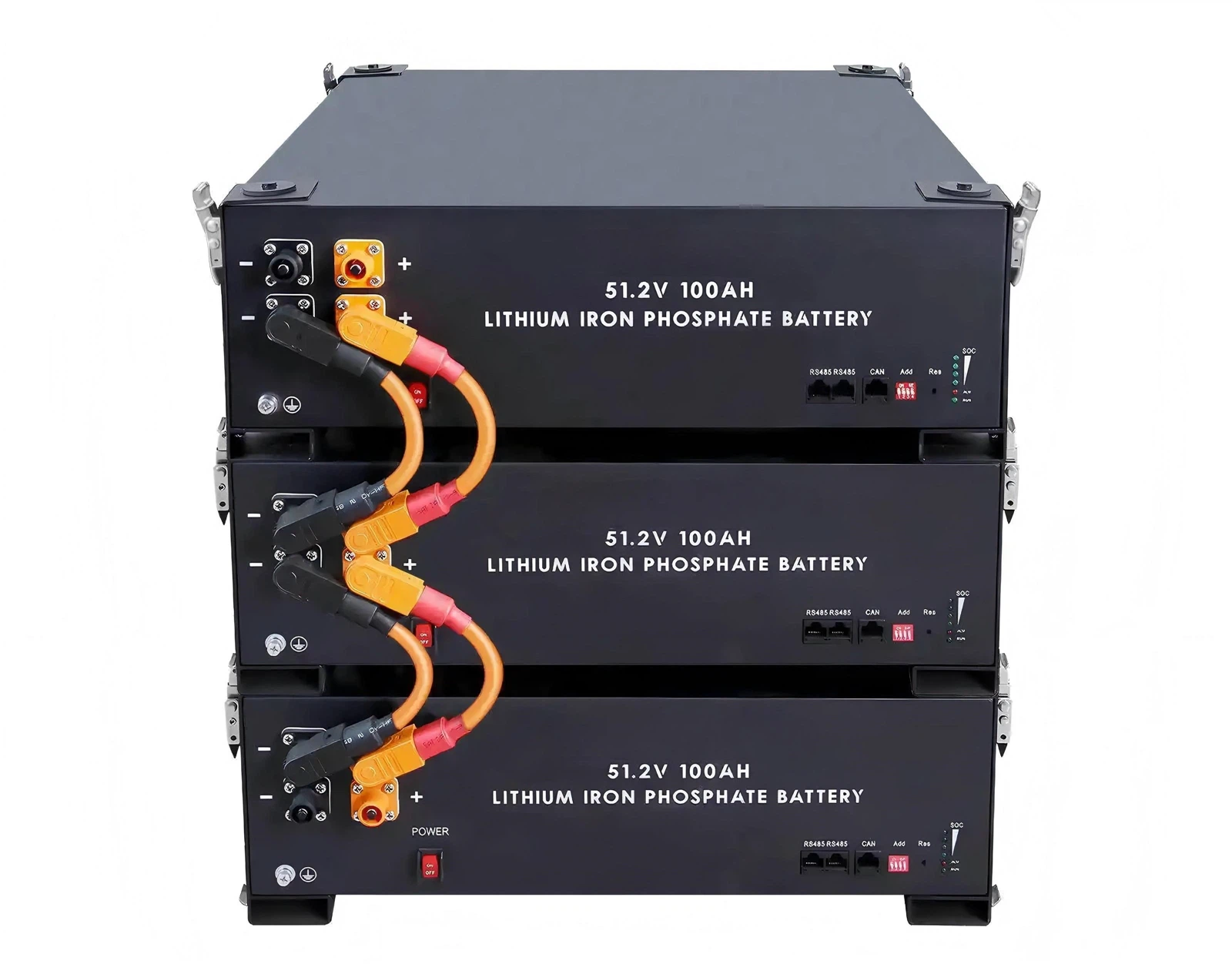
With the large-scale application of rack mounted lithium batteries, the environmentally friendly disposal of retired batteries has become a challenge in the industry - if discarded indiscriminately, it not only pollutes the environment but also wastes scarce resources such as lithium and cobalt. Global enterprises have built a full lifecycle environmental protection loop for rack mounted lithium batteries through a dual path of "cascading utilization+material regeneration", which not only extends the value of the batteries but also reduces recycling costs, promoting the energy storage industry to shift towards a sustainable model of "green manufacturing efficient use recycling".
1 Tiered utilization: "secondary revitalization" of retired batteries
China's "graded screening+scene matching" model. A certain energy storage enterprise has established a classification system for retired rack mounted lithium batteries: different levels of batteries are matched to differentiated scenarios through capacity testing (remaining capacity>80% is Class A, 60% -80% is Class B, and<60% is Class C), internal resistance testing (<50m Ω is qualified), and cycle life evaluation. A-class batteries are used for household energy storage (below 10kWh), B-class batteries are used for low-power scenarios such as streetlights and monitoring, and C-Class batteries are disassembled and recycled. 1000 retired rack batteries (with an original capacity of 50kWh) from a data center in Jiangsu, after screening, 40% will be used for household energy storage and 30% will be used for municipal street lights. The benefits of cascading utilization will reach 30% of the original battery value, which is twice as much as direct recycling.
The modular hierarchical restructuring technology in the United States. To address the issue of inconsistent capacity of retired rack batteries, a "modular reassembly" solution is adopted: after disassembling individual batteries (2V/50Ah), they are reassembled according to the standard of capacity deviation<5% and paired with a new BMS (supporting unbalanced cell management) to form a 12V/100Ah hierarchical battery pack. The reorganized battery pack has a cycle life of 500 times and is suitable for mobile energy storage scenarios such as RVs and camping sites. The application of a California RV manufacturer shows that the cost of this recombinant battery pack is only 50% of that of a new battery, while the range reaches 80% of that of a new battery, with annual sales exceeding 10000 units.

2 Material Recycling: The 'Circular Utilization' of Scarce Resources
The "low-temperature wet recycling" process in Europe. The "low-temperature leaching" technology developed by a recycling company in Germany involves leaching the positive electrode material (NCM) of retired rack batteries with dilute sulfuric acid at a low temperature of 50 ℃. By adding chelating agents, lithium, cobalt, and nickel are selectively extracted (with recovery rates of 95%, 98%, and 97%, respectively), reducing energy consumption by 60% compared to traditional high-temperature pyrometallurgical methods (800 ℃) and avoiding harmful gas emissions. The purity of the recovered lithium salt (Li ₂ CO ∝) reaches 99.5%, which can be directly used for the production of new battery cells; Cobalt and nickel are used to make positive electrode precursors, which are 25% cheaper than mineral raw materials. Tests conducted by a certain battery factory have shown that the energy density and cycle life of battery cells made from recycled materials are only 3% lower than those made from brand new materials, fully meeting the requirements of rack mounted lithium batteries.
China's "Physical Chemical Joint Recycling" program. For lithium iron phosphate rack batteries (cobalt and nickel free, low recycling value), a combination process of "physical disassembly+chemical purification" is adopted: first, the aluminum shell and copper foil are separated by mechanical crushing and screening (recovery rate of 99%), and then the positive electrode powder is leached with phosphoric acid to remove impurities and prepare lithium iron phosphate positive electrode material (regeneration rate of 90%). The recycling cost of this process is reduced by 30% compared to the wet method, and the capacity retention rate of regenerated lithium iron phosphate reaches 95%, with a decay rate of<5% after 500 cycles. The practice of a recycling base in Hunan Province shows that processing 1 ton of retired lithium iron phosphate rack batteries can obtain 0.8 tons of recycled positive electrode materials, with significant economic and environmental benefits.
3 Recycling System: Global Collaboration from Decentralized Recycling to Centralized Processing
Japan's Extended Producer Responsibility (EPR) system. According to the Battery Recycling Law, manufacturers of rack mounted lithium batteries (such as Panasonic and Toshiba) are responsible for the recycling of retired batteries by setting up 500 recycling points nationwide (covering data centers and communication base stations) and providing on-site recycling services (free transportation). The manufacturer will send the recycled batteries to a cooperative recycling plant, and the processing cost will be shared through the product selling price (with a 5% markup per kWh battery). This system has increased the recycling rate of rack mounted lithium batteries in Japan from 30% in 2015 to 85% in 2023, forming a virtuous cycle of "production use recycling".
The "decentralized recycling+centralized processing" model in Africa. In response to the scarcity of recycling points in Africa, a certain enterprise has partnered with local telecommunications operators to set up temporary recycling points at 200 communication base stations. The base station operation and maintenance personnel are responsible for collecting retired rack batteries, which are regularly transported from the regional center warehouse to a centralized recycling plant in South Africa. The recycling plant adopts a simplified wet process (low-cost, suitable for small-scale processing), and the extracted lithium and cobalt are used for local small-scale battery production (such as flashlight and radio batteries), achieving "local recycling local utilization". According to operational data from a recycling plant in South Africa, this model has increased the recycling rate of rack mounted lithium batteries in Africa from 5% to 30%, while creating 200 job opportunities locally.
The environmental recycling system for rack mounted lithium batteries is shifting from "end of pipe treatment" to "full cycle management". In the future, with the application of blockchain traceability (tracking battery flow) and AI sorting (automatically identifying battery grade), "every battery can be traced and every material can be recycled", making high-density energy storage not only a tool for energy transformation, but also a model for sustainable development.