


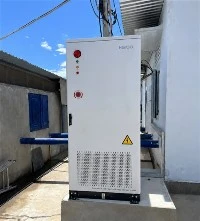
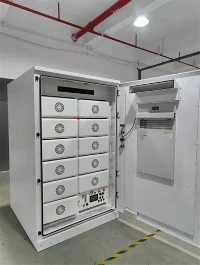
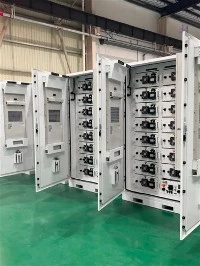
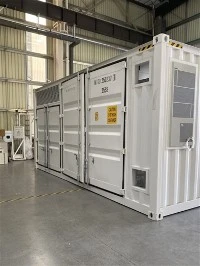
From high temperature exposure at the equator to extreme cold and low light at the poles, photovoltaic energy storage stations need to respond accurately to environmental challenges in different climate zones. Through targeted technological innovation, global projects have achieved efficient and stable operation under extreme conditions, demonstrating the wisdom of adapting new energy technologies to local conditions.
1 Tropical regions: "heat dissipation breakthrough" under high temperature and high humidity
The combination of optimized tilt angle of photovoltaic panels and forced heat dissipation in Southeast Asia. A 500MW photovoltaic energy storage power station in Thailand has increased the tilt angle of its modules from 15 ° to 25 ° (reducing direct sunlight at noon), and installed axial fans (with a wind speed of 3m/s) below the modules, reducing the temperature of the back panel by 8 ° C and improving power generation efficiency by 3%. The energy storage container adopts a "liquid cooling+fresh air" composite system: liquid cooling is used during the day (temperature difference controlled at 5 ℃), and natural ventilation is switched at night (using ambient temperature below 25 ℃ for heat dissipation), saving 40% energy compared to pure liquid cooling solutions. This technology enables the system to maintain an output retention rate of 98% in environments above 35 ℃.
Africa's "dust-proof design+rainwater utilization" to cope with sandstorms. A 100MW photovoltaic energy storage power station in Kenya uses hydrophobic coating (dust protection level IP66) for its components. It automatically cleans the components every week during short-term heavy rainfall during the local rainy season (saving 80% water), and with monthly mechanical cleaning, the surface dust coverage of the components is controlled within 5%. The energy storage battery uses high temperature resistant lithium iron phosphate (working temperature -20 ℃~60 ℃), and its cycle life can still reach 5000 times at 45 ℃, which is 30% longer than ordinary batteries.

2 Cold regions: "Efficiency activation" in low temperature and weak light
Nordic "photovoltaic panel heating+energy storage preheating" technology. A 200MW photovoltaic energy storage power station in Norway has installed a heating film (with a power of 20W/m ²) on the back of the module. When the temperature drops below -5 ℃, it automatically starts, melts the snow within 30 minutes, and raises the plate temperature to 5 ℃, ensuring that the winter power generation is not less than 60% of the summer. The energy storage system adopts "antifreeze circulation heating": it uses the waste heat generated by photovoltaic panels during the day to heat the battery compartment through a heat exchanger, keeping the cell temperature above 15 ℃ and avoiding capacity degradation caused by low temperature (the capacity can be maintained at 85% at -20 ℃, which is 20% higher than without heating).
Canada's "tracking bracket+spotlight design" enhances low light utilization. A 150MW photovoltaic energy storage power station in Ontario uses dual axis tracking brackets (tracking accuracy ± 0.5 °), combined with Fresnel lens focusing (doubling the enhancement rate), to increase power generation by 40% under low light conditions in winter. The energy storage adopts a hybrid system of "lithium battery+flywheel": the flywheel (response time<10ms) responds to instantaneous power fluctuations, while the lithium battery undertakes long-term energy storage and can maintain power supply through grid charging during extreme night periods, ensuring power continuity in remote communities.

3 Plateau region: 'Extreme adaptation' under low-pressure radiation
Low pressure optimization+radiation resistance design for the Qinghai Tibet Plateau in China. The 300MW photovoltaic energy storage power station in Yushu, Qinghai adopts a high prototype design for the inverter (power does not decrease at an altitude of 4000 meters), and increases the heat sink area (50% more than the plain model) to ensure that the IGBT temperature does not exceed 85 ℃. The photovoltaic module uses anti PID (potential induced attenuation) glass, and under strong ultraviolet irradiation (annual radiation of 6000MJ/m ²), the power attenuation rate is controlled within 0.3%/year. The energy storage container adopts "negative pressure ventilation" (the pressure inside the cabin is 10Pa lower than the outside) to avoid the decrease in heat dissipation efficiency caused by low pressure.
The "windproof fixation+hail protection" in South America ensures structural safety. The 200MW photovoltaic energy storage power station in the Atacama Desert of Chile has a wind resistance level of 16 for the photovoltaic bracket design (able to withstand gusts of 50m/s), and the foundation uses spiral piles (buried at a depth of 3 meters) with a displacement of<5cm in strong wind weather. The surface of the components is covered with 2mm thick tempered glass (resistant to hail impact energy of 27J). After encountering a rare hail disaster in 2022, the integrity rate of the components still reached 99%. The energy storage compartment is made of double-layer steel plates (filled with rock wool in the middle), which are both insulated and impact resistant, and can adapt to the temperature difference between day and night in desert areas (up to 30 ℃).
The regional adaptation technology of photovoltaic energy storage power stations is essentially a creative response of human beings to natural conditions. These innovations not only enhance the economic viability of projects in extreme environments, but also expand the application boundaries of photovoltaic energy storage - from tropical rainforests to polar tundra, from plateau deserts to island reefs, the light of new energy is illuminating every corner through technological innovation.