


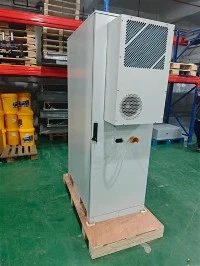
Anyone running construction projects in the Democratic Republic of the Congo knows the pain of power outages. The utility grid cuts out without warning, and nobody can tell when supply will resume. If power fails while a batching plant is discharging concrete, the mix solidifies inside the drum and becomes waste. If a piling rig stops mid-bore, the drill bit may get stuck or deviate from the designed hole. When campsites lose power after dark, workers cannot carry out daily routines.
Diesel generators seem like a reliable backup, yet they come with plenty of headaches for remote sites. Fuel transport costs are high, and bad road conditions can delay deliveries, holding up the whole construction schedule. Generators wear rapidly under continuous heavy load, suffer frequent minor faults, and require dedicated staff for refuelling and maintenance.

This project has clear requirements: the site hosts a concrete batching plant, piling equipment and worker camps, with zero reliance on the utility grid. A solar-storage-led hybrid power system is adopted, with diesel generators only as the final backup. The peak load reaches nearly 470kW, and round-the-clock operations are required. The system must deliver stable power, withstand harsh site conditions and minimise diesel consumption. The final deployed solution is a 522kWp solar array paired with a 1205kWh energy storage system, managed by five 125kW-class hybrid inverters acting as the energy dispatch core.
01 Calculating the Real Site Load Profile
Load assessment is always the first step in power system design. Looking only at a nominal "400kW total power" figure is insufficient. Every piece of equipment must be broken down to distinguish starting power, running power and operating hours. Otherwise, the system will either fail to start machinery or suffer from excessive redundant capacity.
The site loads fall into three categories: the concrete batching plant, on-site construction equipment and camp domestic loads, with the first two as critical loads. The batching plant has a dual-unit setup. Each mixer is rated at 30kW, paired with a 7.5kW conveyor motor and a 5kW screw conveyor. The twin units are configured for backup and can be started sequentially rather than simultaneously. The maximum starting power for a single unit is capped at 30kW to avoid instantaneous overload surges. Under normal operation, the entire batching plant draws around 75kW, with a peak of 110kW. It runs for 6 hours during the day and 2 hours at night. This is a continuous load with strict power continuity requirements; even a few minutes of outage can result in wasted concrete.
Piling equipment forms the largest power consumer. Four sets of rotary piling rigs are deployed. Each set includes one 55kW main winch, one 22kW mud pump and one 5.5kW auxiliary winch. Sequential start-up is enabled, with the 55kW winch defining the maximum starting load for each set to prevent simultaneous hard starting of all four rigs. When two rigs operate in parallel, the average running load is approximately 300kW with a peak of 360kW. These are predominantly inductive motor loads with high inrush current on start-up, demanding strong surge tolerance from the power system. The piling rigs run 8 hours by day and 2 hours at night, and can operate either staggered or in parallel with the batching plant. Domestic loads for the worker camp consist of lighting, general sockets and small appliances. They account for a small share of total consumption and are included in calculations without driving the overall capacity design.
Combining peak loads, the batching plant's 110kW plus the piling rigs' 360kW gives a total peak load close to 470kW and a continuous running load of roughly 375kW. The client's core requirements are straightforward: full independence from the grid with zero outage impact; and a dispatch priority of solar first, storage second, diesel as final backup to cut fuel consumption to the minimum. This forms the design foundation for the whole system.
02 System Architecture: Why Hybrid Is Preferred Over Pure Off-Grid
Many assume that no grid connection means a pure off-grid system. For construction sites characterised by volatile loads and high reliability demands, however, a hybrid architecture of "solar + battery storage + diesel backup" outperforms pure off-grid designs.
The system centres on five 125kW hybrid inverters. On the DC side, 828 pieces of 630W solar modules are connected upstream, while five 241kWh industrial battery cabinets are connected downstream. On the AC side, the inverters interface with site loads and diesel generators to enable coordinated multi-energy dispatch. Key specifications: 522kWp solar capacity, total inverter power of 625kW, total storage capacity of 1205kWh, and total charge/discharge power of 625kW.

This configuration follows clear design logic. First, generous power headroom is reserved. Against a 470kW peak load, the total 625kW inverter rating leaves nearly 30% margin, specifically to absorb motor starting surges and simultaneous peak load events, preventing protective tripping when equipment is switched on. Second, energy capacity matches the site operating schedule. Solar generation during daytime directly feeds construction and batching loads, with surplus energy stored in batteries for night-time operations. Under clear sunny conditions, daytime generation covers all daytime loads and fully charges the batteries. The stored energy can support the 2-hour night shift plus camp loads without activating the diesel generator.
The core advantage of the hybrid architecture lies in its flexibility and stability. The inverters support both grid-tied and off-grid modes with a switching time ≤10ms for near-seamless transition. If the site is later connected to the utility grid, the system can switch directly to grid-tied mode for self-consumption and surplus power utilisation, with no core equipment replacement required. While operating off-grid at present, solar, storage and diesel work in coordination to fill power gaps automatically, delivering far higher reliability than any single energy source.
03 Equipment Selection: Units Optimised for African Site Conditions
Construction sites in Africa face harsh operating conditions: high temperatures, heavy dust and occasional heavy rainfall. Only industrial-grade hardware can deliver stable long-term performance. The two core product lines below are selected against site-specific parameters.
125kW Hybrid Inverter
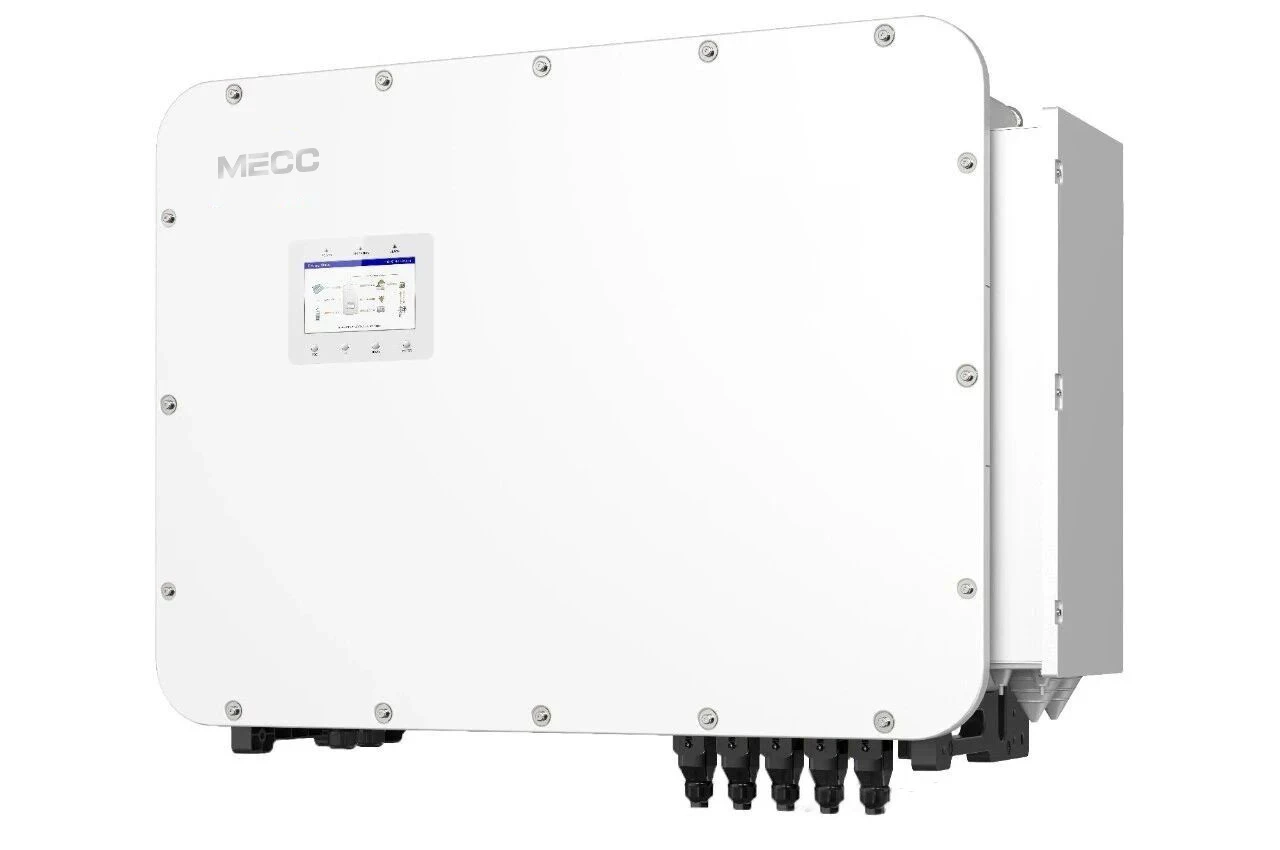
As the system brain, this inverter is optimised for motor loads and complex installation scenarios with strong overload tolerance and multi-channel MPPT. In off-grid mode, it supports 120% rated load for 10 minutes, 130% load for 1 minute and 150% load for 10 seconds. This capability handles the large inrush current of piling rigs and mixers during start-up. There is no need to oversize inverters just for short start surges, balancing performance and cost.
Each unit is equipped with 8 independent MPPT channels. Each MPPT accepts two strings, with a maximum channel current of 40A and a maximum DC input voltage of 1000V. The MPPT operating voltage window of 125V–850V is wide enough to accommodate voltage fluctuations from low light at dawn/dusk and high irradiance at noon, preserving generation efficiency. Partial shading from tower cranes or material piles is common on site. Independent MPPT channels minimise mismatch losses, and shading on one channel does not disrupt other channels.
Environmental performance is robust: IP65 rating, operating temperature range from -40°C to +60°C, perfectly suited for the high temperatures in DRC. Intelligent air cooling removes the need for extra air conditioning, and the units can run reliably in outdoor cabinets. The ≤10ms grid/off-grid switch protects batching plant controls and precision piling electronics from power disruption.
241kWh Industrial Battery Cabinet
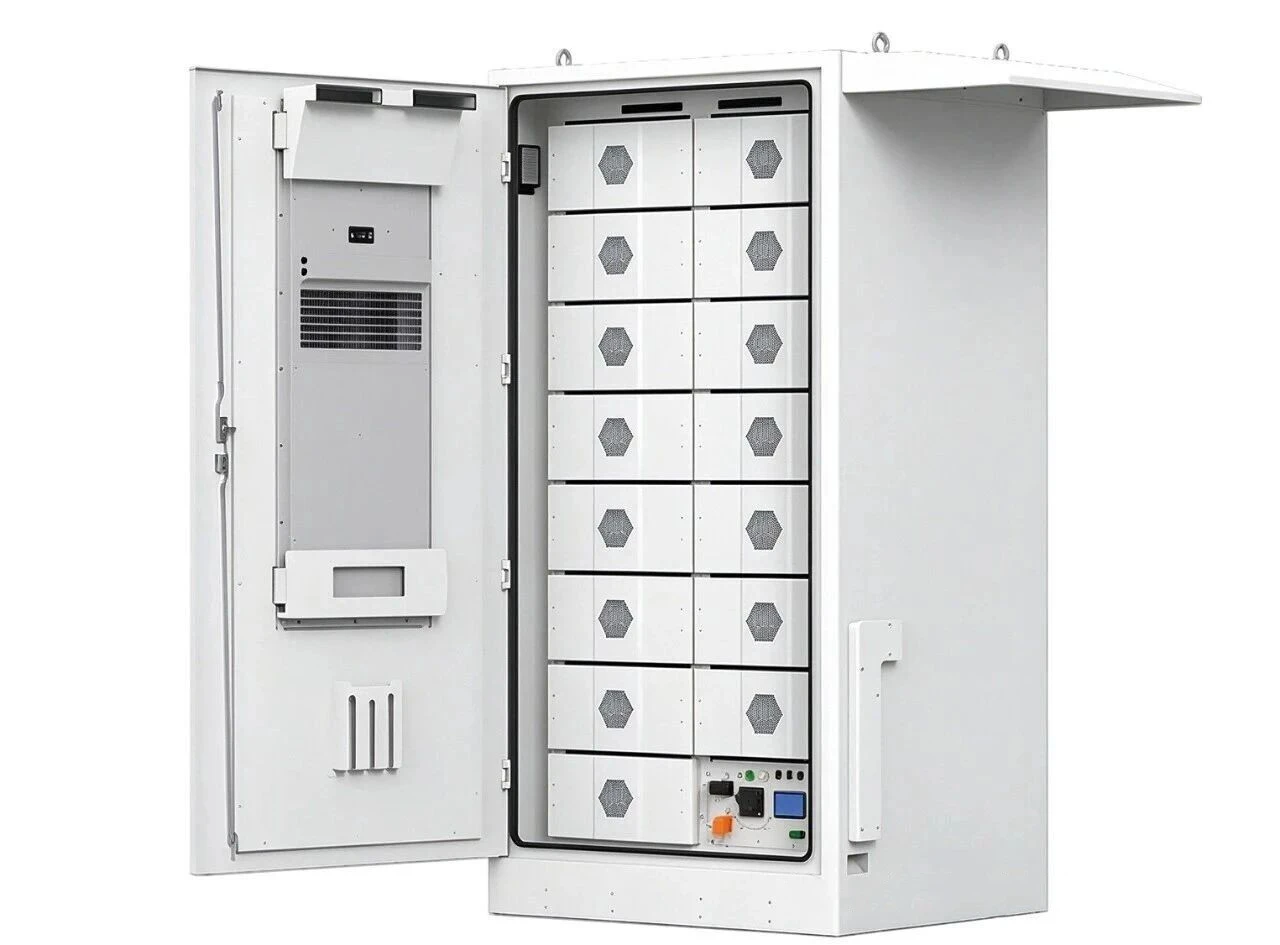
For construction-site storage, safety, durability and long service life are paramount. This cabinet uses lithium iron phosphate cells, assembled from 15 series modules. Rated voltage is 768V, rated capacity 241.15kWh, and rated charge/discharge power 125kW. The one-to-one matching with each inverter maximises energy dispatch efficiency.
The battery delivers 6000 cycles at 90% depth of discharge. Under typical site cycling profiles, it can operate reliably for more than a decade without cell replacement, offering excellent whole-life performance. It comes with an integrated BMS that monitors cell voltage and temperature in real time, with active protection against overcharge, overdischarge, over-temperature and short circuits. A built-in fire suppression system removes the need for dedicated fire compartments on site.
Its environmental parameters match site requirements: operating temperature from -20°C to 50°C, integrated air cooling combining refrigeration, ventilation and heating for stable operation in high heat. IP54 ingress protection defends against dust and water splashes. The self-discharge rate is low, so batteries will not deplete even if the site shuts down for one or two months, eliminating routine maintenance charging during idle periods.
04 String Design: 18 Modules per String - an Optimised Calculated Solution
Solar string design is a highly technical step. Poorly matched parameters reduce energy yield or damage equipment. The final design of 18 modules per string is validated against three critical constraints.
First: open-circuit voltage under extreme low temperature must not exceed the inverter DC voltage limit. Module open-circuit voltage rises as temperature falls. We perform verification at -25°C - far lower than the minimum temperature in DRC - for conservative safety margin. Based on the temperature coefficient, the open-circuit voltage of one module at low temperature is approximately 55V. Eighteen modules in series reach 990V, below the 1000V inverter DC limit with a 10V safety buffer, eliminating cold-temperature breakdown risk.
Second: parallel string current must stay below the MPPT channel current limit. Each module has an operating current of roughly 15.1A. Two strings in parallel on one MPPT channel produce around 30A, well below the 40A channel limit. Current rises in summer high irradiance will not breach the threshold, retaining sufficient safety margin.
Total module count is 828. Divided by 18 modules per string, this gives exactly 46 strings with no leftover modules. Uniform string length minimises mismatch losses. The 46 strings are allocated across five inverters following a hard rule: every MPPT channel must carry an even number of strings (typically two). Single-string connection on one MPPT channel is forbidden, as it degrades tracking accuracy and may induce circulating current that damages hardware. Each inverter has 8 MPPT channels, supporting up to 16 strings per unit with ample spare capacity.
Final allocation:
3 inverters: 10 strings each, utilising 5 MPPT channels, 180 modules per unit, 113.4kWp solar capacity
2 inverters: 8 strings each, utilising 4 MPPT channels, 144 modules per unit, 90.72kWp solar capacity
The total sums to 46 strings, 828 modules and 522kWp. Uneven distribution is necessary because 46 is not divisible by 5. Every inverter operates below its 250kWp maximum solar input rating, and all active MPPT channels run with two matched strings. Remaining MPPT channels are reserved for future expansion and do not interfere with normal operation. Wiring rules are enforced: the two strings on the same MPPT channel must use identical modules, identical string lengths and closely matched cable lengths. Mixed long and short strings on one MPPT are prohibited. Separate MPPT channels are electrically independent; a fault on one channel does not affect others, simplifying maintenance.
05 Operating Strategy: Aligned with Site Work Schedules to Maximise Solar Utilisation
High-quality hardware alone is not enough. A poorly tuned control logic will waste power and fuel. We implement a three-tier power priority matching the site workflow: solar direct supply first, battery discharge second, diesel generator as the final backup.
During the 8-hour daytime construction window, solar output peaks. Solar power feeds piling and batching loads directly. On sunny days, solar covers roughly 70–80% of the 300kW+ running load. Any surplus generation charges the batteries until full. At midday peak irradiance, excess power is stored. When light fades in early morning or late afternoon, or during cloudy weather, batteries automatically discharge to fill the gap without manual intervention or diesel start-up. Only during extended cloudy periods, when solar plus storage cannot meet demand, will the diesel generator start automatically. It runs at a suitable load point to avoid wasteful idling and maintain high efficiency.
During the 2-hour night shift, solar output drops to zero and batteries supply all power. Combined batching and construction loads draw around 375kW. The total 625kW discharge capacity of the five battery cabinets easily covers peak demand with stable voltage and frequency, and no voltage drop during motor start-up. The 2-hour night shift consumes approximately 750kWh. With 1205kWh total storage capacity, substantial energy remains after construction to support camp lighting and domestic loads until sunrise, with no diesel required.
Battery protection thresholds are programmed: when state of charge falls to 20%, the diesel generator starts automatically to carry loads and recharge batteries, ensuring continuity for critical equipment. Once solar generation refills the batteries under favourable weather, the diesel unit shuts down and the system returns to solar-storage mode. Specialised logic is built for motor start events. When piling rigs or mixers kick in, inverters deliver short-duration overload output while batteries provide instantaneous high power to absorb inrush surges, avoiding unnecessary system oversizing. If the construction schedule slows down, the batching plant can switch to single-unit operation at night to cut consumption and extend battery runtime. All strategy parameters can be adjusted remotely via the monitoring platform without rewiring, accessible to site management staff.
06 Core Value of This Solution
Beyond headline solar and storage capacity numbers, the true value of this 522kW hybrid system for DRC construction sites lies in practical operational benefits.
First, it removes reliance on the utility grid. No more waiting for grid restoration, no more concrete waste or schedule delays caused by unexpected blackouts. Construction timelines are fully under site control. For civil engineering projects, schedule reliability is the most important cost driver. Avoiding a single shutdown day can save indirect costs far exceeding the equipment investment.
Second, diesel dependence is drastically reduced. In normal sunny conditions, the diesel generator may not run for weeks. Fuel procurement, transportation, storage and logistical burdens are all eased. Remote sites no longer need frequent tanker deliveries or large fuel stockpiles that carry safety risks and evaporation losses.
Third, power quality outperforms the local grid. Hybrid inverters deliver stable voltage and frequency, free from the voltage fluctuations, flicker and harmonic distortion common on the utility network. This protects controls, motors and electronic components, lowering equipment failure rates and extending service life.
Fourth, the system is highly expandable. Ample spare capacity is reserved: unused MPPT channels and parallel battery capacity remain available. If the site adds machinery or expands operations later, additional solar modules or battery cabinets can be integrated without replacing core equipment, protecting the original capital investment.
Designing power systems for construction sites is never about stacking high specifications. Every parameter must be refined against site load characteristics, environmental conditions and operational requirements. Voltage bands are calibrated, current safety margins are calculated, string lengths are optimised, and control logic follows actual working routines. Only then can the system run reliably for more than a decade in Africa's hot, dusty environment.
This 522kW hybrid solar-storage solution is a mature design refined for African civil construction. Every detail, from module selection and battery sizing to electrical design and operating logic, has been field-proven. For projects seeking grid independence and stable construction power, this is a proven, viable route.

125KW 241kWh Battery Energy Storage System Cabinet
The BESS 125KW 241kWh Lithium Battery Energy Storage Cabinet is a high-power, large-capacity integrated energy storage solution engineered for medium-to-large commercial, industrial, and utility-scale applications. It integrates a 125kW high-performance bidirectional inverter, a 241kWh lithium iron phosphate (LiFePO4) battery bank, and a full-featured intelligent energy management system (EMS) into a modular cabinet design. This system enables efficient renewable energy storage, peak shaving, load shifting, grid frequency regulation, and emergency backup power supply. Ideal for large factories, shopping malls, industrial parks, utility-scale solar/wind farms, and microgrids, it enhances energy independence, reduces high grid demand charges, and supports the stable integration of high-penetration renewable energy into the grid.