


Under the guidance of the global "dual carbon" goal, the pace of energy transformation is constantly accelerating. As the main force of clean energy, photovoltaic power plants are standing at a new development starting point, demonstrating a series of highly potential future trends and leading the energy sector to embark on a new journey of profound transformation. From technological innovation to industrial integration, from market expansion to policy promotion, the development prospects of photovoltaic power plants are vast, and they will play an increasingly crucial role in the future energy landscape.

Continuous breakthroughs in technological innovation, improving power generation efficiency and stability
New photovoltaic cell technology iterative upgrade
In the future, photovoltaic cell technology will continue to iterate to achieve higher conversion efficiency. Perovskite cells have become one of the most promising new generation photovoltaic cell technologies due to their excellent optoelectronic properties. Its theoretical conversion efficiency is over 30%, and currently the laboratory efficiency has exceeded 25%, with advantages such as low cost and simple preparation process. With the deepening of research, perovskite cells are expected to achieve large-scale commercial applications in the next 5-10 years, forming a complementary development trend with traditional crystalline silicon cells and significantly improving the overall power generation efficiency of photovoltaic power plants. Meanwhile, new photovoltaic cell technologies based on quantum dots, organic semiconductors, and other materials are also actively being explored, and breakthroughs in these technologies will bring new development opportunities for photovoltaic power plants.
Intelligent and digital empowerment of photovoltaic power station operation and maintenance
Intelligent and digital technologies will be deeply integrated into the operation and maintenance management of photovoltaic power plants. Through artificial intelligence, big data analysis, and IoT technology, photovoltaic power plants can achieve intelligent monitoring, fault prediction, and accurate diagnosis of equipment. The intelligent operation and maintenance system can collect real-time operation data of photovoltaic modules, inverters, combiner boxes and other equipment, analyze the data using machine learning algorithms, predict equipment failures in advance, issue warnings in a timely manner, and provide the optimal maintenance plan. In addition, digital technology will also promote the optimization of the entire process of design, construction, and operation of photovoltaic power plants, achieve refined management of power plants, improve operational efficiency, and reduce operation and maintenance costs. For example, by using digital twin technology to construct a virtual photovoltaic power plant model, the layout and equipment selection of the power plant can be simulated and optimized before actual construction, ensuring that the power plant can achieve optimal operating conditions after completion.

Accelerating industrial integration, expanding application boundaries and business models
Deep integration of photovoltaics and energy storage to build a stable energy system
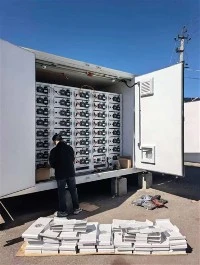
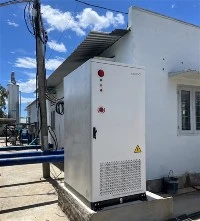
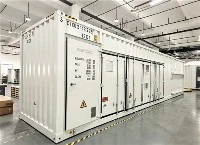
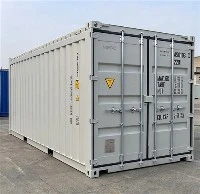
The integration of energy storage technology and photovoltaic power plants will become an important trend for future development. With the continuous advancement and cost reduction of energy storage technologies such as lithium batteries and flow batteries, the "integrated photovoltaic storage" system will be widely applied. The energy storage system can store excess electricity when there is sufficient sunlight, release electricity when there is insufficient sunlight or peak electricity consumption, effectively solve the intermittent and fluctuating problems of photovoltaic power generation, and improve the stability and reliability of power supply. At the same time, the integrated photovoltaic storage system can also participate in auxiliary services of the power grid, such as peak shaving, frequency regulation, backup power supply, etc., expanding the profit space of photovoltaic power plants. In the future, with the further development of energy storage technology, the integration of photovoltaic and energy storage systems will move towards intelligence and efficiency, becoming an important component of building a new type of power system.
Cross industry integration of photovoltaics and multiple industries, creating new application scenarios
Photovoltaic power plants will achieve deep cross-border integration with multiple industries such as agriculture, construction, and transportation, creating rich and diverse new application scenarios. In the field of agriculture, in addition to the existing agricultural photovoltaic complementary models, innovative applications such as photovoltaic agricultural greenhouses and photovoltaic breeding facilities will also emerge in the future, organically combining photovoltaic power generation with agricultural production, agricultural product processing, and other links to achieve efficient utilization of land resources and green upgrading of the agricultural industry. In the field of architecture, Building Integrated Photovoltaics (BIPV) will be more widely applied. Photovoltaic modules will be directly integrated into building structures as building materials, such as photovoltaic roofs, photovoltaic curtain walls, etc., not only realizing self generation of buildings, but also improving the aesthetics and energy-saving effects of buildings. In the field of transportation, applications such as photovoltaic highways and photovoltaic charging piles will gradually be promoted to provide green energy for electric vehicles and promote the electrification and low-carbon development of the transportation sector.

Market expansion and policy support to promote the global layout of photovoltaic power plants
Emerging markets rise, and demand for photovoltaic power plants continues to grow
With the continuous reduction of photovoltaic power generation costs and the popularization of clean energy awareness, emerging markets will become a new engine for the development of photovoltaic power plants. Southeast Asia, Africa, Latin America and other regions have abundant solar energy resources and huge energy demand, but the power grid infrastructure is relatively weak, and photovoltaic power generation has unique advantages. In the future, these regions will increase investment and construction efforts in photovoltaic power stations, promoting rapid growth in the photovoltaic market. For example, in some African countries, governments actively introduce policies to encourage the construction of photovoltaic power stations, attracting a large amount of international investment and leading to explosive growth in photovoltaic installed capacity. The rise of emerging markets will bring new development opportunities for the global photovoltaic industry and promote the widespread layout of photovoltaic power plants worldwide.
Continuous favorable policies ensure the healthy development of photovoltaic power plants
Governments around the world will continue to introduce a series of policies to support the development of photovoltaic power plants, providing strong guarantees for the industry's growth. In terms of subsidy policies, although some regions have gradually reduced or cancelled direct subsidies for photovoltaic power plants, new revenue channels have been created for photovoltaic power plants through the implementation of market mechanisms such as green power certificate trading and carbon trading. In terms of industrial planning, countries will further clarify the development goals and key tasks of the photovoltaic industry, and increase support for photovoltaic technology research and development and industrial upgrading. At the same time, the government will strengthen the standardized management of the construction and operation of photovoltaic power plants, improve relevant standards and regulations, ensure the quality and safety of photovoltaic power plants, and promote the healthy and orderly development of the photovoltaic industry.