


Winding Process
1 Principle and process of winding technology
1. Principle: By fixing the winding needle, the pre processed positive electrode plate, separator, and negative electrode plate are wound and extruded in sequence.
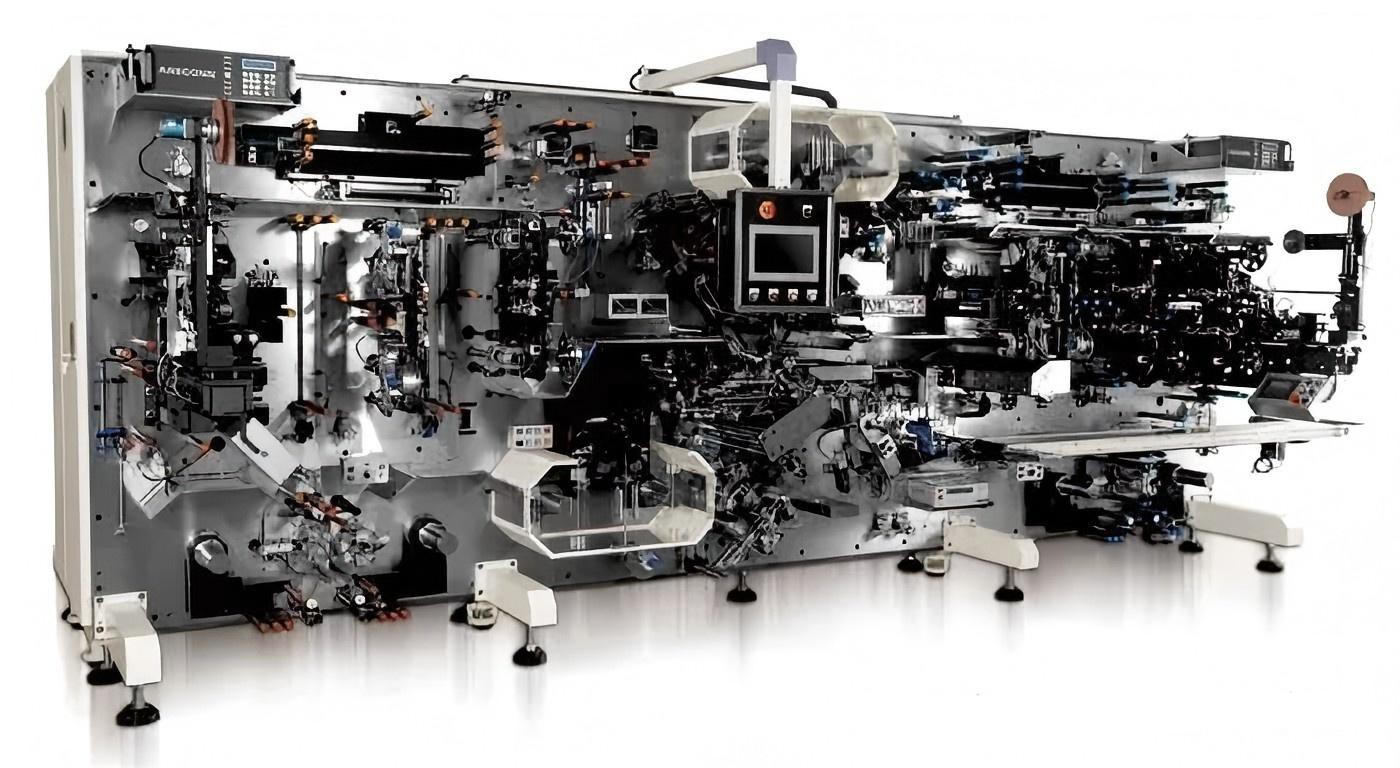
2. Process: Stack the raw materials in the order of negative electrode, separator, positive electrode, and separator, and directly roll them into a cylindrical or elliptical shape through winding method, and then place them in a square or cylindrical metal shell. The specific steps include unwinding the positive and negative pole pieces of the coil material and the diaphragm, automatic correction, automatic tension detection and control. The pole pieces are introduced into the winding part by the gripper feeding mechanism and automatically wound together with the diaphragm according to the specified process requirements. After the winding is completed, the workstation will be automatically changed, the diaphragm will be cut off, and the termination tape will be applied. The finished bare battery cells will be automatically cut off, and after pre pressing, they will be finally transported to the cutting outlet by a pulling belt.
3. Application scenarios: Mostly used for square and cylindrical batteries.

2 Key parameter control
1. Tension parameter: Tension is mainly used to ensure the formation of the wound battery cell and the interface of the electrode after formation. The tension is too low, the battery cells are loose, and even the pole pieces move during the transportation of the battery cells; Excessive tension and tight clamping of the battery cells can cause wrinkles in the electrode plates.
2. Diaphragm cutter temperature: The diaphragm cutter temperature is mainly determined by experimental comparison of cutting effects at different temperatures to determine the optimal cutter temperature. After determining the type and thickness of the diaphragm, the diaphragm chamber will provide an approximate heat-resistant temperature, which is the upper limit of the hot pressing temperature and drying temperature. Beyond this temperature, the diaphragm will shrink more severely, affecting the coating size and even closing the pores.
3. Needle circumference: The standard for needle circumference comes from the design process. In theory, the circumference of the winding needle is equal to (cell width - cell thickness) × 2, but in reality, after hot pressing the cell, the corners on both sides of the cell are not semi-circular, but more like trapezoids. In order to adapt to subsequent material thickness fluctuations and adjust the PTFE, the circumference of the winding needle is definitely smaller than the theoretical value.
4. Negative electrode cutter life: The determination of negative electrode cutter life is mainly based on customer requirements. Even if there are burrs at the cutting position, due to the positive wrapping of the negative end at the beginning and end of the wound battery cell, the overlap after the burrs pierce the diaphragm is still the negative electrode, so there is no need for control.
5. The number of empty turns of the diaphragm at the beginning and end of the roll: Currently, there are 1.5 turns at the beginning and 1.25 turns at the end of the roll, mainly from the design drawings. The adjustment of the number of turns at the beginning of the roll mainly needs to verify the impact on the core pulling and the thickness of the battery cell. The number of turns at the end of the roll mainly considers the influence of the end glue and the position and scanning of the battery cell QR code, which is mainly related to the assembly and welding method.
3 Equipment and Technical Requirements
1. Automation equipment: The winding process is usually completed on automated equipment to ensure the uniformity and consistency of the winding. These devices typically have the characteristics of high precision, high speed, and high reliability.
2. CCD detector: During the winding process, a CCD detector is used to monitor the alignment in real time to ensure uniform and tight adhesion between the polarizer and the diaphragm, as well as reasonable wrapping.
3. Strict control of process parameters: In the winding process, multiple key parameters need to be strictly controlled, such as tension, diaphragm cutter temperature, winding needle circumference, etc., to ensure the quality and performance of the battery cells.
4 Quality inspection and testing
After the winding process is completed, a series of quality inspections and tests need to be conducted on the battery cells to ensure that they meet the design requirements and quality standards. These inspections and tests typically include visual inspection, electrical performance testing, and safety performance testing.
MECC Lithium Battery Manufacturer In China
We have high quality LiFePO4 battery with A grade battery cell and long life circle in our procucts


Stacking Process
1 Principle and Process of Stacking Technology
1. Principle: Divide the coated positive and negative electrode material layers into initial sizes, then bond the positive electrode material layer, separator, and negative electrode material layer in sequence, and then parallel stack multiple "sandwich" structural layers to form an electrode core that can be encapsulated. The continuity of the gasket process relies on the "Z" - shaped bending of the diaphragm, where the positive and negative poles are continuously stacked onto the diaphragm. The "Z" - shaped diaphragm passes through between them, separating the two poles, and finally packaged with a shell.
2. Process: The positive electrode and negative electrode are fed into the laminating machine through an automatic transmission line, and the electrode material box is automatically loaded and returned; The diaphragm is actively unwinding, and after passing through the tension mechanism and correction mechanism, it is introduced into the laminating table; The laminating table drives the diaphragm to move back and forth to place the polarizer; Two sets of robotic suction cups are used to take out the positive and negative plates from each material box, and after precise positioning by the pre positioning system, they are stacked on the laminating table; After the lamination is completed, the battery cells are transferred to the tail roll adhesive station by a robotic arm for automatic tail roll; Cut off the diaphragm and automatically apply adhesive on the side; Simultaneously start the automatic stacking of the next battery cell; The glued battery cells are automatically transferred to the accompanying fixture on the battery cell transmission line and transported to the next process.
3. Application scenarios: Mostly used for square and soft pack batteries, it is also more suitable for producing high rate batteries, large-sized batteries, and shaped batteries.

2 The core equipment of laminating process
Stacker is one of the key equipment in lithium battery production, generally composed of the following mechanisms:
1. Material feeding mechanism: used to place positive and negative electrode plates and separators.
2. Polar film box: used for storing and transporting positive and negative polar films.
3. Pole positioning mechanism: used to ensure the accurate position of the pole during the stacking process.
4. Feeding mechanism: used to pick up the polarizer from the polarizer box and transport it to the laminating table.
5. Stacking table: used to carry and stack positive and negative electrode plates and separators.
6. Adhesive sticking mechanism: used to stick protective adhesive on the battery cell after completion.
7. Cutting mechanism: used to remove the completed stacked cells from the stacking table.
3 Advantages of Stacking Process
1. Improving battery performance: Stacking technology can significantly enhance the energy density, safety, and cycle life of batteries. Compared to wound batteries, laminated batteries have a higher upper limit of volumetric energy density, a more stable internal structure, and a longer cycle life.
2. Strong adaptability: The laminated process is more suitable for producing high rate batteries, large-sized batteries, and shaped batteries, which can meet the performance requirements of different fields for batteries.
3. High material utilization rate: In the lamination process, only a single piece of material needs to be removed for rejection, while winding rejection can lead to waste of the entire piece or even the front and rear two pole pieces. Therefore, the material utilization rate of the lamination process is higher.