


1 Key design and parameters of module
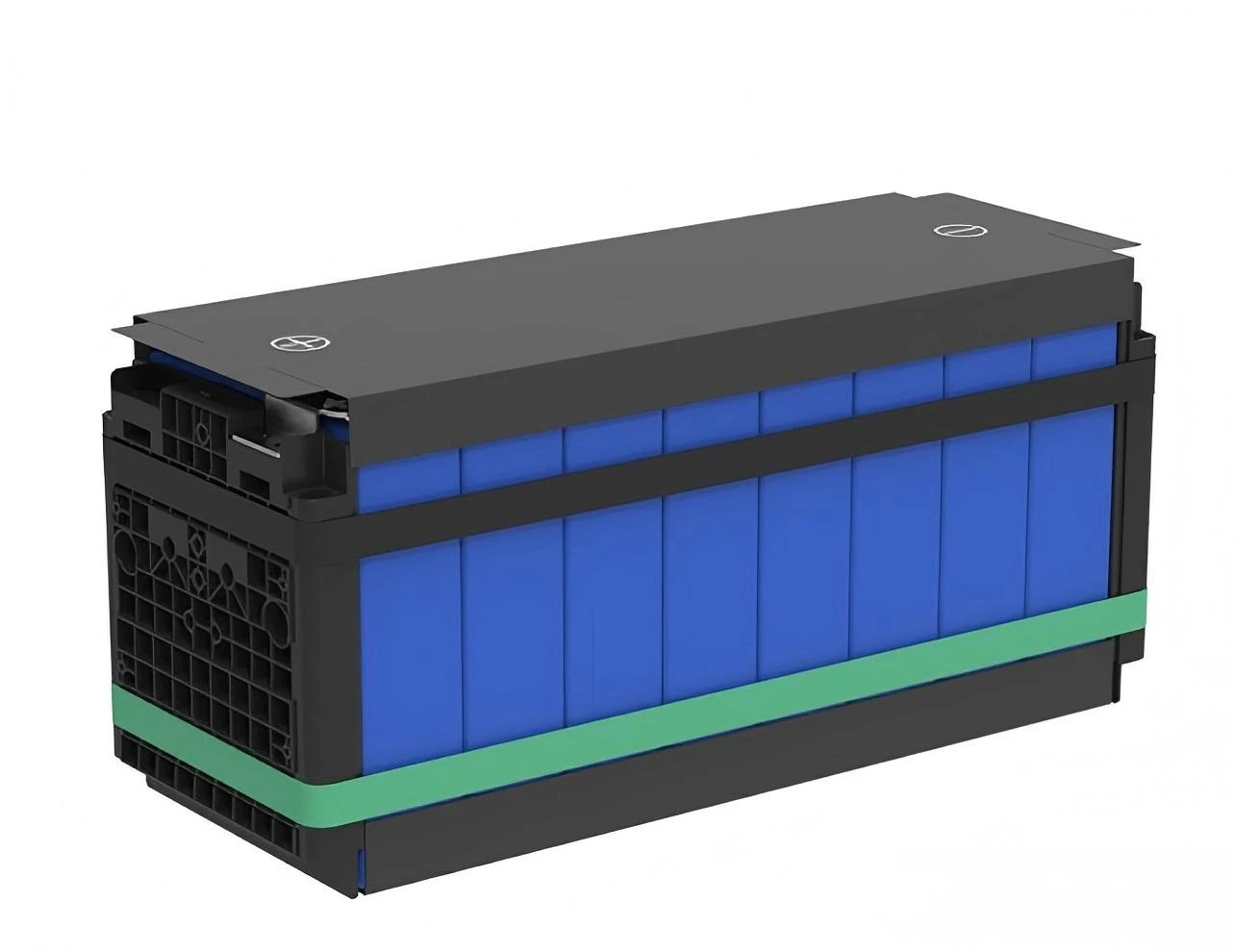
Cell Sorting and Grouping Design
The core of module design lies in the performance matching of individual battery cells. It is necessary to screen the same batch of cells through parameters such as internal resistance (usually controlled within ± 5%), capacity (deviation ≤ 2%), open circuit voltage (error<20mV), etc., to ensure voltage balance after grouping (overall voltage fluctuation of the module ≤ 3%). At the same time, a matrix or stacked structure should be used, combined with high-strength end plates (compressive strength ≥ 50MPa) and flame-retardant partitions (temperature resistance>800 ℃) fixed to enhance structural stability.
Integrated Design of Thermal Management
Using liquid cooled plates or phase change materials in direct contact with the battery cells to ensure that the operating temperature of the module is controlled within the range of 25-40 ℃, with a temperature difference of ≤ 5 ℃. The design of liquid cooled flow channels should meet the technical indicators of flow rate of 0.5-2L/min and pressure drop of less than 10kPa, and be equipped with temperature sensors (accuracy ± 0.5 ℃) for real-time monitoring.
Electrical safety and BMS integration
The module needs to integrate a high-precision voltage acquisition module (error<0.1%), an insulation monitoring device (insulation resistance>100M Ω), and achieve fully automated welding of the data acquisition line through a flexible circuit board (FPC). BMS needs to have three-level protection functions for overvoltage (trigger threshold 4.25V), undervoltage (2.5V), and over temperature (60 ℃).
2 Key design and parameters of module process
Cell pretreatment process
Using a six axis robot combined with a visual positioning system (positioning accuracy ± 0.1mm) to achieve automatic scanning and grading of battery cells, OCV testing is completed through a charge and discharge tester (current accuracy ± 0.1%), with a sorting efficiency of 1200PCS/h.
Laser welding process

The busbar welding adopts fiber laser (wavelength 1070nm, power 3kW), welding speed 80mm/s, melting depth 0.8-1.2mm, and post weld porosity<0.5%. The CCD visual positioning system (with a repeatability of ± 0.02mm) ensures that the alignment deviation between the pole and the busbar is less than 0.1mm.
Sealing and protection process
The module housing adopts IP67 protection design, and the shear strength after the sealant is cured is greater than 5MPa. After welding, the collection line needs to pass a 5kV withstand voltage test. The bending life of the wire harness should be greater than 5000 times, and the vibration test should meet the GB/T 31467.3 standard.

3 Analysis and Handling of Common Problems
Cell consistency attenuation
Phenomenon: Capacity difference>5% after 200 cycles
Cause: Unreasonable sorting parameter settings or fluctuations in environmental temperature and humidity
Solution:
Add dynamic internal resistance testing section (frequency 1kHz)
In a constant temperature and humidity workshop (temperature 23 ± 2 ℃, humidity 30-60%)
Implement active balancing strategy after sorting and grouping (balancing current 2A)
Welding virtual welding and explosion
Phenomenon: Solder joint resistance>50 μ Ω or metal splashing occurs
Cause: Laser focus offset or insufficient protective gas flow
Solution:
Real time detection of molten pool status using coaxial visual monitoring system
Optimize argon protection scheme (flow rate 15-20L/min, purity>99.999%)
Establish a metallographic database for solder joints (sampling every 2 hours)
Preventive measures:
Add aerogel insulation layer (thermal conductivity < 0.02W/m ・ K)
Design bidirectional pressure relief valve (opening pressure 200kPa)
Using V0 grade flame-retardant PC+ABS alloy shell material
4 Process innovation direction
Intelligent detection system
Deploy AI visual inspection equipment to identify micro defects such as pole oxidation and membrane wrinkles through deep learning algorithms, with detection speed increased to 0.5 seconds per module and defect detection rate>99.9%.
Flexible manufacturing technology
Develop a modular fixture system that is compatible with 20-300Ah battery cell production, reducing changeover time to 15 minutes. By adopting digital twin technology to achieve real-time optimization of process parameters, the yield rate can be increased by 2-3 percentage points.
Green Manufacturing System
The welding fume treatment system is equipped with four levels of filtration (dust removal efficiency>99.97%), reducing production energy consumption to 1.2 kWh/kWh energy storage capacity. The application of copper aluminum composite busbars has reduced material costs by 18%.

Through systematic design optimization and process control, modern energy storage battery modules have achieved energy density>160Wh/kg, cycle life>6000 times @ 80% DoD, and overall manufacturing costs have decreased by 40% compared to 2020. In the future, with breakthroughs in solid-state battery technology and intelligent pre lithiation processes, module performance will move towards an energy density of 200Wh/kg and a lifespan of 10000 cycles.