


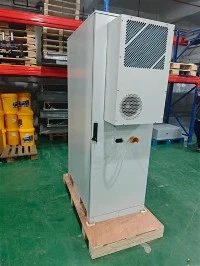
1 Industrial and commercial energy storage: the core of energy management for cost reduction and efficiency improvement
1. Peak valley arbitrage and cost optimization
Industrial and commercial users face significant differences in peak and valley electricity prices. High voltage rack mounted lithium batteries can store electricity during low electricity price periods (such as late nights) and release it during peak periods (such as daytime production periods), directly reducing electricity bills through "low storage and high discharge". Taking typical industrial enterprises as an example, the system can automatically adjust the charging and discharging strategy based on real-time electricity prices, combined with modular expansion characteristics, to adapt to dynamic demands ranging from tens to hundreds of kWh. Long term use can reduce electricity costs by more than 30%.
2. Emergency backup power and production support
In response to the strict requirements of industrial equipment for power continuity, this battery system has millisecond level response capability and can switch to backup power supply mode in the event of a power outage, avoiding economic losses caused by production line shutdown. Its high-voltage output characteristics can directly match high-power equipment such as motors and machine tools, and its cycle life can reach more than 6000 times under 80% deep discharge conditions, meeting the needs of high-frequency emergency start-up.

2 Data centers and communication base stations: the underlying support for reliable power supply
1. Supporting uninterruptible power supply (UPS) for data centers
With the rise of intelligent computing centers and Internet data centers, the demand for power density and stability of backup power sources has soared. The high-voltage rack mounted lithium battery adopts a standard 19 inch rack design, which can be directly embedded into existing server cabinets, reducing space occupation by more than 30%. At the same time, it supports 1C to 6C high rate discharge and can meet the full field backup power demand of 10 minutes to 2 hours, perfectly adapting to the short-term and high-frequency power supply guarantee needs of data centers.
2. Energy supply for communication base stations
In remote communication base station scenarios, this system can be combined with new energy sources such as solar and wind power to solve the problem of insufficient coverage of traditional power grids. Its wide temperature range operating characteristics (-20 ℃ to 55 ℃) can adapt to extreme climates, modular design facilitates rapid deployment in the field, and the intelligent BMS system can dynamically balance the intermittency of new energy generation with the stability of base station power consumption, ensuring uninterrupted signal transmission.

3 Renewable energy support: a key link between consumption and stability
1. Photovoltaic/wind energy storage and consumption
The intermittency and volatility of solar and wind energy have an impact on the power grid. High voltage rack mounted lithium batteries can serve as a "buffer" to store excess electricity during the peak of new energy generation, and release it during periods of low power generation, thereby increasing the consumption rate of renewable energy. By seamlessly integrating with photovoltaic systems, the mode of storing electricity during the day and discharging electricity at night can achieve the all-weather utilization of clean energy and assist in energy transformation.
2. Microgrid energy management
In off grid microgrid scenarios, the system can serve as the core energy storage unit, coordinating the balance between multiple energy supply and load ends such as photovoltaics and diesel generators. Its high-voltage output characteristics can support the operation of industrial grade equipment in microgrids, and its modular parallel function can dynamically adjust capacity according to electricity load, with a maximum scalability of several hundred kWh, ensuring stable power supply for remote communities, islands and other scenarios.
4 Special power scenario: high reliability energy guarantee
1. Engineering Machinery and Ship Power
For the medium and high voltage power requirements of electric engineering machinery, small ships, etc., 380V level high-voltage rack mounted lithium batteries can provide continuous and stable power output. Some products are designed with waterproof and anti-corrosion to adapt to harsh working conditions. Its high rate discharge performance and long cycle life can meet the energy needs of high-frequency operation of engineering machinery and long-term navigation of ships, replacing traditional fuel power to achieve low-carbon operation.
2. Power supply for special equipment
In military equipment, emergency rescue equipment and other scenarios, this system stands out with high safety and strong environmental adaptability. The thermal stability and intelligent protection mechanism of lithium iron phosphate batteries can meet the power supply challenges in extreme environments. At the same time, the compact rack design facilitates equipment integration and provides reliable energy support for special scenarios.